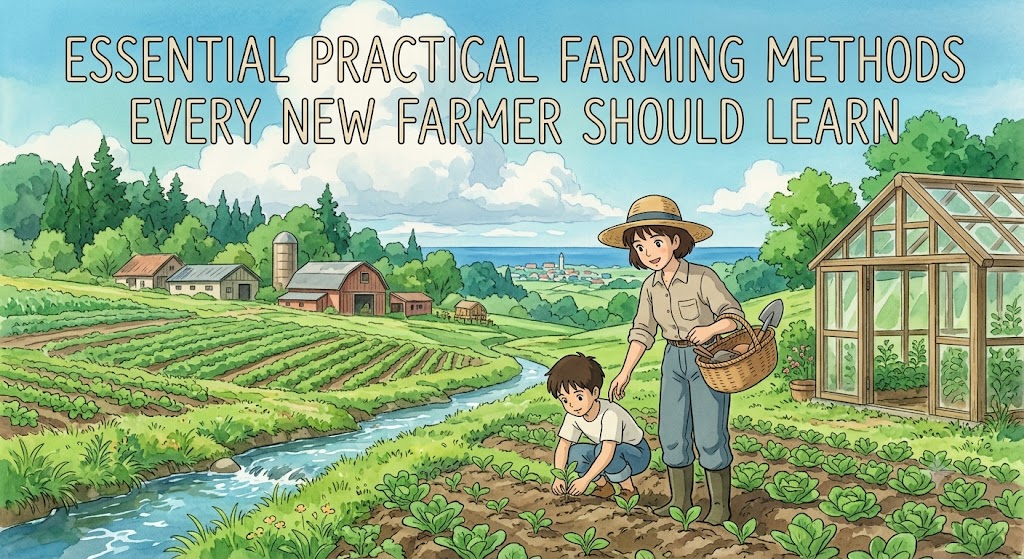
Every Successful Farm Begins With the Right Foundation
Starting a farm is exciting, but it also comes with challenges that many beginners underestimate. Good harvests are rarely the result of luck—they are built through careful planning, healthy soil management, timely field operations, and consistent observation. New farmers often focus on buying equipment or increasing fertilizer use, while experienced growers know that mastering the basics delivers the greatest long-term rewards.
Practical farming is about making smart decisions every day. From preparing the land correctly to harvesting at the right time, each step influences the final yield. Learning these essential methods early can help new farmers avoid costly mistakes, improve crop quality, and build a profitable farming business.
Understand Your Land Before Planting Anything
One of the first lessons every farmer should learn is that every field is different.
Before selecting a crop, evaluate:
- Soil texture
- Drainage capacity
- Water availability
- Sunlight exposure
- Previous cropping history
- Local climate conditions
Understanding these factors allows you to choose crops that naturally perform well in your environment instead of forcing unsuitable varieties to grow.
Prepare the Soil Carefully
Healthy crops start with proper land preparation.
Good soil preparation includes:
- Removing weeds and crop residues
- Loosening compacted soil
- Adding organic matter
- Leveling the field
- Improving drainage if necessary
Well-prepared soil encourages strong root development, better water infiltration, and healthier plant growth throughout the season.
Professional Insight: Time spent preparing soil is rarely wasted. Strong roots established early often determine the success of the entire crop.
Choose High-Quality Seeds
Seeds determine much of your crop’s potential.
When purchasing seeds, look for:
| What to Check | Why It Matters |
|---|---|
| High germination rate | Better plant establishment |
| Disease resistance | Lower crop losses |
| Local adaptability | Improved performance |
| Reliable supplier | Consistent quality |
Investing in quality seeds is one of the most cost-effective decisions a beginner farmer can make.
Follow Proper Planting Techniques
Correct planting improves both crop health and productivity.
Important practices include:
- Planting at the recommended depth
- Maintaining proper spacing
- Sowing during the right season
- Using appropriate seed rates
- Avoiding overly wet or dry soil
Small adjustments during planting often lead to noticeable improvements at harvest.
Water Crops Wisely
Water management is about efficiency rather than quantity.
Best practices include:
- Irrigate during the early morning.
- Water deeply instead of frequently.
- Prevent standing water around roots.
- Adjust irrigation based on weather conditions.
- Check soil moisture before watering.
Efficient irrigation helps plants develop stronger root systems while conserving valuable water resources.
Feed Crops With Balanced Nutrition
Plants require different nutrients throughout their growth cycle.
A balanced nutrition program should combine:
- Organic compost
- Farmyard manure
- Natural soil conditioners
- Appropriate fertilizers when required
Overfeeding plants can be just as harmful as nutrient deficiencies. The goal is to provide steady nutrition that supports healthy development from germination to harvest.
Monitor the Field Regularly
Experienced farmers spend time observing their crops instead of waiting for problems to appear.
During field inspections, check for:
- Leaf discoloration
- Insect activity
- Weed growth
- Water stress
- Disease symptoms
- Uneven crop development
Early detection allows problems to be corrected before they affect large areas of the farm.
Manage Weeds Before They Compete
Weeds compete directly with crops for:
- Sunlight
- Water
- Nutrients
- Growing space
Effective weed management includes:
- Manual removal
- Mulching
- Timely cultivation
- Crop rotation
- Cover cropping
Controlling weeds early is less expensive and more effective than waiting until they spread.
Protect Crops Using Preventive Practices
Rather than reacting after damage occurs, focus on prevention.
Preventive measures include:
- Healthy soil management
- Crop rotation
- Field sanitation
- Companion planting
- Encouraging beneficial insects
Strong, healthy crops are naturally more resistant to many pests and diseases.
Keep Accurate Farm Records
Good record keeping transforms farming into a data-driven business.
Record details such as:
- Planting dates
- Seed varieties
- Rainfall
- Irrigation schedules
- Fertilizer applications
- Pest observations
- Harvest results
These records make it easier to improve future farming decisions.
Harvest at the Right Time
Harvest timing influences both crop quality and profitability.
Harvesting too early may reduce:
- Grain weight
- Fruit flavor
- Market value
Harvesting too late can increase losses from:
- Birds
- Insects
- Rain
- Overripening
Learning the correct harvest stage for each crop ensures maximum returns.
Continue Learning Every Season
Agriculture is constantly evolving.
Successful farmers regularly:
- Learn new cultivation techniques.
- Attend agricultural training programs.
- Observe neighboring farms.
- Test improvements on small plots.
- Review previous harvest results.
Continuous learning helps farmers adapt to changing weather, market demands, and production challenges.
Practical Farming Habits That Deliver Long-Term Results
Develop these habits from the beginning:
✔ Walk through your fields every day.
✔ Prepare equipment before the season starts.
✔ Apply inputs only when necessary.
✔ Protect soil from erosion.
✔ Save rainwater whenever possible.
✔ Maintain clean storage facilities.
✔ Learn from each harvest.
Consistent habits often produce better results than expensive equipment.
Common Beginner Errors
Many new farmers lose productivity because of avoidable mistakes.
Avoid:
- Planting without preparing the soil
- Purchasing poor-quality seeds
- Overwatering crops
- Ignoring early pest signs
- Applying excessive fertilizer
- Delaying weed control
- Harvesting at the wrong stage
- Failing to keep farm records
Recognizing these mistakes early helps build better farming practices.
Final Thoughts
Successful farming is built on practical knowledge, careful observation, and consistent improvement. New farmers who focus on understanding their land, preparing healthy soil, selecting quality seeds, managing water efficiently, and monitoring crops regularly establish a strong foundation for future success.
Rather than searching for shortcuts, invest time in mastering the essential farming methods that experienced growers rely on every season. These practical skills not only improve crop production but also create a more sustainable, profitable, and resilient farming operation for years to come.
Frequently Asked Questions
1. What is the first farming skill every beginner should learn?
Understanding soil conditions and preparing land properly are the most important starting points for successful farming.
2. Why are quality seeds so important?
Healthy, certified seeds improve germination, reduce disease risk, and increase the chances of achieving high yields.
3. How often should farmers inspect their crops?
Daily or regular inspections help identify pests, diseases, and nutrient deficiencies before they become serious problems.
4. Is record keeping really necessary for small farms?
Yes. Even simple records help farmers evaluate performance, reduce unnecessary expenses, and improve future planning.
5. Can practical farming methods increase profits?
Absolutely. Efficient management of soil, water, seeds, and crop care reduces production costs while improving crop quality and overall profitability.