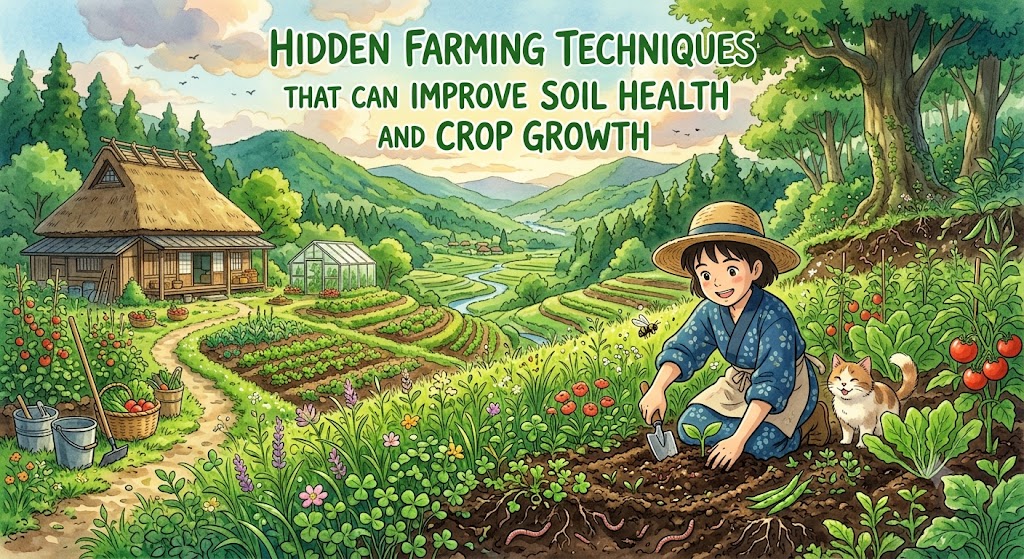
Healthy soil is the foundation of successful farming. While fertilizers, irrigation systems, and modern machinery often receive the most attention, many experienced farmers know that some of the most effective ways to improve crop production happen beneath the surface. These lesser-known or “hidden” farming techniques focus on restoring soil naturally, increasing biodiversity, and creating a stronger growing environment for crops.
Unlike expensive agricultural technologies, these methods often rely on understanding nature and working with it rather than against it. They improve soil structure, increase organic matter, conserve water, and encourage beneficial microorganisms that help plants grow healthier and stronger.
Whether you own a small garden, a family farm, or a large commercial operation, these hidden farming techniques can significantly improve long-term soil health while increasing crop productivity.
Why Soil Health Matters More Than Ever
Healthy soil is much more than dirt. It is a living ecosystem filled with bacteria, fungi, insects, worms, and organic materials working together to support plant growth.
A healthy soil system provides:
- Better nutrient availability
- Improved water retention
- Stronger root development
- Higher crop yields
- Reduced disease pressure
- Lower fertilizer costs
- Greater resistance to drought
Farmers who invest in soil health often see better harvests year after year while spending less on chemical inputs.
1. Feed the Soil Instead of Feeding the Plants
Many farmers focus only on adding nutrients directly to crops. A smarter approach is feeding the microorganisms living inside the soil.
Beneficial microbes break down organic matter and naturally release nutrients that plants can absorb.
Ways to feed soil life include:
- Compost
- Well-rotted manure
- Crop residues
- Leaf mulch
- Organic compost tea
As microbial activity increases, soil fertility naturally improves without relying entirely on synthetic fertilizers.
2. Leave Crop Residues on the Field
Instead of burning crop leftovers after harvest, allow them to decompose naturally.
Crop residues:
- Return organic matter
- Reduce erosion
- Protect soil from sunlight
- Improve moisture retention
- Feed beneficial organisms
Over time, residue decomposition creates nutrient-rich humus that improves overall soil quality.
3. Grow Living Roots Throughout the Year
One hidden secret used by regenerative farmers is keeping living roots in the soil for as many months as possible.
Plants continuously release natural sugars through their roots, feeding billions of microorganisms underground.
Popular cover crops include:
| Cover Crop | Main Benefit |
|---|---|
| Clover | Nitrogen fixation |
| Rye | Weed suppression |
| Radish | Breaks compact soil |
| Oats | Improves organic matter |
| Mustard | Reduces certain soil pests |
Continuous root activity creates healthier soil biology throughout the year.
4. Encourage Earthworms Naturally
Earthworms are often called “nature’s soil engineers.”
They naturally:
- Create air channels
- Improve drainage
- Mix nutrients
- Break down organic matter
- Improve root penetration
Farmers can attract earthworms by:
- Adding compost
- Reducing pesticide use
- Keeping soil moist
- Avoiding excessive tillage
- Leaving organic mulch
A field rich in earthworms is usually a sign of healthy soil.
5. Reduce Deep Tillage
Frequent ploughing disturbs soil organisms and breaks down soil structure.
Conservation tillage helps preserve:
- Soil fungi
- Beneficial bacteria
- Moisture
- Earthworm tunnels
- Carbon storage
Reduced tillage also lowers fuel costs and protects fields from erosion.
6. Use Companion Planting
Growing compatible crops together creates a healthier farming ecosystem.
Examples include:
- Corn + Beans
- Tomatoes + Basil
- Cabbage + Marigold
- Onion + Carrot
Companion planting can:
- Reduce pests
- Improve pollination
- Increase biodiversity
- Enhance nutrient cycling
- Improve crop quality
Nature rarely grows plants in isolation, and farms can benefit by copying natural ecosystems.
7. Build Natural Mulch Layers
Organic mulch acts like a protective blanket over the soil.
Suitable mulch materials include:
- Dry leaves
- Straw
- Grass clippings
- Coconut husks
- Wood chips
Benefits include:
- Lower evaporation
- Fewer weeds
- Cooler soil temperature
- Increased microbial activity
- Improved organic matter
Mulching is one of the easiest yet most overlooked farming practices.
8. Rotate Crops Strategically
Growing the same crop repeatedly exhausts specific nutrients and encourages pest populations.
Crop rotation helps:
- Break disease cycles
- Balance nutrient use
- Improve soil fertility
- Reduce weeds
- Lower pesticide requirements
A simple four-year rotation can dramatically improve long-term productivity.
9. Encourage Beneficial Soil Fungi
Mycorrhizal fungi create underground networks connecting plant roots.
These fungi help plants absorb:
- Phosphorus
- Zinc
- Water
- Micronutrients
Healthy fungal populations often increase drought tolerance while improving crop growth.
Avoid excessive fungicide use whenever possible to protect these valuable organisms.
10. Add Biochar Carefully
Biochar is charcoal made from plant material under controlled conditions.
When mixed into soil, it can:
- Hold nutrients
- Improve water retention
- Increase microbial habitats
- Reduce nutrient loss
- Improve long-term fertility
Biochar remains in soil for decades, making it an excellent long-term soil improvement tool.
11. Plant Windbreak Trees
Many farms lose valuable topsoil because of strong winds.
Planting trees around field borders helps:
- Reduce erosion
- Protect crops
- Improve biodiversity
- Create wildlife habitat
- Lower moisture loss
Popular windbreak species vary depending on local climate and farming conditions.
12. Collect Rainwater for Soil Moisture
Natural rainwater harvesting reduces irrigation costs while maintaining healthy soil moisture.
Common methods include:
- Farm ponds
- Recharge pits
- Swales
- Contour trenches
- Storage tanks
Steady moisture supports healthy microbial activity throughout the growing season.
13. Introduce Green Manure Crops
Green manure crops are grown specifically to improve soil rather than for harvest.
Examples include:
- Sunn hemp
- Cowpea
- Sesbania
- Clover
These crops:
- Add nitrogen
- Increase biomass
- Improve soil texture
- Reduce weeds
- Feed microorganisms
After growth, they are incorporated back into the soil to enrich it naturally.
14. Increase Farm Biodiversity
Monoculture farming often weakens soil ecosystems.
Adding diversity through:
- Flower strips
- Mixed crops
- Pollinator plants
- Fruit trees
- Native grasses
creates a healthier environment that supports insects, birds, microbes, and beneficial predators.
Greater biodiversity often leads to stronger and more resilient farming systems.
15. Observe the Soil Regularly
One of the most valuable hidden techniques costs nothing.
Walk through your fields frequently and observe:
- Soil colour
- Moisture
- Earthworm activity
- Root development
- Smell
- Organic matter
Healthy soil usually smells earthy, feels soft, and supports abundant biological activity.
Regular observation helps identify problems before they affect crop yields.
Common Mistakes That Damage Soil Health
Avoid these practices whenever possible:
- Excessive chemical fertilizer use
- Overwatering
- Continuous monocropping
- Burning crop residues
- Heavy pesticide dependence
- Deep tillage every season
- Leaving soil bare
- Ignoring soil testing
Preventing damage is often easier and cheaper than restoring degraded soil.
Long-Term Benefits of Hidden Farming Techniques
Farmers adopting these practices often experience:
- Better soil fertility
- Stronger crop growth
- Higher organic matter
- Improved water efficiency
- Lower production costs
- Reduced erosion
- Increased biodiversity
- More stable yields
- Greater resilience during droughts
- Sustainable farm productivity
These improvements build gradually, but the benefits continue for many years.
Frequently Asked Questions (FAQs)
1. What is hidden farming?
Hidden farming refers to lesser-known agricultural practices that naturally improve soil health, crop growth, and farm sustainability without relying heavily on chemicals.
2. How long does it take to improve soil health?
Noticeable improvements may appear within one growing season, while significant changes in soil structure and fertility often take two to five years of consistent management.
3. Are these techniques suitable for small farms?
Yes. Most hidden farming techniques are affordable and can be applied to home gardens, small farms, and large commercial fields alike.
4. Can hidden farming reduce fertilizer use?
Yes. By improving soil biology and nutrient cycling, these methods can reduce dependence on synthetic fertilizers over time.
5. Which technique should beginners start with?
Starting with compost application, crop rotation, mulching, and cover crops provides a strong foundation for improving soil health and boosting crop productivity.
Conclusion
Hidden farming techniques may not always receive the spotlight, but they play a vital role in building fertile, productive, and resilient agricultural systems. By focusing on soil biology, organic matter, biodiversity, and natural processes, farmers can create healthier fields that consistently produce stronger crops with fewer external inputs.
The key to long-term success is patience and consistency. Small improvements made season after season can transform tired, nutrient-poor soil into a thriving ecosystem that supports abundant harvests for years to come. Investing in soil health today is one of the smartest decisions any farmer can make for a more sustainable and profitable future.