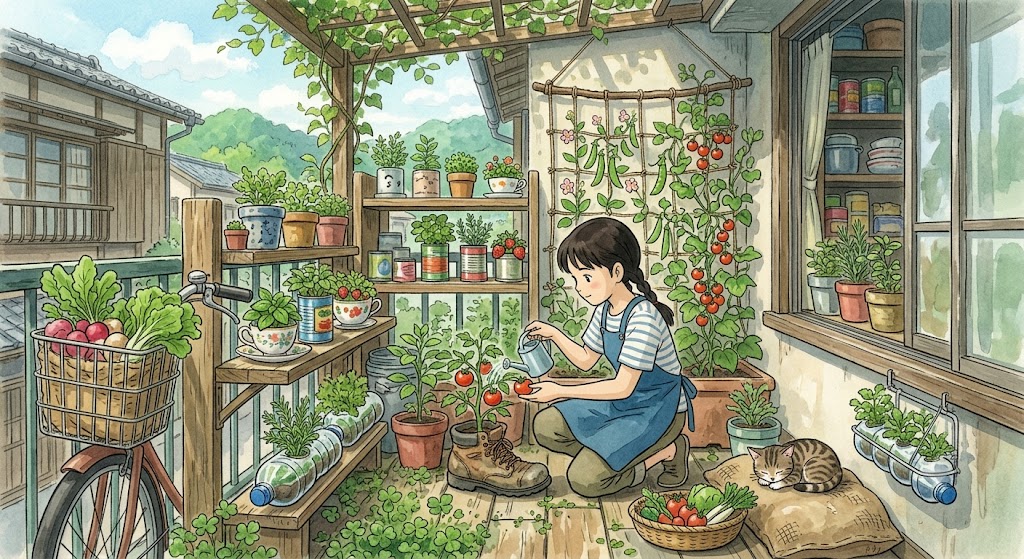
Not every productive farm needs acres of open land. In many homes, small farms, urban properties, and rural businesses, there are spaces that remain unused simply because they do not look suitable for traditional farming. A narrow side yard, rooftop, balcony, empty corner, unused greenhouse area, or even a small strip along a wall can potentially become a useful growing space with the right planning.
Small-space farming is becoming an interesting option for people who want to grow vegetables, herbs, fruits, flowers, or other useful plants without purchasing additional land. The key is to stop thinking only in terms of large fields and start looking at how sunlight, vertical space, containers, water, and available surfaces can be used more efficiently.
With careful crop selection and simple management, even a modest area can become an organized growing zone.
Look at Unused Space Differently
The first step is not buying equipment or seeds. It is identifying what space is actually available.
Walk around the property and look for areas that receive adequate sunlight and have reasonable access to water. Measure the available space and note whether it is exposed to strong winds, excessive heat, standing water, or shade.
Potential areas may include:
- Narrow spaces beside buildings
- Rooftops with suitable structural support
- Balconies and terraces
- Empty corners of a backyard
- Fences and walls
- Areas beneath suitable structures
- Unused greenhouse sections
- Small strips between established growing areas
Not every empty space should be converted into a growing area. Safety, drainage, sunlight, structural strength, and local rules should be considered before starting.
1. Turn Walls Into Vertical Growing Areas
One of the biggest advantages of small-space farming is that plants do not always need to spread outward.
Walls, fences, trellises, and other vertical structures can support climbing plants and compact growing systems.
Crops such as beans, peas, cucumbers, and certain climbing varieties can grow upward when provided with appropriate support.
Vertical arrangements can also be used for herbs and leafy vegetables in containers or modular planters.
The main advantage is simple: use height when ground space is limited.
However, plants should still receive sufficient sunlight and airflow. A crowded vertical system can create competition between plants and make maintenance more difficult.
2. Give Narrow Side Yards a Purpose
The narrow strip between a house and boundary wall is often ignored.
If the area receives enough sunlight, it can potentially become a useful herb or vegetable garden.
Raised beds or long containers can fit into narrow spaces while keeping planting organized. Herbs such as basil, mint, coriander, parsley, or other locally suitable varieties may work well depending on the climate.
Before planting, check how much sunlight the area receives throughout the day. A space that appears bright in the morning may become heavily shaded later.
Drainage is equally important. Water should not accumulate against building foundations or walls.
3. Use Containers Instead of Permanent Beds
Container farming is one of the simplest ways to use small spaces.
Buckets, grow bags, pots, boxes, and other suitable containers can allow plants to be grown on patios, terraces, balconies, and compact outdoor areas.
The major benefit is flexibility. Containers can be rearranged when necessary, and different crops can be given different growing conditions.
However, containers should have appropriate drainage holes and be large enough for the selected crop. Very small containers can restrict root development and may dry out quickly in hot weather.
Lightweight growing containers may also be preferable on rooftops or balconies, but structural safety should always be considered before adding significant weight.
4. Create a Compact Herb Corner
Herbs can be particularly useful for small-space growers because many varieties do not require large planting areas.
A dedicated herb corner can contain several containers arranged according to sunlight requirements.
Instead of planting dozens of varieties at once, start with a few herbs that are regularly used or have reliable local demand.
This approach makes harvesting and maintenance easier.
A small herb garden can also be placed near a kitchen or other convenient location, reducing the distance between growing and using the produce.
5. Make Use of Rooftops Carefully
Rooftops can offer excellent sunlight, making them attractive for small-scale growing.
However, rooftop farming requires more planning than placing a few pots in a backyard.
The structure must be able to safely support the additional weight of containers, growing media, water, and plants. Waterproofing and drainage also need attention.
For suitable structures, lightweight containers and carefully selected crops can create a productive rooftop garden.
Heat can be another challenge. Rooftops often experience higher temperatures and stronger winds than ground-level areas, so irrigation, shade management, and wind protection may be necessary.
A rooftop should never be used for farming simply because it is empty. Safety comes first.
6. Turn Fences Into Productive Space
Fences can serve more than one purpose.
With appropriate supports, they can provide a framework for climbing plants. Trellises or netting can be attached where suitable, creating a vertical growing surface without taking up much ground area.
This can be useful for crops that naturally climb.
The advantage is that the same physical boundary can provide both separation and growing support.
Before installing anything, make sure the fence can safely support the additional load and that the plants will not interfere with neighboring properties or access areas.
7. Try a Small Microgreen Setup
Microgreens are young edible plants harvested at an early stage of growth.
They can be grown in shallow trays and may require considerably less space than mature field crops. Because the growing cycle is relatively short for many varieties, small growers can experiment with different crops without dedicating a large area for an extended period.
A simple setup may include trays, suitable growing media, adequate light, water, and a clean growing environment.
Anyone considering microgreens for sale should first research local customer demand, food-handling requirements, packaging expectations, and production costs.
Growing something quickly does not automatically make it profitable.
8. Use Shade Wisely
Not every unused area receives full sunlight.
Instead of treating partial shade as useless, consider crops that are more tolerant of lower light conditions.
Some leafy greens and herbs can perform better than sun-loving fruiting crops in partially shaded environments, although the exact results depend on local conditions.
Shade can also be created intentionally using appropriate structures when temperatures become excessive.
The goal is to match the crop to the available environment rather than forcing every plant into the same conditions.
9. Combine Different Crops in One Area
Small-space farming becomes more productive when the available area is planned carefully.
Different crops can occupy different levels of the same space. A climbing plant may use vertical support while a shorter crop grows beneath it, provided their light and water requirements are compatible.
This type of mixed planting can make better use of available sunlight and growing area.
However, overcrowding should be avoided. Plants still require enough space, air circulation, nutrients, and light.
A productive small garden is not necessarily the one with the highest number of plants. It is the one where plants can grow successfully without competing excessively.
10. Reuse Suitable Materials
Small-space farming does not always require expensive garden structures.
Some growers reuse safe and appropriate household or agricultural materials as containers, supports, or organizers.
Old food-safe containers, wooden structures, unused shelves, or suitable crates may have practical applications when properly cleaned and adapted.
However, not every discarded material is appropriate for growing food. Containers that previously held harmful chemicals or materials that can release unwanted substances should not be used for edible crops.
The goal should be responsible reuse rather than simply using whatever material is available.
Build Around Water Efficiency
Small growing spaces still require good water management.
Containers can dry out faster than larger beds, particularly during hot weather. Checking soil moisture before watering can help prevent unnecessary watering.
Drip irrigation or simple targeted watering systems may also be useful for larger container arrangements.
Collecting rainwater may be an option in some locations, subject to local rules and safe storage practices. Water used for edible crops should be clean and appropriate for that purpose.
Efficient watering is especially important when the growing area contains many containers because manually watering each one can become time-consuming.
Start Small and Learn What Works
One of the biggest mistakes in small-space farming is trying to use every available corner immediately.
A better approach is to start with one small area.
Plant a few crops, record how much sunlight they receive, monitor water requirements, observe pest activity, and track the time required for maintenance.
After one growing cycle, evaluate the results.
Ask:
Which crops grew well?
Which ones required too much attention?
How much produce was actually harvested?
Was the space easy to maintain?
Were the crops useful for home consumption or local sales?
These answers can guide the next expansion.
Productivity Is About Planning, Not Just Space
Small-space farming demonstrates an important agricultural principle: productivity depends on how resources are organized.
A small growing area with suitable crops, efficient irrigation, good sunlight management, and regular maintenance can be more useful than a larger area that is poorly planned.
Farmers and home growers should therefore consider the full picture—space, water, sunlight, labor, crop value, maintenance, and local demand.
The most productive solution may be vertical growing in one location, containers in another, and a small raised bed somewhere else.
There is no requirement for every growing area to look the same.
Turning Forgotten Corners Into Useful Growing Areas
Unused space does not automatically have to remain unused. A narrow yard, wall, rooftop, fence, balcony, or empty corner may offer opportunities for growing when approached creatively and safely.
The best small-space farming projects begin with observation. Identify the available light, understand the limitations of the location, select crops that match those conditions, and build a system that is easy to maintain.
Vertical supports can increase growing capacity. Containers can make farming flexible. Microgreens can fit into compact setups. Herbs and leafy vegetables can work well in smaller areas, while carefully managed rooftops and fences can provide additional opportunities.
Most importantly, small-space farming should grow gradually. Start with a manageable area, measure the results, and expand only when the system proves practical.
With thoughtful planning, spaces that once appeared insignificant can become productive parts of a home garden or small farming operation—helping growers make better use of the land, water, time, and resources already available to them.