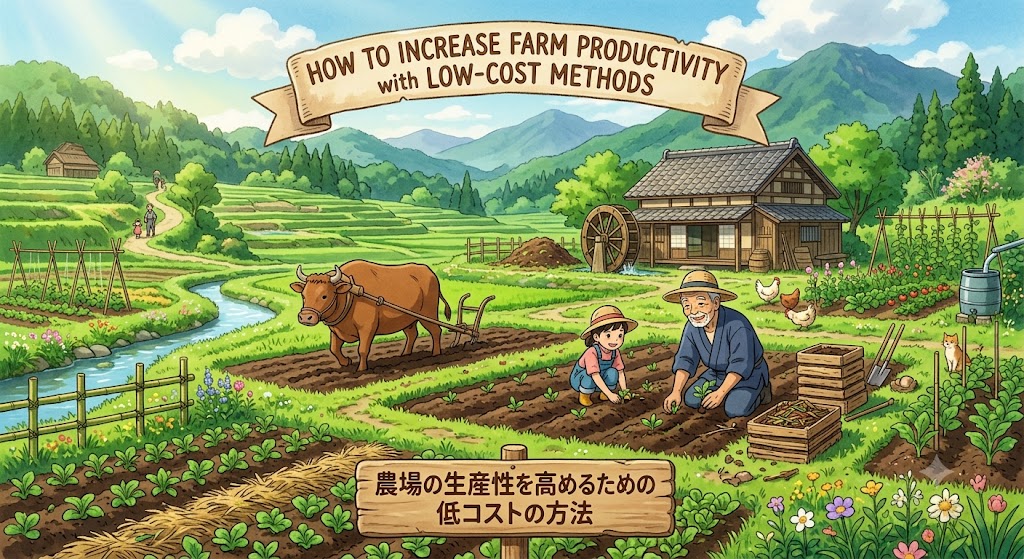
Farming has always been about making the most of available resources. However, rising costs of fertilizers, fuel, seeds, and labor have made it increasingly difficult for farmers to maintain good profits. Many growers believe that increasing farm productivity requires expensive machinery or advanced technology, but that is not always true. In reality, small improvements in everyday farming practices can significantly increase yields while keeping production costs under control.
Low-cost farming methods focus on using natural resources wisely, improving soil health, reducing waste, and managing crops more efficiently. These practices not only increase productivity but also support long-term sustainability and better farm income.
In this guide, you’ll learn practical and affordable ways to improve farm productivity without making large investments.
Why Farm Productivity Matters
Farm productivity is the amount of crop or livestock output produced from available land, labor, and resources. Higher productivity means farmers can harvest more while spending less.
Improving productivity offers several benefits:
- Higher crop yields
- Lower production costs
- Better soil fertility
- Increased farm profits
- Reduced environmental impact
- Greater food security
Small improvements made consistently often produce better long-term results than expensive short-term solutions.
1. Improve Soil Health Naturally
Healthy soil is the foundation of productive farming. Poor soil limits root growth, nutrient absorption, and water retention.
Affordable ways to improve soil include:
- Adding compost
- Using farmyard manure
- Growing green manure crops
- Applying crop residues as mulch
- Practicing crop rotation
Healthy soil supports stronger plants and better harvests year after year.
2. Choose Quality Seeds
Seed quality directly affects crop performance.
Investing in healthy, certified seeds often provides higher returns than purchasing cheaper, low-quality seeds.
Good seeds offer:
- Better germination rates
- Stronger seedlings
- Improved disease resistance
- Higher productivity
Always select varieties suited to your local climate and growing conditions.
3. Practice Crop Rotation
Growing the same crop continuously encourages pests, diseases, and nutrient depletion.
Crop rotation helps:
- Break pest life cycles
- Improve soil fertility
- Reduce weed growth
- Lower fertilizer requirements
For example, rotating cereals with legumes naturally increases nitrogen levels in the soil.
4. Use Water Efficiently
Water is one of the most valuable farm resources.
Simple methods to conserve water include:
- Drip irrigation
- Mulching
- Rainwater harvesting
- Early morning irrigation
- Repairing leaking pipes
Efficient irrigation reduces costs while supporting healthy crop growth.
5. Control Weeds Early
Weeds compete with crops for sunlight, nutrients, and water.
Instead of allowing weeds to spread:
- Remove them during early growth
- Use organic mulch
- Practice timely cultivation
- Rotate crops regularly
Early weed management saves both labor and future expenses.
6. Adopt Integrated Pest Management
Expensive pesticides are not always necessary.
Integrated Pest Management (IPM) combines several natural techniques:
- Crop monitoring
- Neem oil sprays
- Beneficial insects
- Companion planting
- Field sanitation
This approach reduces chemical use while protecting crop health.
7. Apply Organic Fertilizers
Organic fertilizers improve soil fertility gradually and reduce dependence on costly chemical fertilizers.
Popular options include:
- Compost
- Vermicompost
- Poultry manure
- Cow manure
- Green manure
Organic matter improves moisture retention and supports beneficial microorganisms.
8. Maintain Farm Equipment
Poorly maintained tools waste both time and money.
Regular maintenance includes:
- Cleaning equipment
- Sharpening blades
- Lubricating moving parts
- Checking irrigation systems
- Replacing worn components
Well-maintained equipment performs better and lasts longer.
9. Keep Farm Records
Many farmers overlook the value of record keeping.
Tracking information such as:
- Planting dates
- Fertilizer applications
- Pest outbreaks
- Harvest quantities
- Expenses
- Profits
helps identify successful practices and improve future planning.
10. Continue Learning
Agriculture continues to evolve every year.
Farmers can improve productivity by:
- Attending training programs
- Following agricultural extension services
- Learning from experienced growers
- Reading farming publications
- Testing new methods on a small scale
Continuous learning helps farms remain productive and competitive.
Low-Cost Productivity Methods at a Glance
| Method | Main Benefit | Cost Level |
|---|---|---|
| Compost Application | Better soil fertility | Low |
| Crop Rotation | Reduced pests and healthier soil | Low |
| Mulching | Conserves moisture | Low |
| Quality Seeds | Higher yields | Moderate |
| Drip Irrigation | Saves water | Moderate |
| Neem-Based Pest Control | Natural pest management | Low |
Common Mistakes to Avoid
Avoid these mistakes that reduce productivity:
- Planting poor-quality seeds
- Ignoring soil health
- Overusing fertilizers
- Delaying weed control
- Overwatering crops
- Skipping crop rotation
- Neglecting farm records
Correcting these habits can significantly improve farm performance.
Conclusion
Increasing farm productivity does not always require expensive machinery or large investments. By focusing on healthy soil, quality seeds, efficient water use, natural pest management, crop rotation, and proper farm planning, farmers can achieve better harvests while keeping production costs under control.
Success in farming comes from making consistent improvements rather than relying on quick fixes. Low-cost methods not only increase yields but also strengthen soil health, reduce waste, and build a more sustainable farming system. Whether you operate a small family farm or a larger agricultural business, these practical techniques can help improve productivity and long-term profitability.
Frequently Asked Questions
1. What is the cheapest way to improve farm productivity?
Improving soil with compost, rotating crops, and using quality seeds are among the most affordable ways to increase productivity.
2. Can small farms benefit from low-cost farming methods?
Yes. Most low-cost techniques are ideal for small farms because they require minimal investment while delivering long-term benefits.
3. Does crop rotation really increase yields?
Yes. Crop rotation improves soil fertility, reduces pest problems, and supports healthier plant growth, leading to better yields.
4. Why is record keeping important in farming?
Farm records help farmers track expenses, monitor crop performance, and make better management decisions.
5. Are organic fertilizers better than chemical fertilizers?
Organic fertilizers improve soil health over time and provide long-term fertility, while chemical fertilizers mainly supply nutrients for short-term crop growth.