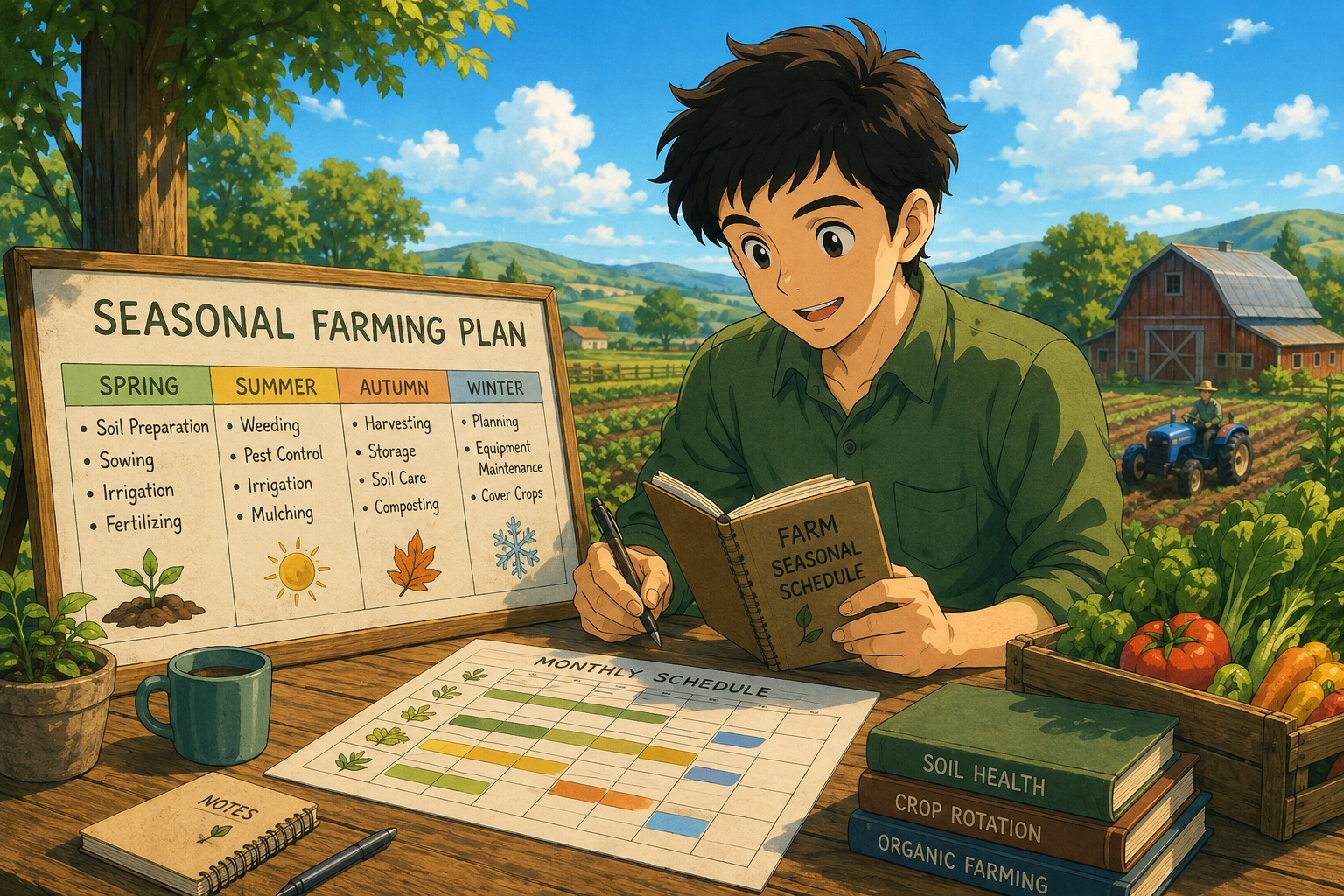
A lot of non-farmers think winter is when we sit by the fire and sleep in. Veteran farmers know that winter is the most critical season of the year. The success of your summer harvest is entirely decided by the decisions you make in January and February. This is your strategy phase.
The Focus: Data, Smart Planning, and Infrastructure Instead of rushing, I use the quiet months to review my yield data from the previous year. What cover crops thrived? Which livestock paddocks got overgrazed? I map out my crop rotations and order all my inputs before the spring rush causes shipping delays.
📅 The Winter Action Checklist:
- Audit and Order: Order seeds, organic amendments, and livestock supplements. (Buying winter hay in summer, and summer inputs in winter saves a fortune).
- Deep Maintenance: This is when you tear down the tractor engine, sharpen every mower blade, and calibrate your smart farming sensors or irrigation timers.
- Financial Review: Update the bookkeeping, analyze profit margins per crop, and drop the lowest-performing ventures.
🌱 Phase 2: The Spring Sprint (Execution & Planting)
Spring is the bottleneck. You have a microscopic window of perfect weather to get seeds in the ground and transition livestock to fresh pasture. If your winter planning was poor, spring will bury you.
The Focus: Soil Prep, Calving/Kidding, and Seeding Because I already fixed the equipment and ordered the seeds in the winter, my spring is focused entirely on execution. For livestock management, this is often birthing season and the time to initiate rotational grazing plans to protect early, vulnerable grass. For the fields, it’s about prepping the soil with minimal disturbance to keep our soil biology intact.
📅 The Spring Action Checklist:
- Soil Testing: Do this as soon as the ground thaws. Adjust your organic amendments based on real data, not guesswork.
- Greenhouse Management: Stagger seed starting. I plant seeds in batches every two weeks so that my eventual harvest is spread out, rather than maturing all on the same day.
- Infrastructure Checks: Walk all perimeter fences before releasing livestock into spring pastures.
☀️ Phase 3: The Summer Grind (Maintenance & Observation)
By the time July hits, the planting is mostly done. Summer is a marathon of maintenance. The days are incredibly long, the heat is brutal, and the weeds are trying to reclaim your fields.
The Focus: Irrigation, Pest Control, and Animal Welfare This is where smart farming practices really shine. Whether you are using automated drip tapes or simply utilizing heavy mulching, water conservation is the name of the game. For livestock, summer is all about mitigating heat stress—ensuring shade structures are adequate and water troughs are scrubbed and filled daily.
📅 The Summer Action Checklist:
- The Weekly Weed Walk: Don’t let weeds go to seed. Dedicate a specific day each week purely for weed management before they establish deep root systems.
- Pest Monitoring: Walk the fields early in the morning to spot pest eggs on the undersides of leaves. Catching an infestation in week one is a minor chore; catching it in week three is a disaster.
- Mid-Season Succession Planting: Pull up spent early-spring crops (like radishes or early peas) and immediately replace them with heat-tolerant varieties to maximize land use.
🍂 Phase 4: The Fall Wrap-Up (Harvest & Winterizing)
Fall is the grand finale. It is a time of heavy lifting, bulk harvesting, and preparing the earth to sleep. The mistake rookies make in the fall is burning out during the harvest and neglecting to close down the farm properly, which sabotages the following spring.
The Focus: Preservation, Soil Armor, and Livestock Shelter Once the cash crops are pulled, the ground cannot be left bare. Sustainable agriculture demands that we armor the soil. Sowing winter cover crops (like winter rye or hairy vetch) is non-negotiable. It stops erosion, fixes nitrogen, and builds organic matter for the next decade.
📅 The Fall Action Checklist:
- The Big Harvest: Bring in the storage crops (potatoes, onions, winter squash) and cure them properly for long-term sales.
- Blanket the Soil: Seed cover crops immediately after the final harvest, or apply a thick layer of compost and mulch to protect the soil microbiology from winter freezes.
- Winterize the Farm: Drain all irrigation lines, pull in the hoses, and fortify livestock shelters against the coming cold winds.
💡 The Veteran’s Secret: The “20% Buffer Rule”
If you take only one piece of advice from my ten years in the dirt, let it be this: Never schedule 100% of your time.
When I build my weekly schedules within these seasons, I only plan for 80% capacity. I intentionally leave 20% of my week completely blank.
Why? Because on a farm, the unexpected is the expected. A goat will get loose. A water line will burst. The tractor will get a flat tire. If your schedule is packed to 100%, a single two-hour emergency will derail your entire week, leaving you playing catch-up until Sunday night. That 20% buffer absorbs the chaos, allowing you to handle the emergencies without missing your critical seasonal targets.
Farming is a dance with nature. A great seasonal schedule doesn’t try to control the weather or the land; it ensures that when the perfect conditions finally arrive, you are ready to move. Take a day this week to map out your four phases. Your future self will thank you.