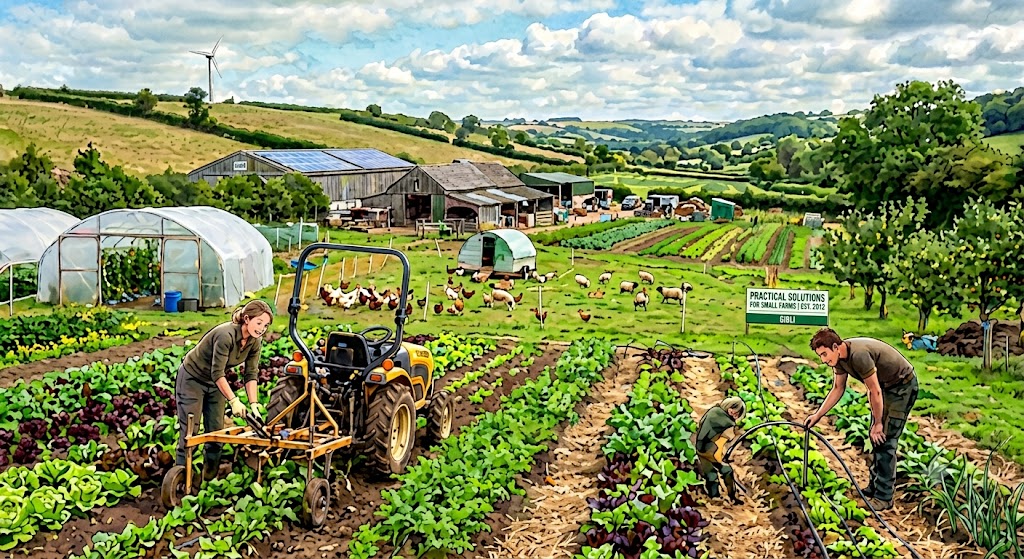
Small and medium-sized farms play a vital role in global food production, rural employment, and local economic development. Despite their importance, these farms often face unique challenges such as limited resources, rising production costs, labor shortages, market competition, and changing climate conditions. To remain productive and profitable, farmers must adopt practical solutions that improve efficiency, increase yields, and support long-term sustainability.
Fortunately, many effective agricultural improvements do not require massive investments or large-scale operations. Through better planning, resource management, modern farming practices, and strategic decision-making, small and medium-sized farms can significantly improve productivity while controlling costs.
This guide explores practical agricultural solutions that help smaller farming operations achieve greater success in today’s competitive agricultural environment.
Understanding the Challenges of Small and Medium Farms
Unlike large commercial operations, smaller farms often operate with limited land, labor, equipment, and financial resources.
Common challenges include:
- Rising input costs
- Limited access to technology
- Water shortages
- Pest and disease pressures
- Market fluctuations
- Labor availability
- Climate-related risks
Addressing these challenges requires efficient management and carefully selected farming strategies.
Practical solutions often focus on maximizing returns from available resources.
Prioritize Soil Health Improvement
Healthy soil forms the foundation of successful farming.
Soil quality directly affects:
- Crop growth
- Water retention
- Nutrient availability
- Root development
Farmers can improve soil health through:
- Compost application
- Crop rotation
- Cover cropping
- Reduced tillage
- Organic matter incorporation
Healthy soils often require fewer external inputs while supporting stronger crop performance.
Investing in soil improvement provides long-term productivity benefits.
Conduct Regular Soil Testing
Many production problems originate below the soil surface.
Soil testing helps farmers understand:
- Nutrient deficiencies
- pH imbalances
- Organic matter levels
- Fertility requirements
Benefits include:
- More accurate fertilizer use
- Reduced input waste
- Improved crop performance
Regular testing allows farmers to make informed management decisions that support profitability.
Select Crops Based on Local Conditions
Crop selection plays a major role in farm success.
Farmers should evaluate:
- Climate conditions
- Soil characteristics
- Water availability
- Market demand
Choosing crops well-suited to local environments often results in:
- Higher yields
- Lower production risks
- Improved profitability
Proper crop selection reduces unnecessary challenges during the growing season.
Implement Crop Rotation Systems
Growing the same crop repeatedly can lead to declining productivity.
Crop rotation offers several benefits:
- Improved soil fertility
- Reduced pest populations
- Lower disease pressure
- Better nutrient utilization
Examples include:
- Grain-legume rotations
- Vegetable diversification
- Cover crop integration
Rotational systems contribute to healthier and more productive farmland.
Improve Water Management
Water is one of the most valuable resources available to farmers.
Efficient water management practices include:
Drip Irrigation
Reduces water waste and improves application efficiency.
Rainwater Harvesting
Provides additional water reserves during dry periods.
Soil Moisture Monitoring
Helps determine when irrigation is actually needed.
Effective water management supports crop health while reducing operating costs.
Use Mulching Techniques
Mulching is a simple but highly effective farming practice.
Benefits include:
- Moisture conservation
- Weed suppression
- Temperature regulation
- Improved soil health
Common mulch materials include:
- Straw
- Crop residues
- Compost
- Dry leaves
Mulching helps improve growing conditions while reducing labor and water requirements.
Adopt Integrated Pest Management
Pests can significantly affect yields and profitability.
Integrated Pest Management (IPM) focuses on:
- Monitoring pest activity
- Biological controls
- Cultural practices
- Targeted interventions
Benefits include:
- Reduced pesticide costs
- Better environmental protection
- Improved crop health
Preventive approaches are often more effective than relying solely on chemical treatments.
Utilize High-Quality Seeds
Seed quality strongly influences crop performance.
Good seeds typically provide:
- Better germination rates
- Improved disease resistance
- Greater yield potential
- More uniform growth
Investing in quality planting material often generates higher returns than choosing the lowest-cost option.
Strong crop establishment contributes to overall farm success.
Diversify Farm Enterprises
Diversification reduces dependence on a single income source.
Examples include:
- Multiple crop types
- Livestock integration
- Poultry production
- Fish farming
- Specialty crops
Benefits include:
- Improved income stability
- Better resource utilization
- Reduced financial risk
Diversified farms are often more resilient during market or environmental challenges.
Improve Nutrient Management
Efficient nutrient use helps maintain productivity while controlling costs.
Best practices include:
- Soil testing
- Split fertilizer applications
- Organic amendments
- Precision nutrient placement
Balanced nutrition supports:
- Healthy plant growth
- Higher yields
- Better crop quality
Avoiding excessive fertilizer use improves both profitability and sustainability.
Utilize Small-Scale Mechanization
Appropriate machinery can improve efficiency without requiring large investments.
Examples include:
- Small tractors
- Seeders
- Cultivators
- Irrigation pumps
Mechanization helps reduce labor demands and improve operational efficiency.
Farmers should select equipment that matches their production scale and needs.
Explore Protected Cultivation
Protected growing structures can extend production seasons and improve yields.
Options include:
- Greenhouses
- High tunnels
- Shade structures
Benefits include:
- Weather protection
- Improved crop quality
- Year-round production opportunities
Protected cultivation is particularly valuable for high-value vegetables and specialty crops.
Improve Post-Harvest Management
Post-harvest losses can significantly reduce farm income.
Important practices include:
- Proper storage
- Gentle handling
- Temperature management
- Efficient transportation
Protecting harvested products helps maintain quality and maximize market value.
Reducing losses often increases profitability without increasing production costs.
Develop Direct Marketing Opportunities
Direct sales can help farmers capture a larger share of product value.
Marketing options may include:
- Farmers markets
- Community-supported agriculture (CSA)
- Local retailers
- Restaurants
- Online sales
Strong customer relationships often improve business stability and profitability.
Direct marketing is particularly beneficial for small and medium-sized farms.
Keep Accurate Farm Records
Record keeping supports better decision-making.
Important records include:
- Production data
- Input costs
- Yield information
- Weather observations
- Financial performance
Accurate records help identify strengths, weaknesses, and opportunities for improvement.
Data-driven management often leads to higher efficiency and profitability.
Invest in Farmer Education
Agriculture continues to evolve rapidly.
Ongoing education helps farmers:
- Learn new techniques
- Improve productivity
- Adopt useful technologies
- Respond to changing market conditions
Knowledge is often one of the most valuable investments a farmer can make.
Continuous learning supports long-term success.
Build Climate Resilience
Weather variability is becoming increasingly important in agricultural planning.
Resilience strategies include:
- Drought-tolerant crops
- Water conservation
- Crop diversification
- Soil health improvement
Prepared farms are better able to maintain production during adverse conditions.
Climate-smart practices support long-term sustainability.
Creating a Successful Farm Improvement Plan
An effective strategy may include:
- Soil health enhancement
- Efficient water management
- Crop diversification
- Integrated pest management
- Improved marketing approaches
- Accurate record keeping
- Continuous education
Combining these solutions creates stronger and more productive farming systems.
Conclusion
Small and medium-sized farms have tremendous potential to achieve sustainable growth through practical agricultural solutions. By focusing on soil health, water efficiency, crop diversification, integrated pest management, improved marketing, and data-driven decision-making, farmers can increase productivity while managing costs effectively.
Success in modern agriculture is not determined solely by farm size but by how efficiently resources are utilized and opportunities are managed. Farmers who adopt practical, well-planned solutions are better positioned to improve profitability, strengthen resilience, and build successful agricultural enterprises for the future.