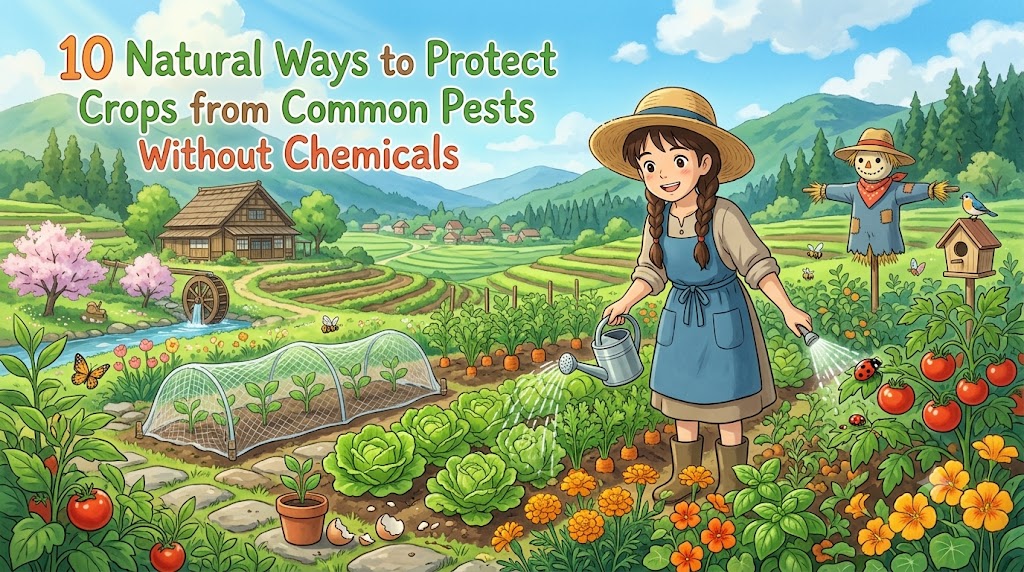
Healthy crops are the foundation of every successful farm. Unfortunately, insects, mites, caterpillars, beetles, aphids, and other pests can damage crops at every stage of growth. Many farmers rely on chemical pesticides for quick results, but excessive use of these products can harm beneficial insects, reduce soil fertility, contaminate water sources, and increase production costs over time.
The good news is that nature already provides many effective ways to keep pest populations under control. By using natural farming methods, growers can protect their crops, improve soil health, and produce safer food while reducing their dependence on synthetic chemicals.
In this guide, you’ll discover ten practical and proven methods to protect crops naturally without sacrificing productivity.
Why Choose Natural Pest Control?
Natural pest management is more than avoiding chemicals. It is about creating a healthy farming environment where crops become naturally resistant to pests and diseases.
Some of the biggest benefits include:
- Produces safer food for consumers
- Protects beneficial insects like bees and ladybugs
- Improves long-term soil fertility
- Reduces environmental pollution
- Lowers farming costs over time
- Supports sustainable agriculture
Instead of killing every insect, natural farming focuses on maintaining a healthy balance in the ecosystem.
1. Grow Pest-Resistant Crop Varieties
The easiest way to reduce pest damage is to start with strong crop varieties.
Many modern and traditional crop varieties have natural resistance against common insects and diseases. Choosing the right seeds reduces future pest problems before they even begin.
When selecting seeds:
- Buy from trusted suppliers
- Choose disease-resistant varieties
- Select seeds suitable for your local climate
- Avoid planting weak or damaged seeds
Healthy plants naturally resist pest attacks better than stressed plants.
2. Practice Crop Rotation
Growing the same crop repeatedly in one field encourages pest populations to multiply year after year.
Crop rotation interrupts the life cycle of insects because many pests survive only on specific plants.
For example:
- Grow legumes after cereals
- Rotate tomatoes with beans
- Plant onions after leafy vegetables
- Alternate root crops with grains
Changing crops every season significantly reduces pest pressure while improving soil nutrients.
3. Encourage Beneficial Insects
Not every insect is harmful.
Many insects actually protect crops by feeding on destructive pests.
Helpful insects include:
- Ladybugs
- Lacewings
- Hoverflies
- Praying mantises
- Parasitic wasps
Plant flowering herbs such as dill, fennel, marigold, basil, and coriander around crop fields to attract these natural predators.
A balanced insect population keeps harmful pests under control naturally.
4. Use Neem-Based Solutions
Neem has been used in farming for centuries.
Neem oil contains natural compounds that interrupt insect feeding, breeding, and egg development without severely harming beneficial insects.
It is highly effective against:
- Aphids
- Whiteflies
- Mealybugs
- Caterpillars
- Spider mites
Spray neem oil during the early morning or evening for the best results.
Regular applications help reduce pest populations safely.
5. Install Physical Barriers
Simple physical protection often works surprisingly well.
Farmers can use:
- Insect nets
- Floating row covers
- Fine mesh screens
- Plant collars
- Sticky traps
These barriers prevent insects from reaching crops without using any chemicals.
Young vegetable plants especially benefit from protective covers during their early growth stages.
6. Maintain Healthy Soil
Healthy soil produces healthier plants.
Strong plants naturally tolerate insect attacks better than weak plants.
Improve soil by adding:
- Compost
- Farmyard manure
- Vermicompost
- Green manure
- Organic mulch
Healthy soil also supports beneficial microorganisms that improve plant immunity against pests and diseases.
Good soil management is one of the most overlooked forms of natural pest control.
7. Remove Weeds and Crop Residues
Many pests survive on weeds before moving to cultivated crops.
Keeping fields clean removes breeding places and hiding spots for insects.
Good sanitation practices include:
- Remove infected plants immediately
- Clear crop residues after harvest
- Eliminate weeds regularly
- Clean farming tools
- Destroy heavily infested plant material
A clean farm greatly reduces pest populations throughout the growing season.
8. Use Companion Planting
Some plants naturally repel insects, while others attract beneficial predators.
Growing compatible crops together creates a healthier farming system.
Popular companion planting combinations include:
| Main Crop | Companion Plant | Benefit |
|---|---|---|
| Tomato | Basil | Repels insects |
| Cabbage | Marigold | Reduces nematodes |
| Cucumber | Nasturtium | Attracts pests away |
| Carrot | Onion | Confuses insect pests |
| Corn | Beans | Improves soil health |
Companion planting is inexpensive and environmentally friendly.
9. Monitor Crops Regularly
Early detection prevents serious pest outbreaks.
Walk through the field several times each week and inspect:
- Leaves
- Stems
- Flowers
- Fruits
- Soil surface
Watch for:
- Chewed leaves
- Egg clusters
- Yellow spots
- Wilting plants
- Sticky substances
- Webbing
The earlier pests are discovered, the easier they are to control naturally.
10. Encourage Birds and Natural Wildlife
Birds are excellent natural pest controllers.
Many species feed on caterpillars, beetles, grasshoppers, and other crop-damaging insects.
Farmers can attract birds by:
- Installing bird perches
- Providing water sources
- Planting native trees
- Avoiding excessive pesticide use
Small wildlife like frogs, spiders, and lizards also help reduce insect populations naturally.
Creating a diverse farm ecosystem provides year-round pest protection.
Common Mistakes to Avoid
Even natural farming requires proper planning.
Avoid these common mistakes:
- Ignoring early pest signs
- Overwatering crops
- Planting the same crop repeatedly
- Removing beneficial insects
- Using too much organic spray
- Neglecting field sanitation
Combining several natural methods always produces better results than relying on just one technique.
Quick Comparison of Natural Pest Control Methods
| Method | Cost | Effectiveness | Eco-Friendly |
|---|---|---|---|
| Crop Rotation | Low | High | Excellent |
| Neem Oil | Low | High | Excellent |
| Companion Planting | Low | Medium | Excellent |
| Beneficial Insects | Medium | High | Excellent |
| Physical Barriers | Medium | High | Excellent |
| Healthy Soil Management | Low | High | Excellent |
Conclusion
Protecting crops without chemicals is not only possible but also one of the smartest long-term farming strategies. Natural pest control strengthens the entire farming ecosystem instead of simply eliminating insects. Healthy soil, crop diversity, beneficial insects, regular monitoring, and simple preventive practices work together to reduce pest damage while improving crop quality.
Although natural methods may require patience and consistent management, they provide lasting benefits for farmers, consumers, and the environment. By adopting these ten natural pest control techniques, you can produce healthier crops, lower production costs, and build a more sustainable farming system for future generations.
Frequently Asked Questions (FAQs)
1. Is natural pest control as effective as chemical pesticides?
Yes. When multiple natural methods are used together, they can effectively manage most common crop pests while protecting soil and beneficial insects.
2. What is the best natural pesticide for vegetables?
Neem oil is one of the most widely used natural pesticides because it controls many common insects without causing significant harm to beneficial organisms.
3. How often should crops be inspected for pests?
Inspect crops at least two to three times each week during the growing season to detect pest problems before they become severe.
4. Can companion planting really reduce pests?
Yes. Certain plants naturally repel harmful insects or attract beneficial predators, helping reduce pest populations in an eco-friendly way.
5. Why is healthy soil important for pest management?
Healthy soil produces stronger plants with better natural resistance to insects and diseases, reducing the need for pest control treatments.