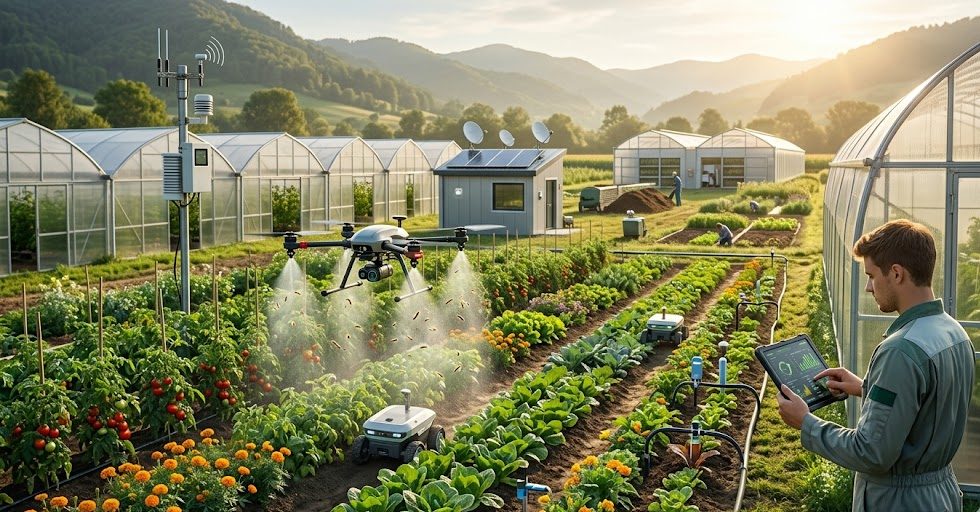
The agricultural landscape is undergoing a massive transformation. For decades, maximizing crop yields meant relying heavily on synthetic chemical pesticides, fertilizers, and intensive soil treatments. While these methods boosted production in the short term, they left behind a trail of degraded soil, chemical-resistant pests, and disrupted ecosystems. Today, a new era of agriculture is emerging: Smart Farming.
Smart farming isn’t just about high-tech sensors, automated drones, and data analytics; it is about combining cutting-edge technology with ecological intelligence. As global markets demand sustainable food production and stricter environmental regulations come into effect, modern growers are turning to natural protection methods. By integrating biological defenses with digital tools, farmers can safeguard their crops, restore soil health, and ensure long-term profitability. This comprehensive guide explores how natural protection and smart farming work hand-in-hand to build a resilient agricultural future.
Why Natural Protection Matters in Modern Agriculture
The shift toward natural crop protection is driven by both necessity and market demand. Over-reliance on synthetic chemicals has led to the emergence of “superbugs”—pests that have evolved immunity to standard chemical treatments. Furthermore, consumers worldwide are increasingly willing to pay a premium for food grown with minimal chemical inputs.
For a long time, critics argued that natural or organic pest management couldn’t scale to match the efficiency of commercial chemical farming. Smart farming completely changes that narrative. By using data-driven insights, farmers no longer have to guess when or where to apply natural remedies. They can target interventions with surgical precision, making natural protection both highly effective and economically viable on a large scale.
Core Pillars of Natural Protection in Smart Systems
Implementing natural protection in a high-tech agricultural setup involves a multi-layered approach. Instead of relying on a single chemical spray to eliminate a problem, smart farming uses an ecosystem of natural defenses.
1. Advanced Biological Pest Control (Biocontrols)
Biological control involves using living organisms to suppress pest populations. In a traditional setting, releasing beneficial insects can be hit-or-miss. In a smart farming ecosystem, it is highly optimized.
- Beneficial Predators: Releasing ladybugs, lacewings, or predatory mites to control aphids and thrips.
- Microbial Inoculants: Deploying beneficial bacteria and fungi (like Bacillus thuringiensis or Trichoderma) that naturally combat plant pathogens without harming the surrounding environment.
Smart farmers use localized weather data and automated pest traps to identify exactly when pest populations hit an economic threshold. Drones can then be used to release beneficial insects precisely over infected hotspots, minimizing waste and maximizing impact.
2. Botanicals and Biopesticides
Biopesticides are derived from natural materials such as plants, bacteria, and certain minerals. Examples include neem oil, pyrethrins (extracted from chrysanthemums), and garlic barrier sprays.
Unlike synthetic chemicals that persist in the food supply and water tables for years, biopesticides break down rapidly in sunlight and leave zero toxic residues. When integrated with smart weather tracking software, farmers can schedule biopesticide applications during optimal wind and temperature windows, ensuring the natural compounds don’t degrade before doing their job.
3. Precision Companion Planting and Biodiversity
Companion planting is the practice of growing different crops together for mutual benefit. Certain companion plants naturally repel pests, while others attract pollinators or improve soil nutrients.
- Trap Crops: Planting a highly appealing secondary crop around the main harvest to lure pests away. For instance, planting marigolds around tomatoes helps distract destructive nematodes and hornworms.
- Push-Pull Strategy: This system uses repellent plants to “push” pests away from the main crop, while a peripheral trap crop “pulls” them toward the edges of the field where they can be managed naturally.
With modern satellite imagery and GPS-guided tractors, designing complex, biodiverse planting patterns across hundreds of acres is easier than ever before.
How Smart Technology Amplifies Natural Defenses
Natural protection methods require a deep understanding of timing and environment. This is where smart technology acts as an amplifier, turning traditional ecological practices into a highly predictable science.
+------------------------+      +------------------------+      +------------------------+
|    AI & IoT Sensors    | ---> |    Predictive Model    | ---> | Targeted Natural Action|
| Detects micro-climates |      | Forecasts pest hatches |      | Drones release insects |
|   and early crop stress|      |  before damage occurs  |      |   or spot-spray neem   |
+------------------------+      +------------------------+      +------------------------+
AI-Powered Early Warning Systems
High-resolution cameras mounted on automated field rovers or drones use computer vision to scan fields for early signs of disease, leaf discoloration, or pest damage. Artificial Intelligence (AI) models analyze these images to identify the exact pest species long before a human eye would notice an infestation. This allows farmers to deploy localized natural remedies immediately, preventing a minor issue from becoming a farm-wide crisis.
IoT Soil and Micro-Climate Sensors
Healthy plants have strong natural immune systems. Internet of Things (IoT) sensors placed throughout the fields monitor soil moisture, nutrient levels, and ambient humidity in real time. By keeping crops perfectly hydrated and nourished via automated drip irrigation, the plants maintain high vigor, making them naturally resistant to fungal infections and insect attacks.
Restoring Soil Health: The Ultimate Natural Defense
The foundation of any natural protection strategy is the soil. Synthetic fertilizers often kill off the complex underground network of microbes, leaving crops entirely dependent on chemical lifelines. Smart farming prioritizes building a robust soil microbiome.
Cover Cropping and Intelligent Crop Rotation
Leaving fields bare between growing seasons invites soil erosion and weed invasions. Smart growers utilize cover crops like clover, rye, or vetch to naturally protect the soil. These plants fix nitrogen in the ground, suppress weed growth, and improve soil structure. Using historical yield data and machine learning, software platforms can recommend the absolute best crop rotation schedules to break pest life cycles naturally.
Biochar and Organic Soil Amendments
Biochar—a charcoal-like substance produced by burning organic biomass in the absence of oxygen—is increasingly used in smart farming. It acts as a permanent sponge in the soil, retaining water and providing a safe haven for beneficial microbes. Combined with automated compost tea injection systems, biochar helps build a self-sustaining ecosystem where the soil itself defends the plant against root-rot and nutrient deficiencies.
Best Practices for Transitioning to Eco-Smart Farming
Shifting from a conventional chemical-heavy approach to an eco-smart natural protection system requires a strategic, phased plan.
| Step | Focus Area | Actionable Strategy |
|---|---|---|
| 1 | Baseline Assessment | Install basic soil and weather sensors to understand your farm’s unique micro-climates. |
| 2 | Start Small | Dedicate a small percentage of acreage to test biocontrols and botanical sprays alongside digital tracking. |
| 3 | Build Biodiversity | Introduce simple companion rows or trap crops on the edges of major fields to evaluate pest migration. |
| 4 | Scale and Automate | Integrate drone mapping and automated biological application tools once data models prove accurate. |
Conclusion: The Sustainable Way Forward
Natural protection for smart farming is no longer a idealistic concept reserved for small, niche gardens. It is a highly sophisticated, commercially viable methodology that represents the future of global food production. By leveraging AI, IoT sensors, and precision data, modern agriculture can finally move away from harsh synthetic chemicals without sacrificing yields or profitability.
Investing in natural crop protection improves soil fertility, protects local biodiversity, reduces chemical input costs, and future-proofs operations against shifting climate patterns and market regulations. True innovation in agriculture doesn’t mean rewriting the laws of nature—it means using technology to understand, respect, and amplify them.