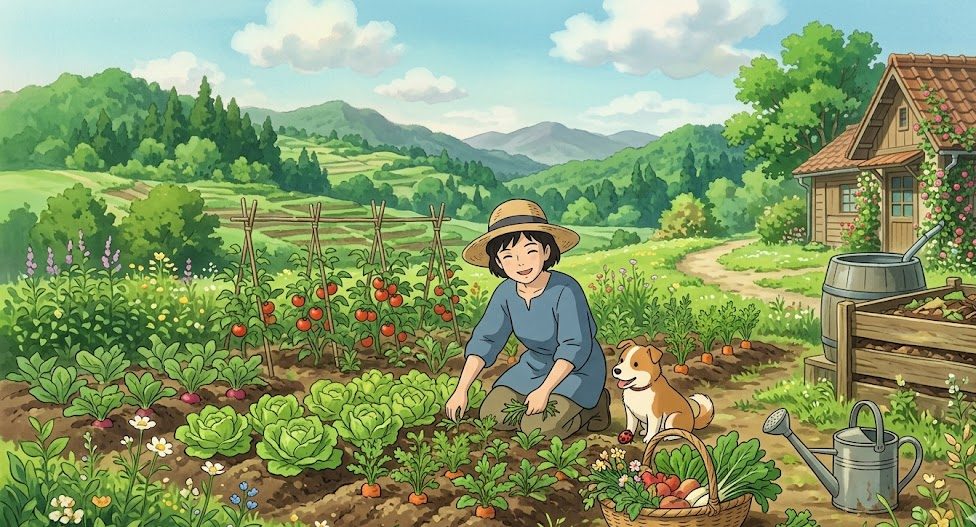
In the modern agricultural landscape of 2026, the shift toward sustainability is no longer a choice—it is a necessity for survival and profitability. Conventional farming has trapped many into a cycle of rising chemical costs and declining soil health. This blueprint provides a strategic escape, offering a path to “Financial Freedom” by leveraging “Smart Farming” techniques that work with nature rather than against it.
1. The Foundation: Soil as a Living Ecosystem
The most critical secret to natural farming is shifting your perspective from seeing soil as dirt to seeing it as a living organism. Healthy, vibrant soil is a “digital goldmine” of microbial activity that sustains your crops for free.
- The No-Till Strategy: Traditional plowing destroys the delicate fungal networks (mycorrhizae) that plants use to absorb nutrients. By practicing no-till farming, you preserve these networks, allowing the soil to heal naturally.
- Healing through Fermentation: Instead of synthetic NPK, focus on “healing the soil” using fermented organic matter. These inputs act as a catalyst, feeding the microbes that in turn feed your plants.
2. Mulching: The Low-Maintenance Shield
Mulching is a cornerstone of “Practical Farming” that simultaneously reduces labor and increases efficiency. It acts as nature’s protective blanket for your land.
- Water Conservation: Covering the soil with straw, leaves, or crop residues drastically reduces evaporation. This is a primary “water-saving technique” that ensures your crops thrive even in harsh summer conditions.
- Natural Weed Control: A thick layer of mulch smothers weeds by blocking sunlight, eliminating the need for expensive and toxic herbicides.
- Thermal Regulation: Mulch keeps the soil temperature stable, protecting the roots and microbial life from extreme heat and cold.
3. Biological Inputs: Achieving Zero Chemical Costs
The “Zero Chemical Cost” model relies on manufacturing your own high-potency bio-fertilizers using materials already present on the farm.
- Fermented Bio-Inputs: By combining cow dung, urine, jaggery, and pulse flour, you can create powerful microbial starters. These provide immediate nutrition and boost plant immunity without the harmful “burning” effects of chemicals.
- Waste-to-Wealth: Every bit of organic waste, from fallen leaves to livestock manure, is a resource for creating liquid fertilizers, ensuring your input costs remain at zero.
4. Strategic Biodiversity and “Smart” Crop Selection
Monoculture is an invitation for pests and soil depletion. The secret to doubling your yield is creating a balanced, diverse environment.
- Intercropping for Success: Integrate “High-Value Cash Crops” with nitrogen-fixing legumes. This synergy ensures that one crop provides what the other needs, maximizing every inch of your land.
- Natural Pest Repellents: Planting flowers like marigolds or herbs among your vegetables creates a natural barrier against pests, reducing the need for active intervention.
5. Innovation and Integrated Farming Systems
To grow more with less effort, your farm must function as a closed-loop system where nothing is wasted.
- Livestock Integration: Combining dairy, poultry, or goat farming with your crops is the ultimate blueprint. Animals provide the raw materials for your bio-inputs, while crop residues provide nutritious feed.
- Precision Management: Use “Smart Farming” innovations, such as soil sensors or moisture monitors, to ensure you are only providing exactly what the farm needs, further reducing effort and resource waste.
6. Micro Farming and Urban Opportunities
You do not need hundreds of acres to achieve organic success. “Micro Farming” techniques allow for high-profit harvests in small spaces.
- Exotic Crops: Focus on crops with high market demand, such as broccoli, cherry tomatoes, or zucchini. These “High-Value Cash Crops” offer a much higher return on investment per square foot.
- Space Optimization: Vertical gardening and intensive spacing allow micro-farmers to produce a “High-Yield” harvest that rivals larger traditional farms.
Conclusion: Your Path to Financial Independence
Natural farming is more than a set of agricultural techniques; it is a strategic approach to “Financial Freedom.” By eliminating the heavy financial burden of chemicals and adopting low-maintenance, practical methods, you transform your land into a sustainable asset.
Whether you are focusing on “Survival Farming” for self-reliance or scaling “High-Value Cash Crops” for the market, this blueprint ensures long-term success. The future of farming is smart, natural, and highly profitable.