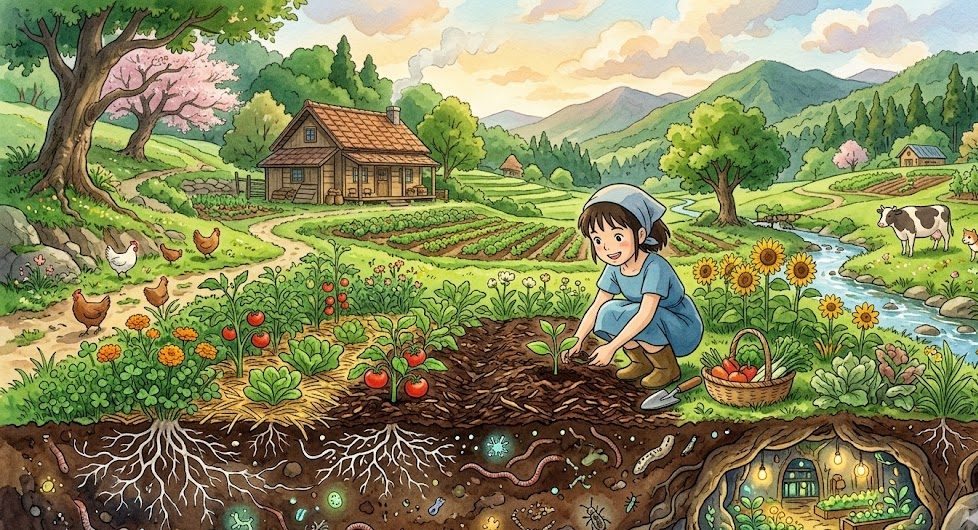
In the world of modern agriculture, we are often obsessed with what we can see: the towering stalks of corn, the bright red of a ripening tomato, or the sheer acreage of a golden wheat field. But if you talk to the most successful, climate-resilient farmers today, they will tell you that the real farm—the one that actually matters—is the one you cannot see.
Welcome to the world of “Hidden Farming.” It isn’t a secret plot of land; it is a philosophy of working with the unseen forces of nature to create abundance. By shifting our focus from industrial “input-heavy” methods to the hidden biological machinery of the earth, we are unlocking a new era of sustainable, high-yield, and environmentally healing agriculture.
The Soil Microbiome: The Real Workforce
When we look at a patch of dirt, we often see a static medium. In reality, healthy soil is a bustling, high-speed metropolitan area of microorganisms. This is the first level of hidden farming.
Billions of fungi, bacteria, and protozoa are working around the clock to break down organic matter and turn it into plant-available nutrients. In traditional chemical-heavy farming, we often destroy this workforce with synthetic fertilizers and pesticides. When we transition to natural farming—using methods like compost, bio-cultures (like Jeevamrit), and mulch—we are essentially “hiring” this workforce to do the heavy lifting for us.
Plants obtain about 98% of their nutritional needs from the air, water, and sunlight. The remaining 2% comes from the soil. When the soil biology is healthy, that 2% is delivered with perfect efficiency. This is why “hidden” farmers don’t need expensive chemical inputs; they have a living, self-sustaining factory beneath their feet.
The Power of the “Hidden” Cover
One of the most effective techniques in this movement is the use of cover crops and mulching. To the untrained eye, a “messy” farm covered in organic matter might look neglected. To a regenerative farmer, that layer of mulch is a goldmine.
- Micro-climate regulation: That layer of leaves, straw, or green biomass keeps the soil cool during the scorching summer heat and insulates it during cold snaps.
- Moisture retention: Bare soil is exposed to the sun, which evaporates precious water. Hidden farming practices ensure the soil is always “dressed,” trapping moisture and reducing the need for irrigation.
- Weed suppression: By keeping the ground covered with beneficial plants or organic matter, we hide the soil from sunlight, preventing invasive weeds from germinating.
The Underground Frontier
While soil biology represents the “micro” version of hidden farming, there is also a “macro” trend emerging: Underground Farming.
In cities where land is scarce and climates are becoming unpredictable, innovators are moving into abandoned bunkers, repurposed parking garages, and old mining tunnels. By using Controlled Environment Agriculture (CEA) and vertical hydroponics, these farms exist entirely out of sight of the public.
These underground farms aren’t just a novelty; they are a solution to food security in hostile environments. Whether it’s a desert region or a tundra, by moving underground, farmers can insulate crops from erratic weather patterns, drastically reduce water waste, and eliminate the need for chemical pesticides because the environment is completely sealed and controlled.
Why “Hidden” Agriculture is the Future
The move toward these invisible, nature-aligned processes is not just a trend—it is a necessity. Here is why the “hidden” approach is winning:
1. Resilience Against Climate Change
Conventional farming is fragile. It relies on specific chemical timing and perfect weather. Natural, soil-focused farming is resilient. Because it prioritizes high levels of organic matter, the soil acts like a sponge, holding onto water during droughts and managing drainage during floods.
2. Economic Independence
Every time a farmer buys a bag of synthetic fertilizer or a jug of herbicide, they are tethered to the global supply chain, subject to fluctuating prices and corporate dependency. Hidden farming focuses on on-farm inputs—manures, local crop varieties, and microbial inoculants. It keeps the profit on the farm rather than sending it to chemical companies.
3. Human Health and Nutrient Density
There is a growing body of evidence suggesting that food grown in biologically active, mineral-rich soil is more nutrient-dense. When we stop poisoning the soil with harsh chemicals, we stop the bioaccumulation of toxins in our food chain. The result is produce that doesn’t just look better—it is functionally better for our bodies.
How to Get Started: The Hidden Mindset
You don’t need a massive commercial operation to start “hidden farming.” Whether you have a backyard garden, a rooftop plot, or a few acres, you can begin today:
- Stop the Tilling: Tilling disrupts the fungal networks (mycorrhizae) that act as the internet for plants, helping them share nutrients. Minimize or eliminate tilling to keep the soil structure intact.
- Diversify Your Life: Nature never grows a monoculture. Rotate your crops, mix flowers with vegetables, and invite biodiversity back onto your land. The more diverse the ecosystem, the less likely you are to have a pest outbreak.
- Feed the Microbes: Use compost, organic mulch, and biological sprays to feed the life in the soil, not just the plants on the soil.
Conclusion: The Quiet Revolution
The most powerful change in agriculture is currently happening beneath the surface, hidden from plain view. It is a transition from an extractive, industrial mindset to a regenerative, biological one.
We are finally realizing that the Earth is not an empty pot to be filled with chemicals, but a living, breathing partner. By embracing the “hidden” side of farming—the soil biology, the micro-climates, and the ecological wisdom—we are not just growing food; we are growing a future that can sustain generations to come.
The next time you walk past a farm, don’t just look at the crops. Look at the health of the soil, the diversity of the insects, and the moisture in the ground. That is where the real work happens. That is the hidden harvest.