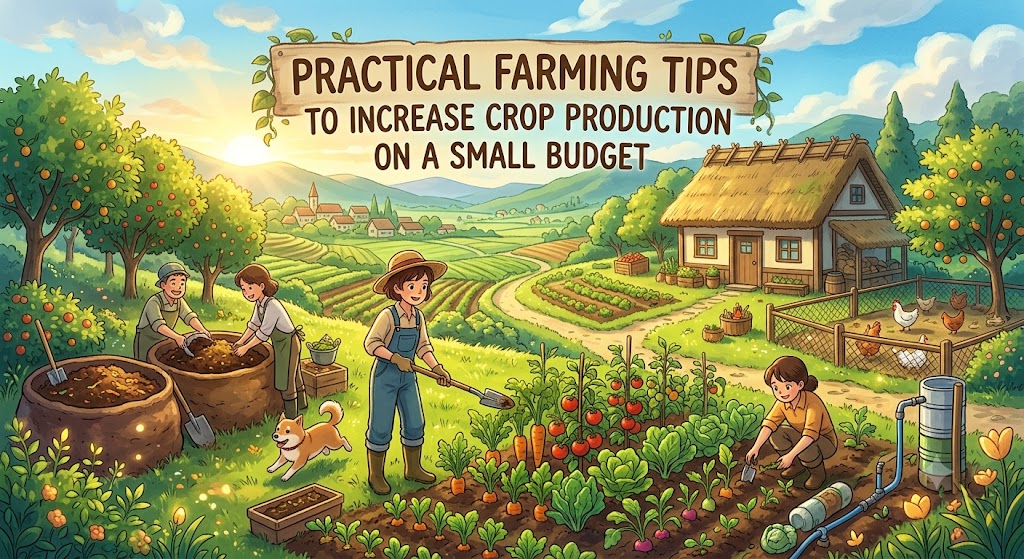
Farming Smarter Doesn’t Have to Cost More
Many farmers believe that increasing crop production requires expensive machinery, premium fertilizers, or large financial investments. In reality, some of the most effective improvements come from better planning, efficient resource management, and practical farming techniques that cost very little.
Whether you own a small plot of land or manage a family farm, making the right decisions at the right time can significantly improve productivity while keeping expenses under control. The key is to maximize the value of every seed, every drop of water, and every hour of work.
The following practical tips can help farmers achieve better harvests without stretching their budgets.
Create a Seasonal Farm Plan Before Planting
Successful farming begins long before seeds go into the ground.
Prepare a simple seasonal plan that includes:
- Crops to be planted
- Seed requirements
- Fertilizer schedule
- Irrigation plan
- Expected planting dates
- Harvest timeline
Planning ahead reduces unnecessary purchases and prevents costly delays during the growing season.
Invest in Healthy Soil Instead of Expensive Inputs
Healthy soil is one of the best long-term investments a farmer can make.
Improve soil naturally by using:
- Compost
- Farmyard manure
- Vermicompost
- Crop residues
- Green manure crops
These materials improve soil structure, increase nutrient availability, and help retain moisture, reducing the need for costly chemical fertilizers.
Buy Quality Seeds, Not More Seeds
Using poor-quality seeds often leads to weak germination and uneven crop growth.
Choose seeds that are:
- Certified
- Disease-resistant
- Suitable for your local climate
- Fresh and properly stored
A smaller quantity of high-quality seeds usually produces better results than a larger quantity of low-quality seeds.
Save Water With Simple Irrigation Practices
Water is one of the most valuable farm resources.
You can improve irrigation efficiency by:
| Practice | Benefit |
|---|---|
| Water early in the morning | Reduces evaporation |
| Apply mulch | Conserves soil moisture |
| Irrigate only when needed | Prevents water waste |
| Repair leaking pipes | Saves water and money |
| Improve drainage | Prevents root damage |
Efficient watering reduces costs while supporting healthy crop growth.
Grow Crops That Match Your Local Conditions
Instead of choosing crops based only on market trends, select varieties that naturally perform well in your region.
Consider:
- Climate
- Soil type
- Rainfall
- Growing season
- Water availability
Locally adapted crops often require fewer inputs and produce more reliable yields.
Control Weeds Before They Become a Problem
Young weeds compete aggressively with crops for nutrients, sunlight, and water.
Affordable weed management methods include:
- Hand weeding
- Mulching
- Crop rotation
- Timely cultivation
- Cover crops
Removing weeds early is much easier and less expensive than dealing with heavy infestations later.
Use Farm Waste as a Valuable Resource
Many useful farming materials are already available on the farm.
Examples include:
- Crop residues for mulch
- Animal manure for compost
- Kitchen waste for organic fertilizer
- Fallen leaves for soil improvement
Recycling farm waste reduces input costs while improving soil fertility.
Rotate Crops Every Season
Growing the same crop continuously can reduce soil fertility and encourage pests.
Crop rotation offers several advantages:
- Better nutrient balance
- Reduced pest pressure
- Healthier soil
- Improved yields
- Lower fertilizer requirements
Even a simple rotation plan can improve long-term productivity.
Inspect Crops Regularly
Walking through the field every day helps identify problems before they become serious.
Look for:
- Insect damage
- Yellow leaves
- Wilting plants
- Nutrient deficiencies
- Weed growth
- Disease symptoms
Early action is usually less expensive than correcting severe damage.
Encourage Natural Pollinators
Pollination directly influences the production of many fruits and vegetables.
Support pollinators by:
- Growing flowering plants
- Avoiding unnecessary pesticide use
- Providing clean water
- Preserving natural habitats
Healthy pollinator populations contribute to higher crop yields naturally.
Keep Farming Tools Well Maintained
Simple tool maintenance saves money over time.
Regularly:
- Sharpen blades
- Clean equipment after use
- Store tools in dry places
- Repair damaged handles
- Lubricate moving parts
Well-maintained tools work more efficiently and last much longer.
Keep Simple Farm Records
Recording farm activities helps improve future decisions.
Track information such as:
- Planting dates
- Rainfall
- Fertilizer applications
- Pest outbreaks
- Harvest quantities
- Production costs
These records help identify successful practices and reduce unnecessary spending.
Focus on Gradual Improvements
Trying to change everything at once can become expensive and difficult to manage.
Instead:
Year 1
Improve soil health.
Year 2
Increase irrigation efficiency.
Year 3
Introduce crop rotation.
Year 4
Expand organic farming practices.
Small improvements each season create lasting progress without placing financial pressure on the farm.
Budget-Friendly Farming Checklist
Before each planting season, make sure you can answer “Yes” to these questions:
✔ Have I prepared the soil properly?
✔ Are my seeds suitable for local conditions?
✔ Is my irrigation plan ready?
✔ Have I arranged organic fertilizers?
✔ Do I have a weed management strategy?
✔ Are my farming tools ready?
✔ Have I planned crop rotation?
✔ Am I keeping farm records?
Completing this checklist helps prevent unnecessary expenses throughout the season.
Costly Mistakes to Avoid
Many production losses happen because of preventable mistakes.
Avoid:
- Buying cheap, poor-quality seeds
- Overusing fertilizers
- Ignoring soil preparation
- Delaying weed control
- Excessive irrigation
- Poor crop spacing
- Neglecting field inspections
- Failing to plan before planting
Preventing these mistakes is often more profitable than trying to fix them later.
Final Thoughts
Improving crop production does not always require a larger budget. Careful planning, healthy soil, quality seeds, efficient irrigation, crop rotation, regular field inspections, and smart use of available resources can dramatically increase farm productivity while keeping costs under control.
The most successful farmers are not always those who spend the most—they are the ones who manage their resources wisely. By applying these practical farming tips consistently, even small-scale farmers can achieve healthier crops, higher yields, and stronger profits without making major financial investments.
Frequently Asked Questions
1. Can small-budget farmers still achieve high crop yields?
Yes. Efficient soil management, quality seeds, proper irrigation, and timely crop care can significantly improve yields without large investments.
2. What is the most affordable way to improve soil fertility?
Using compost, farmyard manure, crop residues, and green manure crops are among the most cost-effective methods.
3. Why is planning important before planting?
A seasonal farm plan helps reduce waste, control expenses, and ensure that essential resources are available when needed.
4. How often should crops be inspected?
Daily or frequent field inspections help detect pests, diseases, and nutrient deficiencies before they cause major losses.
5. What is the biggest money-saving tip for farmers?
Maintaining healthy soil and preventing problems through regular monitoring usually saves more money than correcting issues after they become severe.