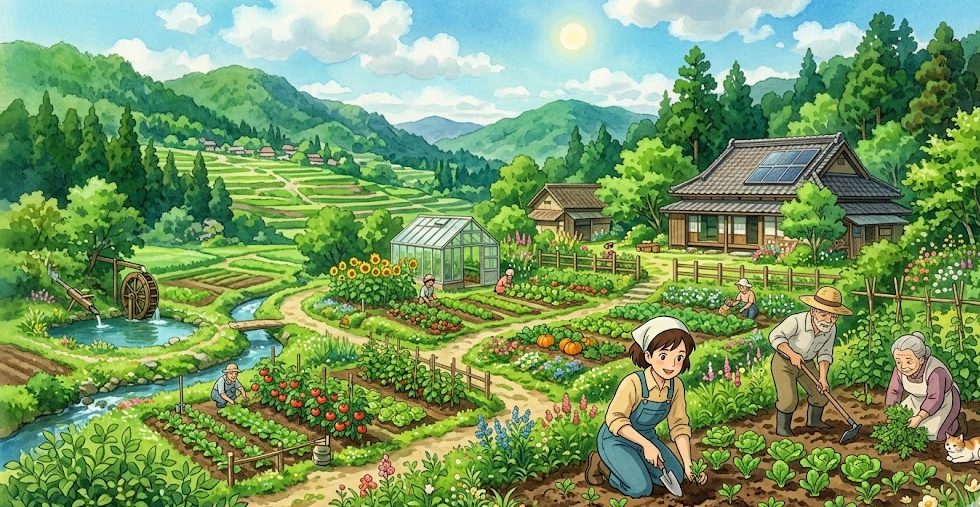
In an era where agricultural inputs are becoming increasingly expensive and environmental concerns are at an all-time high, the shift toward sustainable farming is no longer just a trend—it is a necessity for profitability and longevity. Farmers worldwide are realizing that the “conventional” model of intensive chemical usage is reaching a point of diminishing returns.
To thrive, you must transition to a system that works with nature rather than against it. This guide provides a deep dive into the natural methods and practical planning required to build a resilient, high-yield, and AdSense-friendly farming operation.
The Philosophy of Sustainable Agriculture
Sustainable farming is defined by the ability to produce food indefinitely without depleting the natural resources upon which production depends. It is a holistic approach that views the farm as a living ecosystem. By focusing on Natural Protection and Practical Farming habits, you create a self-sustaining cycle where the soil supports the crop, and the crop, in turn, supports the farm’s financial health.
Why Sustainability Equals Profitability
Many beginners fear that sustainable methods result in lower yields. The reality is quite the opposite. While it may take a few seasons to restore soil health, the long-term benefits include:
- Reduced Input Costs: By making your own organic fertilizers and practicing biological pest control, you significantly cut down on recurring chemical expenses.
- Market Premium: Consumers are increasingly willing to pay a higher price for sustainably grown or organic produce.
- Resource Independence: You become less vulnerable to supply chain disruptions and volatile fertilizer prices.
Pillar 1: Natural Methods for Soil Regeneration
The soil is the engine of your farm. If the engine is damaged, no amount of water or sunlight can fix the output.
1. The Art of Composting
Composting is the cornerstone of natural farming. It turns farm waste, crop residues, and animal manure into “black gold.” A well-managed compost pile provides essential macronutrients and beneficial microbes that help plants resist diseases.
- Pro Strategy: Implement a “hot” composting system to ensure that weed seeds and pathogens are killed before the compost is applied to your fields.
2. Cover Cropping and Green Manure
Never leave your soil bare. Exposed soil loses moisture rapidly and is susceptible to erosion. By planting cover crops (like legumes or clover) during off-seasons, you fix nitrogen in the soil naturally, suppress weeds, and improve soil structure.
3. Biological Pest Control (Natural Protection)
Instead of reaching for a synthetic pesticide, aim to build a farm that controls itself. This involves:
- Companion Planting: Pairing plants that deter pests (e.g., Marigolds near tomatoes) or attract beneficial insects.
- Predatory Habitat: Planting hedgerows or wild flower strips to house ladybugs, spiders, and predatory wasps that eat aphids and other harmful insects.
Pillar 2: Practical Farming Plans for Efficiency
Even the best natural methods will fail if they are not managed through a robust Session Plan. A professional farm layout needs to be data-driven and organized.
Developing a Seasonal Roadmap
Your farming calendar should be divided into specific, actionable phases:
- Preparation Phase: Soil testing, organic amendment application, and seed selection.
- Growth Phase: Daily monitoring of irrigation, organic nutrient application, and pest scouting.
- Harvest/Post-Harvest Phase: Proper storage and logistics to reduce post-harvest losses, which can account for up to 30% of total revenue.
Water Conservation Techniques
Water is your most precious input. Practical farming demands high-efficiency irrigation:
- Drip Irrigation: Delivers water directly to the root zone, reducing waste by up to 60%.
- Mulching: Applying a thick layer of straw or wood chips retains soil moisture, reduces evaporation, and regulates soil temperature.
Integrating AI and Smart Technology
As an entrepreneur, you should leverage modern AgriTech to bridge the gap between traditional methods and modern efficiency.
- Sensor-Based Monitoring: Even in a small operation, low-cost soil moisture sensors can help you avoid over-watering.
- Digital Record Keeping: Use basic spreadsheets or dedicated apps to track which plots are yielding the highest profit margins. This allows you to scale what works and discard what doesn’t.
Building a “Resilient Farm” Model
To make your farming business truly “AdSense-friendly” and profitable, you must move toward a diversified model. Don’t put all your eggs in one basket.
The Integrated Approach:
- Combine Crop Farming with a small amount of Poultry or Goats. The manure serves as an immediate, high-quality fertilizer for your crops, and the animals can be sold for additional revenue.
- Implement Hydroponics or Vertical Farming for high-value herbs or exotic vegetables that can provide consistent cash flow regardless of the outside season.
Challenges and How to Overcome Them
Transitioning is rarely a smooth road. You may encounter:
- Initial Yield Dips: During the conversion from chemical to natural, your crops may struggle briefly as the soil ecosystem rebalances. Patience is key.
- Labor Intensity: Natural farming often requires more hands-on work than spraying chemicals. This is why a Practical Plan is essential—you must automate tasks where possible and focus your labor on high-value activities.
Conclusion: Planting for the Future
Sustainable farming is not just a technique; it is a mindset. It requires you to look beyond the immediate harvest and consider the health of your land five, ten, or twenty years from now. By mastering natural soil building, prioritizing biological protection, and following a disciplined operational plan, you position yourself as a leader in the modern agricultural space.
The farms of the future are not just places of production—they are hubs of innovation, efficiency, and sustainability. Start small, track your data, stay consistent, and watch your farm grow into a thriving, profitable enterprise.