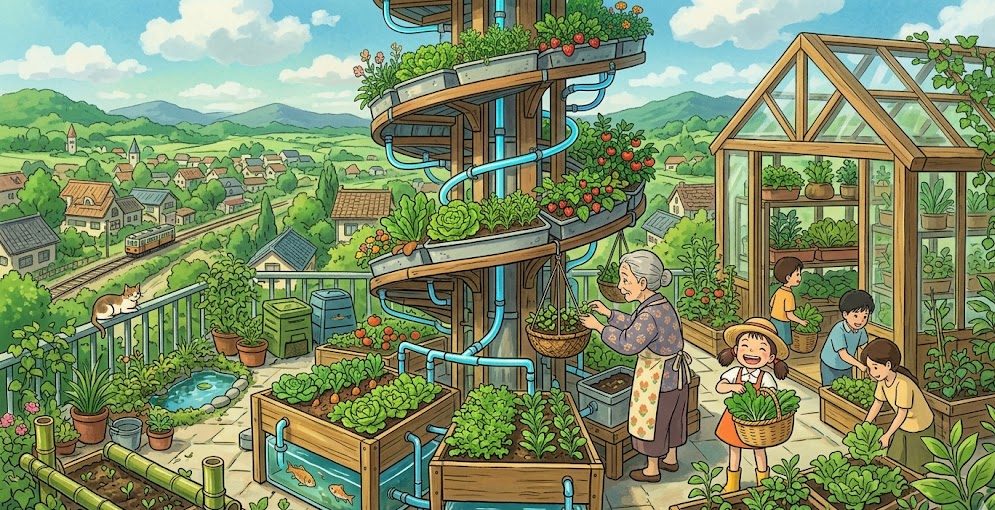
The image of a farmer—overalls, a wide-brimmed hat, and acres of sun-drenched soil—is becoming a vintage postcard. While traditional agriculture remains the backbone of our food system, a quiet, high-tech, and incredibly green revolution is moving indoors.
As urbanization peaks and climate patterns become increasingly unpredictable, we are witnessing the rise of “Invisible Agriculture.” These are innovative methods like vertical gardens, hydroponic shelves, and terrace ecosystems that allow city dwellers to grow premium produce in spaces no larger than a closet.
If you’ve ever wanted to harvest crisp romaine lettuce from your hallway or gourmet mushrooms from your basement, here is how the future of farming is coming home.
1. Vertical Gardening: Farming Up, Not Out
The most significant limitation in urban areas is horizontal space. Vertical gardening flips the script by utilizing the Y-axis. Instead of rows of crops stretching across a field, plants are stacked in layers.
Why It’s Innovative:
- Space Efficiency: You can grow up to 10 times the amount of produce in the same footprint as traditional gardening.
- Micro-Climate Control: By growing vertically indoors, you can control the light, temperature, and humidity for every “floor” of your green tower.
- The Aesthetic Factor: Beyond food, vertical “living walls” act as natural air purifiers and sound insulators for modern apartments.
From DIY PVC pipe towers to sleek, automated Aeroponic systems that mist roots with nutrient-rich water, vertical gardening is turning blank walls into literal salad bars.
2. Hydroponics and Aquaponics: The End of Soil?
It sounds like science fiction, but you don’t actually need dirt to grow a plant. Soil is simply a medium that holds nutrients; if you deliver those nutrients directly to the water, the plant grows faster and cleaner.
Hydroponics
In a hydroponic system, plant roots are submerged in a nutrient-rich water solution. Because the plant doesn’t have to “search” for nutrients in the soil, it puts all its energy into growing leaves and fruit.
- The Result: Growth rates are often 30-50% faster than soil-based plants.
Aquaponics: The Ultimate Ecosystem
This is where it gets truly fascinating. Aquaponics combines aquaculture (raising fish) with hydroponics.
- The Fish: Produce waste (ammonia).
- The Bacteria: Convert that waste into nitrates.
- The Plants: Absorb the nitrates as fertilizer, effectively cleaning the water for the fish.
It is a closed-loop system that uses 90% less water than traditional farming because the water is constantly recycled.
3. Terrace and Rooftop Farming: Reclaiming the Concrete Jungle
For those with access to a roof or a balcony, terrace farming is the bridge between traditional gardening and high-tech urban ag. However, modern terrace farming goes beyond just putting a few pots on the ground.
Innovative Rooftop Techniques:
- Sub-Irrigated Planters (SIPs): These “self-watering” containers use a reservoir at the bottom to allow plants to drink as much as they need through capillary action, preventing the common “sun-baked” death of rooftop plants.
- Modular Green Roofs: Lightweight, interlocking trays that can be installed over waterproof membranes. They don’t just grow food; they insulate the building, lowering cooling costs in the summer.
- Bee-Friendly Corridors: Urban terrace farmers are increasingly integrating “pollinator pockets” to support declining bee populations, ensuring their urban tomatoes actually get pollinated.
4. Indoor Mushroom “Farms”: The Dark Horse of Agriculture
While most indoor farming focuses on light, a growing subculture is focusing on the dark. Mycology (the study of fungi) has made it possible to grow gourmet mushrooms like Oyster, Lion’s Mane, and Shiitake in small bags of sawdust or coffee grounds.
Mushroom farming is arguably the most sustainable form of indoor agriculture because it uses upcycled waste. You can turn your morning coffee grounds into a harvest of protein-rich mushrooms in less than three weeks. It requires no sunlight and very little space, making it perfect for under-the-sink setups.
5. The Role of Technology: Smart Sensors and AI
What makes these methods “innovative” isn’t just the physical setup—it’s the “brain” behind them. We are entering the era of Smart Farming at home.
- LED Grow Lights: Modern LEDs can mimic specific “light recipes.” For example, blue light encourages leafy growth, while red light triggers flowering and fruiting.
- IoT Sensors: Small devices can now monitor the pH level of your water, the moisture of your soil, and the CO2 levels in your room, sending an alert to your phone when your plants are “thirsty.”
- Automation: From automated nutrient dosers to timers that manage the “sun” cycle, you can now run a mini-farm even if you have a hectic 9-to-5 schedule.
The Benefits: Why Should We Care?
Transitioning to these “unseen” farming methods isn’t just a hobby; it’s a response to global challenges.
| Benefit | Description |
|---|---|
| Food Security | You aren’t dependent on long supply chains or grocery store shortages. |
| Zero Food Miles | The distance from “farm to table” is measured in footsteps, not miles, reducing your carbon footprint. |
| Nutrient Density | Produce loses nutrients the moment it’s harvested. Eating a pepper seconds after picking it gives you the maximum vitamin hit. |
| Chemical-Free | You have 100% control over what goes into your food. No pesticides, no wax coatings, no “mystery” sprays. |
Export to Sheets
Getting Started: A Micro-Guide
You don’t need a PhD in botany to start. Here is a simple ladder of entry:
- Level 1 (The Window Sill): Start with microgreens or herbs in small pots. They are hard to kill and provide instant gratification.
- Level 2 (The Hydro-Kit): Buy a countertop hydroponic system (like an AeroGarden). It manages the light and water for you.
- Level 3 (The Vertical Build): Install a wall-mounted felt pocket planter or a DIY PVC tower on your balcony.
- Level 4 (The Full Cycle): Explore small-scale aquaponics or a dedicated indoor grow tent with high-intensity LEDs.
Final Thoughts: The Future is Hyper-Local
The future of food isn’t just in the hands of giant corporations; it’s in our kitchens, on our balconies, and against our living room walls. By embracing innovative methods like vertical gardening and indoor hydroponics, we turn our living spaces into productive ecosystems.
We are moving away from being mere consumers and becoming “Prosumers”—people who produce what they consume. In a world of rising prices and environmental uncertainty, there is no greater luxury than a fresh harvest from your own home.
“The best time to plant a tree was 20 years ago. The second best time is now—even if that ‘tree’ is a head of lettuce in a hydroponic tube.”
Are you ready to turn your “dead space” into a living farm? The green revolution is waiting just inside your front door.