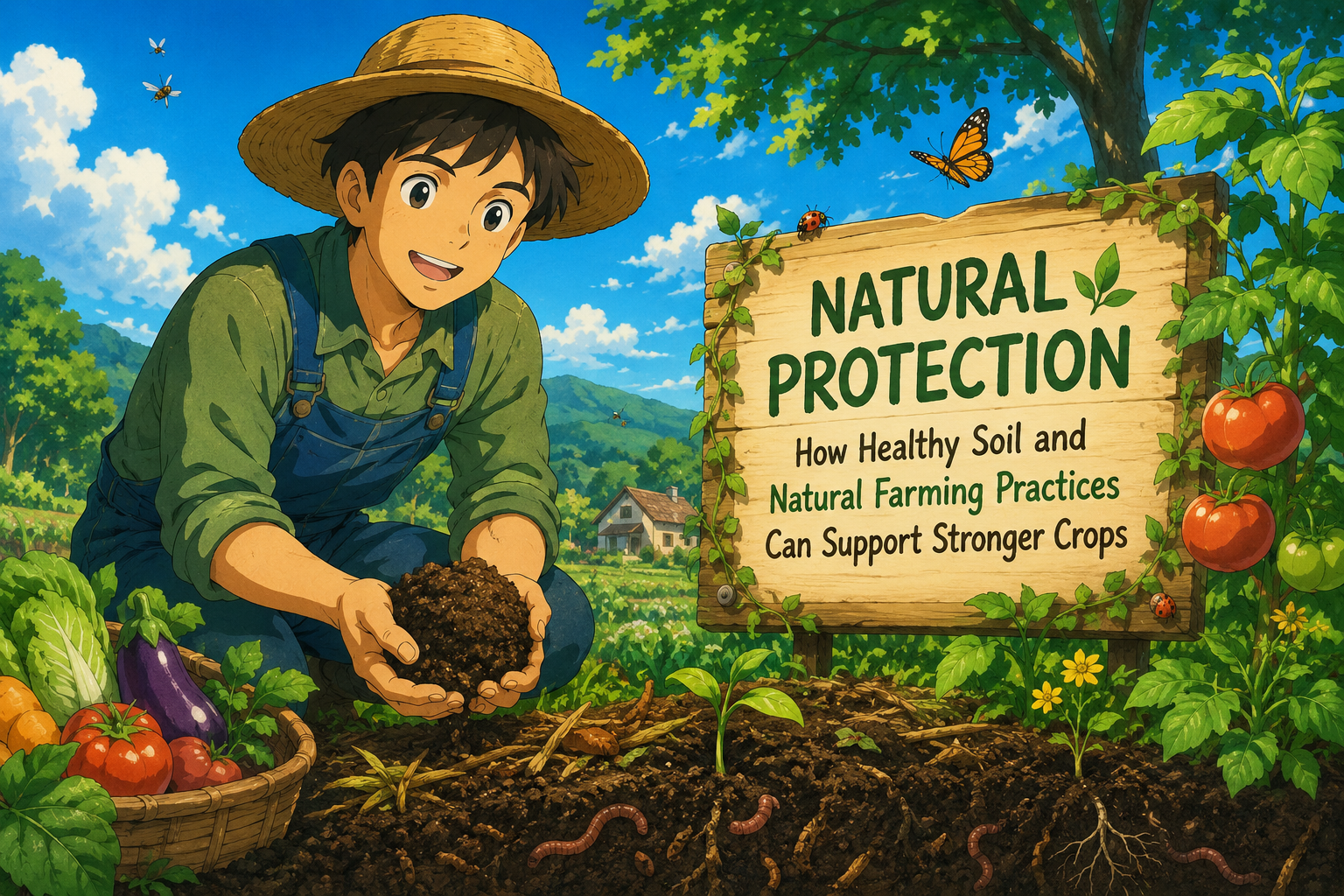
If you had walked onto my farm a decade ago, you would have seen a very different operation—and a very stressed-out farmer. Back then, my approach to crop protection was entirely reactive. If I saw a bug, I sprayed it. If a plant looked yellow, I dumped synthetic nitrogen on it. I was fighting a never-ending war against nature, and honestly, nature was winning. My input costs were through the roof, and my yields were stubbornly average.
The turning point came during a particularly brutal season of blight. While my chemically treated fields struggled, a small, neglected patch of heirloom tomatoes growing near my compost pile—where I had dumped organic matter and left the soil undisturbed—thrived. They were vibrant, untouched by disease, and crawling with beneficial insects.
That was my lightbulb moment. For years, I had been treating the symptoms. I needed to start treating the system.
Over the last ten years, I’ve completely overhauled how I farm. I learned that the ultimate pesticide, fungicide, and fertilizer isn’t sold in a plastic jug; it is built into the ground beneath our boots. Here is how focusing on healthy soil and natural farming practices builds an immune system for your entire farm.
The Paradigm Shift: Dirt vs. Soil
The first thing I had to unlearn was the idea that soil is just a structural anchor for roots to hold onto.
Dirt is d***. It is just crushed rocks and minerals. Soil is alive. It is a bustling, microscopic metropolis.
A single handful of healthy, organic soil contains more living organisms than there are human beings on planet Earth. This includes bacteria, nematodes, and, most importantly, mycorrhizal fungi. When we nurture this “soil food web,” we aren’t just feeding the plants; we are hiring an underground army to protect them.
Field Note 1: The Fungal Highway and Natural Immunity
In my early years, I tilled my fields ruthlessly. It looked clean and uniform, but I was unknowingly destroying the natural infrastructure of the soil.
When you leave the soil relatively undisturbed (a practice known as low-till or no-till farming), mycorrhizal fungi form massive, thread-like networks called hyphae. These networks physically attach to your crops’ roots.
How it protects your crops: This fungal network acts as an extension of the plant’s root system, reaching deep into the earth to mine water and minerals (like zinc and phosphorus) that the plant couldn’t reach on its own. In exchange, the plant feeds the fungi liquid carbon (sugars) it produces through photosynthesis.
But here is the real magic: If a pest attacks a plant on one end of the field, that plant sends a chemical distress signal through the fungal network. The other plants in the network receive the warning and begin producing natural defensive chemicals—like enzymes that make their leaves taste bitter or toxic to insects—before the pests even arrive.
Field Note 2: The “Brix” Factor (Why Bugs Attack Weak Plants)
One of the most fascinating things I’ve learned in my decade of farming is that insects are nature’s garbage collectors. They are biologically programmed to attack weak, sick, or nutritionally deficient plants.
We measure a plant’s health by its “Brix level,” which is essentially the sugar and mineral density in the plant’s sap.
- Low Brix (Weak Soil): The plant has a watery sap containing incomplete proteins. To a pest like an aphid, this is an easily digestible, all-you-can-eat buffet.
- High Brix (Healthy Soil): The plant produces complex sugars and complete proteins. Most pests physically cannot digest these complex compounds. The sap acts almost like a poison to them, or the leaves become too thick and waxy for them to chew.
By focusing on natural farming practices—like adding rich compost, using green manures, and balancing soil minerals—you raise the Brix level of your crops. You aren’t just killing bugs; you are making your crops physically invisible or unappealing to them.
Field Note 3: Liquid Biology (Compost Teas)
If you want to rapidly accelerate your soil health, you have to move beyond just throwing compost on the ground. About six years ago, I started brewing aerated compost teas, and it changed the trajectory of my harvests.
Instead of buying chemical fungicides when conditions get wet and humid, I brew a massive batch of compost tea. This involves taking high-quality, biologically active compost and aerating it in water with a food source (like unsulfured molasses) for 24 hours. This multiplies the beneficial bacteria and fungi by the billions.
The Application: I spray this liquid biology directly onto the leaves of my crops (a foliar spray) and drench the soil. The beneficial microbes literally cover the surface of the leaves, eating the food sources that pathogenic fungi (like mildew or blight) need to survive. It is a biological shield. The bad guys simply have no room to land and grow.
Myths vs. Reality in Natural Farming
When I transitioned to natural farming, my neighbors thought I was crazy. There are a lot of misconceptions out there. Let’s clear a few up:
Myth: Natural farming means you just let weeds grow and hope for the best. Reality: Natural farming is incredibly intentional. It requires more observation and management than conventional farming, but less brute physical labor and chemical intervention. We manage weeds through cover cropping and dense planting, not by abandoning the field.
Myth: You can’t get high yields without synthetic fertilizers. Reality: It takes 2 to 3 years for the soil biology to recover from chemical dependency. During that transition, yields might dip slightly. But today, my yields consistently match or beat county averages, and because my input costs (fertilizers and sprays) are practically zero, my actual profit per acre is significantly higher.
Myth: Pests will destroy your crop if you don’t spray. Reality: By cultivating biodiversity above ground (planting hedgerows, flowers, and companion plants), you attract predatory insects like ladybugs, lacewings, and parasitic wasps. They do the pest control for free.
The Long Game
Farming with nature instead of against her is not a get-rich-quick scheme. It is a long-term investment in your greatest asset: your land.
When you rely on chemicals, you are essentially renting your soil’s fertility. The moment you stop paying for the fertilizer, the soil collapses. When you use natural farming practices—building organic matter, protecting the soil food web, and fostering biodiversity—you are buying your fertility outright. You are putting money in the biological bank.
After ten years of getting my hands dirty, the biggest lesson I can share is this: Your crops are only as resilient as the soil they grow in. Feed the soil, protect the biology, and I promise you, the soil will take care of the rest.