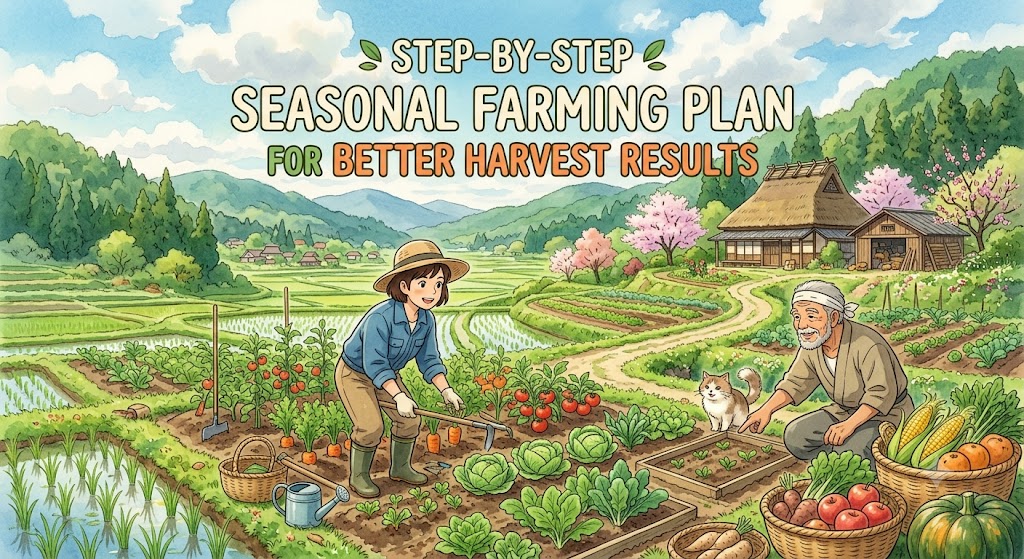
Successful farming is not just about planting seeds and waiting for harvest. Every growing season brings different weather conditions, soil requirements, pest challenges, and crop management tasks. Farmers who follow a well-organized seasonal farming plan are more likely to achieve healthy crops, higher yields, and better profits.
A seasonal farming plan helps farmers use their time, labor, and resources more efficiently. It reduces unnecessary expenses, minimizes crop losses, and ensures that each farming activity is completed at the right time. Whether you manage a small vegetable garden or a large commercial farm, careful seasonal planning can make a significant difference in your harvest results.
This guide explains how to plan your farming activities step by step throughout the year for maximum productivity.
Why Seasonal Planning Is Important
Agriculture depends heavily on timing. Delaying land preparation, irrigation, fertilization, or harvesting can reduce crop quality and yield.
A proper seasonal plan helps farmers:
- Prepare fields before planting
- Improve soil fertility
- Manage water efficiently
- Reduce pest and disease outbreaks
- Increase crop productivity
- Lower production costs
Good planning also helps farmers adapt to changing weather conditions and market demand.
Step 1: Assess Your Farm Before the Season Begins
Before planting, evaluate the current condition of your farm.
Inspect:
- Soil quality
- Irrigation systems
- Farm equipment
- Seed availability
- Previous crop performance
If possible, conduct a soil test to determine nutrient levels and pH. This information helps you select suitable crops and fertilizer requirements.
Proper planning before the season begins prevents costly mistakes later.
Step 2: Select the Right Crops
Choosing crops that match your climate, soil type, and market demand is essential.
Consider factors such as:
- Local weather conditions
- Water availability
- Growing season length
- Market prices
- Disease resistance
Planting suitable crop varieties improves survival rates and increases overall productivity.
Step 3: Prepare the Soil
Healthy soil provides the foundation for healthy crops.
Before planting:
- Remove weeds
- Add compost or organic manure
- Improve drainage if necessary
- Level the field
- Loosen compacted soil
Good soil preparation encourages strong root development and better nutrient absorption.
Step 4: Plan Irrigation Carefully
Water management is critical throughout the growing season.
Develop an irrigation schedule based on:
- Crop growth stage
- Rainfall
- Soil moisture
- Temperature
Avoid both overwatering and underwatering, as either can reduce yields.
Using drip irrigation or mulching can help conserve water while maintaining healthy plant growth.
Step 5: Monitor Crop Growth Regularly
Regular field inspections allow farmers to identify problems early.
Check crops for:
- Pest activity
- Disease symptoms
- Nutrient deficiencies
- Weed growth
- Water stress
Early action prevents small issues from becoming major crop losses.
Step 6: Apply Nutrients at the Right Time
Plants require different nutrients during different growth stages.
Use balanced fertilization practices by:
- Applying compost before planting
- Using organic fertilizers during growth
- Following soil test recommendations
- Avoiding excessive fertilizer use
Proper nutrient management improves both crop quality and yield.
Step 7: Manage Pests and Diseases Naturally
Healthy crops are less vulnerable to pests.
Effective management includes:
- Crop rotation
- Neem oil sprays
- Beneficial insects
- Field sanitation
- Removing infected plants
Integrated pest management reduces chemical dependence while protecting beneficial organisms.
Step 8: Harvest at the Right Time
Harvest timing affects crop quality, storage life, and market value.
Signs that crops are ready include:
- Proper color
- Full size
- Desired moisture level
- Mature fruits or grains
Harvesting too early or too late can reduce product quality and profitability.
Step 9: Post-Harvest Management
The work does not end after harvesting.
Good post-harvest practices include:
- Cleaning produce
- Proper drying
- Safe storage
- Sorting damaged products
- Preparing fields for the next season
Reducing post-harvest losses helps maximize farm income.
Seasonal Farming Checklist
| Farming Stage | Main Activities |
|---|---|
| Pre-Season | Soil testing, equipment maintenance, crop planning |
| Planting | Land preparation, seed selection, sowing |
| Growing Season | Irrigation, fertilization, weed and pest management |
| Mid-Season | Crop monitoring, disease prevention |
| Harvest | Timely harvesting and quality inspection |
| Post-Harvest | Cleaning, storage, field preparation for next season |
Tips for Better Harvest Results
To improve seasonal productivity:
- Keep detailed farm records.
- Use certified quality seeds.
- Monitor weather forecasts regularly.
- Rotate crops every season.
- Improve soil with organic matter.
- Maintain irrigation equipment.
- Learn from each growing season and adjust future plans.
Small improvements each season often lead to significant long-term gains.
Common Mistakes to Avoid
Avoid these errors that often reduce harvest quality:
- Delaying planting
- Ignoring soil health
- Overusing fertilizers
- Poor irrigation management
- Neglecting pest monitoring
- Harvesting at the wrong time
- Improper crop storage
Careful planning helps prevent these costly mistakes.
Conclusion
A successful harvest begins long before seeds are planted. By following a step-by-step seasonal farming plan, farmers can organize their work, reduce unnecessary expenses, and create better growing conditions throughout the year. From selecting the right crops and preparing healthy soil to monitoring plant growth and harvesting at the ideal time, every stage plays an important role in farm success.
Seasonal planning is not about making farming more complicated—it is about making every farming decision more effective. With consistent planning, proper resource management, and timely field operations, farmers can achieve healthier crops, improved yields, and a more profitable agricultural business.
Frequently Asked Questions
1. Why is seasonal planning important in farming?
It helps farmers complete important tasks at the right time, improving crop health and increasing yields.
2. What should be done before planting?
Farmers should test the soil, prepare the land, inspect equipment, and choose suitable crop varieties.
3. How often should crops be monitored?
Fields should be inspected at least two or three times each week during the growing season.
4. Can seasonal planning reduce farming costs?
Yes. Proper planning reduces waste, improves resource use, and prevents expensive mistakes.
5. Is seasonal farming planning useful for small farms?
Absolutely. Even small farms benefit from organized planning, better resource management, and timely farming practices.