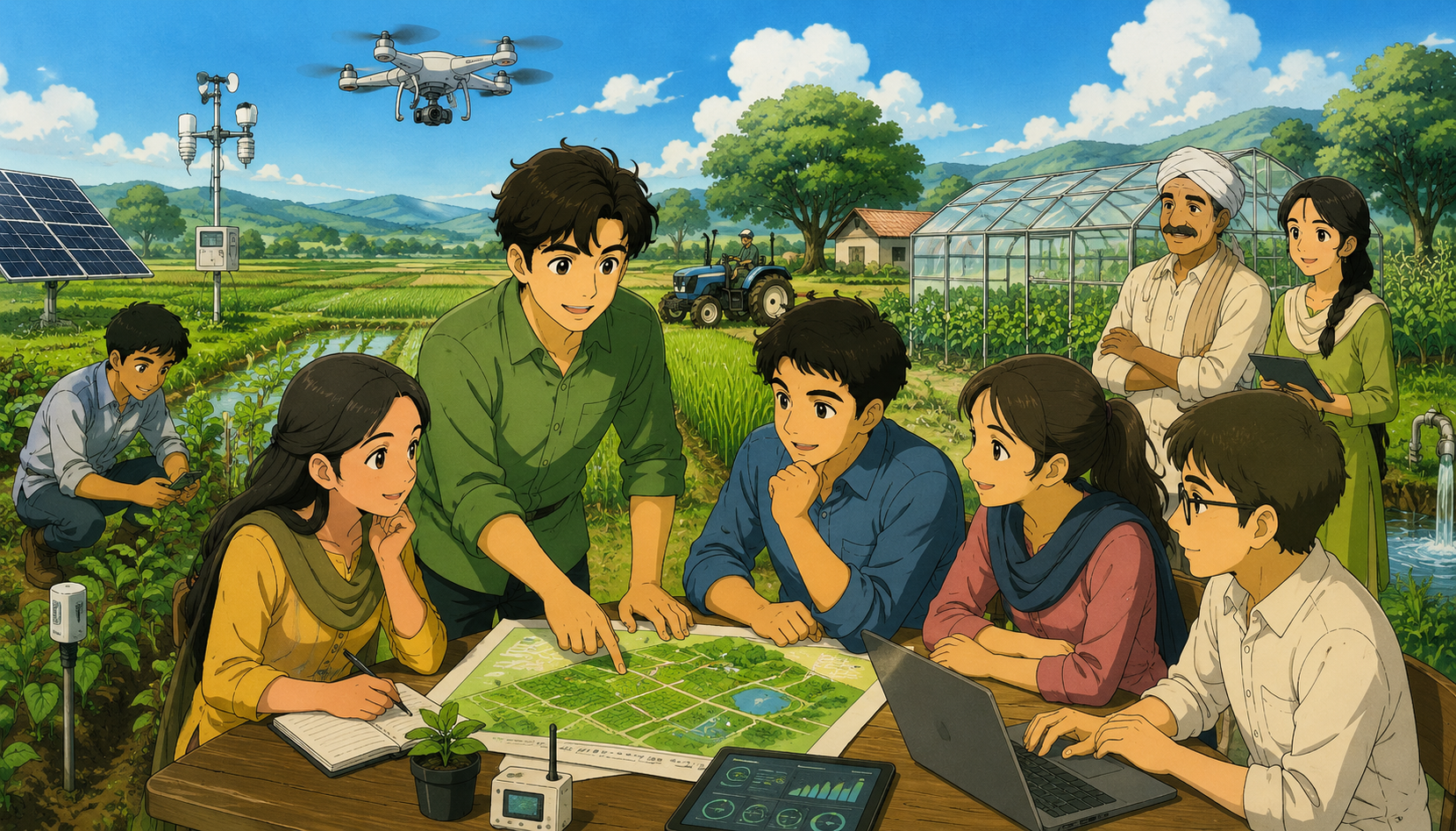
Agriculture has always been the backbone of human survival. For generations, farming relied heavily on intuition, tradition, and unpredictable weather patterns. But today, the rules of the field are changing. Technology is merging with traditional practices to create a new era of agriculture, one that is highly efficient, sustainable, and data-driven.
Stepping into this modern agricultural landscape can feel overwhelming. With so many new tools, from soil sensors to automated irrigation, where do you even begin? The secret to mastering these innovations is structured learning.
Whether you are a traditional farmer looking to upgrade your methods or a newcomer passionate about sustainable food production, having a clear roadmap is essential. This article breaks down a comprehensive session plan for learning smart farming, designed to guide you from basic concepts to modern agricultural success.
The Core of Smart Farming
Before jumping into the session plan, it helps to understand what smart farming actually means. At its heart, smart farming is the use of modern technology to increase the quantity and quality of agricultural products.
This does not mean replacing the farmer with robots. Instead, it is about giving the farmer better tools to make smarter decisions. By using technologies like Internet of Things (IoT) devices, climate control systems, and precise soil management techniques, farmers can use less water, reduce chemical fertilizers, and grow healthier crops.
Methods like hydroponics and vertical farming are prime examples of this shift, allowing growers to produce high yields in smaller spaces, completely independent of the traditional soil and weather constraints.
Step-by-Step Session Plan for Smart Farming Learning
To truly grasp modern agriculture, you need to break your learning into manageable stages. Here is a step-by-step session plan you can follow or use to train your farm staff.
Session 1: Mastering Soil and Water Basics
Technology cannot fix bad agronomy. Before introducing sensors, you must understand the foundation.
- Focus: Learn about soil health, pH levels, and nutrient cycles.
- Action: Practice taking proper soil samples and reading basic laboratory analysis reports. Understand how water retention works in different soil types.
Session 2: Introduction to Agri-Tech and Sensors
Once the foundation is set, introduce basic technology that monitors the environment.
- Focus: Understand how IoT sensors work in agriculture.
- Action: Learn to install and read data from basic soil moisture sensors and digital weather stations. This session should teach you how to track real-time conditions rather than relying on guesswork.
Session 3: Exploring Alternative Growing Methods
Traditional field farming is not the only way to grow. Modern agriculture heavily relies on controlled environments.
- Focus: Study hydroponics, aquaponics, and vertical farming structures.
- Action: Build or study a small-scale hydroponic system. Learn how to mix water-soluble nutrients and manage water pH levels, which is crucial for soil-less farming.
Session 4: Automation and Irrigation Control
Water is a precious resource, and smart farming aims to use it perfectly.
- Focus: Automated drip irrigation and fertigation (mixing fertilizers with irrigation water).
- Action: Set up a simple automated timer for a drip irrigation line. Learn how smart controllers adjust watering schedules based on the weather data collected in Session 2.
Session 5: Data Management and Farm Software
Collecting data is useless if you do not know how to read it.
- Focus: Farm management software and digital record-keeping.
- Action: Explore simple farm management applications. Practice logging crop growth stages, pest observations, and harvest yields to track your farm’s overall profitability.
A Real-Life Example: The Tech-Driven Tomato Farm
To see how this works in practice, look at a mid-sized family-owned tomato farm that recently transitioned to smart methods. For years, they watered their fields on a strict daily schedule, regardless of the actual soil conditions. This led to wasted water and occasional root diseases from overwatering.
After implementing a basic smart farming plan, they installed solar-powered soil moisture sensors across their fields. These sensors sent real-time data directly to the farmer’s smartphone. Instead of watering every morning, the irrigation system only turned on when the soil moisture dropped below a specific level.
The result? The farm reduced its total water usage by 30% in the first year. Because the plants were no longer stressed by overwatering, the overall tomato yield increased, and fertilizer runoff was practically eliminated. This is the true power of applying practical technology to agriculture.
Practical Tips You Can Apply Today
You do not need a massive budget to start integrating smart farming into your life. Here are a few practical tips to get you moving in the right direction:
- Start Small: Do not try to automate your entire farm on day one. Pick one specific problem, like water management or pest tracking, and solve that with technology first.
- Focus on ROI: Before buying any new tech, ask yourself how it will save you money or make you money. If a tool costs more to maintain than it saves in resources, it is not a smart investment.
- Keep Records Digitally: Move away from paper notebooks. Start using a simple spreadsheet or a free farm management app on your phone to track planting dates, weather, and harvest weights.
- Maintain Your Equipment: Sensors and automated valves live in harsh environments. Dust, water, and heat can damage them. Make routine cleaning and calibration a regular part of your weekly farm chores.
Common Mistakes to Avoid
As with any new industry, beginners often fall into a few predictable traps. Avoid these common mistakes to ensure your smart farming journey is smooth and profitable.
First, avoid buying technology just because it looks impressive. Drones and complex robotic harvesters are amazing, but they are often unnecessary for small to medium operations. Stick to tools that solve your specific daily challenges.
Second, never ignore the basic principles of agriculture. A computer cannot force a plant to grow if the basic environmental conditions are terrible. Technology enhances good farming practices; it does not replace them.
Finally, do not become overwhelmed by data. Having hundreds of data points about your greenhouse temperature is useless if you do not take action. Focus on a few key metrics—like soil moisture and daily sunlight—and learn to make confident decisions based on those numbers first.
Conclusion
The future of agriculture is undeniably tied to technology. By following a structured session plan, anyone can transition from traditional methods to highly efficient smart farming. It is a journey of continuous learning, starting with the basics of soil health and moving all the way up to automated climate control and data analysis.
Remember that the goal is not to complicate your daily routine, but to simplify your decision-making process. Start small, focus on practical solutions, and always keep the health of your crops at the center of your strategy. With patience and the right learning approach, agricultural success in the modern age is well within your reach.
Frequently Asked Questions (FAQs)
Q: Is smart farming only for large commercial farms? A: Not at all. Many smart farming technologies, like basic soil moisture sensors, automated drip irrigation timers, and smartphone tracking apps, are highly affordable and perfectly suited for small family farms or even large backyard gardens.
Q: Do I need a background in computer science to use smart farm tech? A: No. Most modern agricultural technology is designed to be user-friendly. App interfaces are usually as simple to use as standard social media or banking applications. If you can operate a smartphone, you can manage basic smart farming tools.
Q: What is the best smart farming technology for a beginner? A: The best starting point is usually automated irrigation paired with soil moisture sensors. It provides an immediate return on investment by saving water, reducing labor time, and preventing overwatering, which is a common cause of crop failure.
Q: Can smart farming methods be entirely organic? A: Yes. Smart farming is about efficiency and data, not just chemicals. In fact, by using precise data, organic farmers can better predict pest outbreaks, manage natural compost cycles, and reduce waste, making their organic practices even more successful.
Q: How does vertical farming fit into smart agriculture? A: Vertical farming relies entirely on controlled environments, making it a major pillar of smart agriculture. Because crops are grown indoors without natural soil or sunlight, smart systems automatically manage the LED lighting schedules, hydroponic nutrient delivery, and climate control to ensure perfect growing conditions year-round.