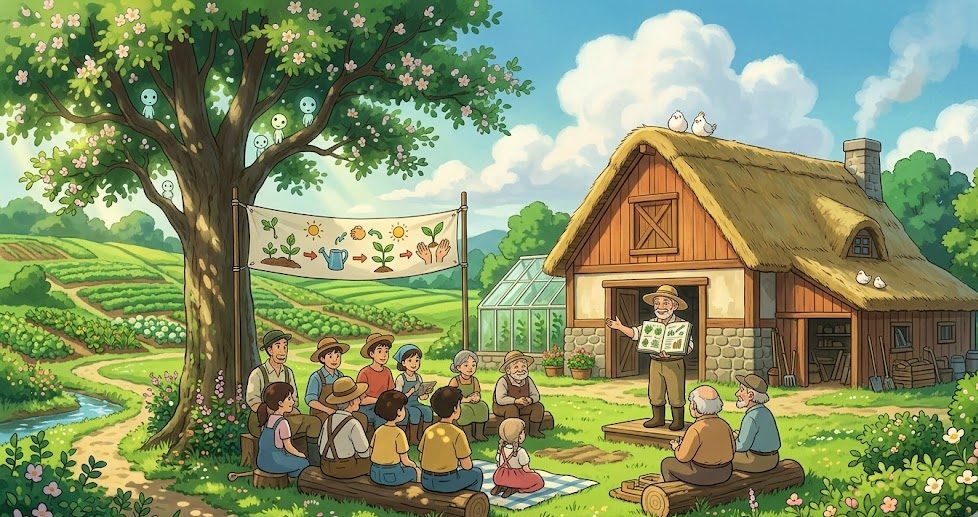
The agricultural landscape is evolving at a breakneck pace. Whether it is adopting regenerative farming practices, integrating smart ag-tech, or mastering modern agribusiness strategies, farmers and homesteaders are constantly seeking knowledge.
If you are an agricultural expert, extension officer, or ag-tech brand, hosting workshops and webinars is one of the most effective ways to share knowledge, build a community, and grow your brand. However, throwing together a few slides and hoping for the best won’t cut it. To truly impact your audience, you need a bulletproof blueprint.
This ultimate guide will walk you through creating a high-converting, highly engaging session plan for your next farming workshop or webinar.
Why Structure Matters in Agricultural Training
Farmers are incredibly busy people. Their time is literally money, often tied to weather windows and seasonal demands. If they invest 60 to 90 minutes into your webinar or travel miles to attend your workshop, your content needs to be highly organized, actionable, and easy to digest.
A well-structured session plan ensures:
- High Retention: Farmers can easily implement what they learn.
- Better Engagement: Interactive elements prevent “zoom fatigue” or afternoon drowsiness in physical workshops.
- Increased Trust: Professional delivery establishes you as a go-to authority in the agricultural niche.
Step 1: Pre-Session Planning (The Foundation)
Before you write a single slide, you need to define the boundaries of your session.
Define Your Target Audience
Are you speaking to generational row-crop farmers, urban market gardeners, or livestock producers? A corporate soybean farmer in the Midwest needs a completely different tone and data set than a small-scale organic vegetable grower.
Determine the Core Deliverable
What is the one thing your attendees should be able to do after your session?
- Bad Goal: “Teach them about soil health.”
- Good Goal: “Enable farmers to correctly read a soil test report and choose the right cover crop mix.”
Step 2: The Ideal Anatomy of a Farming Webinar (60-Minute Template)
Webinars are excellent for reaching a global or regional audience without travel constraints. Here is a proven, high-retention timeline for a 60-minute virtual session:
1. The Welcome and Grounding (0–5 Minutes)
- What to do: Welcome early arrivals, test audio/video, and use a casual icebreaker.
- Ag Tip: Ask attendees to type their location and what crops they grow into the chat box. This instantly builds community.
2. The Hook and the “Why” (5–12 Minutes)
- What to do: Introduce yourself briefly, but quickly pivot to why the topic matters right now.
- Ag Tip: Use real-world stakes. If you are teaching water conservation, display a recent drought map or a chart showing rising input costs. Show them the problem they are facing.
3. Core Content Delivery: The “How-To” (12–40 Minutes)
Break your main topic down into three distinct, bite-sized pillars.
- Pillar 1: The Science/Theory (Keep it brief).
- Pillar 2: The Practical Application (Equipment needed, step-by-step process).
- Pillar 3: Case Studies/Real-Life Examples (Show, don’t just tell).
4. Interactive Q&A Session (40–55 Minutes)
- What to do: Answer live questions. This is where the real trust is built.
- Ag Tip: Have a few “seeded” questions ready in case the audience is shy initially (e.g., “A question I often get from corn farmers is…”).
5. Clear Call to Action (55–60 Minutes)
- What to do: Give them the next steps. Do you want them to download a free planting calendar, buy a book, or sign up for a premium consulting service?
Step 3: The Anatomy of an In-Person Farming Workshop (Half-Day Template)
In-person workshops allow for hands-on learning that a screen simply cannot replicate. Here is a structure for a highly effective 4-hour field day or workshop:
| Time | Segment | Description |
|---|---|---|
| 08:30 AM | Registration & Coffee | Welcome folks with hot coffee and a chance to network. |
| 09:00 AM | Classroom Theory | Classroom session covering the concepts (keep slides minimal). |
| 10:15 AM | Coffee Break | Critical for farmer-to-farmer networking. |
| 10:30 AM | Live Demonstration | Head to the field/barn. Show the machinery, look at the soil, or handle the livestock. |
| 11:30 AM | Hands-On Practice | Let the attendees try it themselves under your supervision. |
| 12:15 PM | Wrap-Up & Lunch | Answer final questions over a shared meal. |
Export to Sheets
Step 4: Best Practices for Engaging an Agricultural Audience
To make your session a roaring success, keep these human-centric engagement strategies in mind:
Speak the Language of the Field
Avoid overly dense academic jargon unless you are speaking exclusively to researchers. Use terms your audience uses daily. Talk about bushels, yields, acreage, calibration, and ROI (Return on Investment).
Focus Heavily on ROI
Farming is a business with tight margins. Every strategy you introduce should ideally solve at least one of these three problems:
- How to save money (e.g., reducing fertilizer reliance).
- How to save time (e.g., automating irrigation).
- How to increase yield/profitability (e.g., high-value niche crops).
Use Visuals Over Text
Don’t read off your slides. Farmers are highly visual, spatial learners. Use high-quality photos of crops, step-by-step videos of machinery setups, simple infographics, and clear charts instead of blocks of text.
Step 5: Post-Session Follow-Up (Maximizing Value)
Your session plan doesn’t end when the webinar room closes or the attendees drive off your farm. The fortune is in the follow-up.
- Send a Resource Packet: Within 24 hours, email a PDF summary, a checklist, or links to the tools you mentioned.
- Provide the Recording: Digital replays are essential for farmers who might have been called away by an equipment breakdown or a sudden weather event.
- Gather Feedback: Send a simple 3-question survey to learn what they loved and what they want to learn about next.
Final Thoughts
Creating a successful farming workshop or webinar comes down to respecting your audience’s time and giving them practical, real-world solutions. By mapping out your session with a clear timeline, focusing on interactive elements, and providing actionable takeaways, you will build an engaged, loyal community of producers who look forward to every event you host.
Now, pick your topic, format your timeline using this guide, and go help your audience grow!