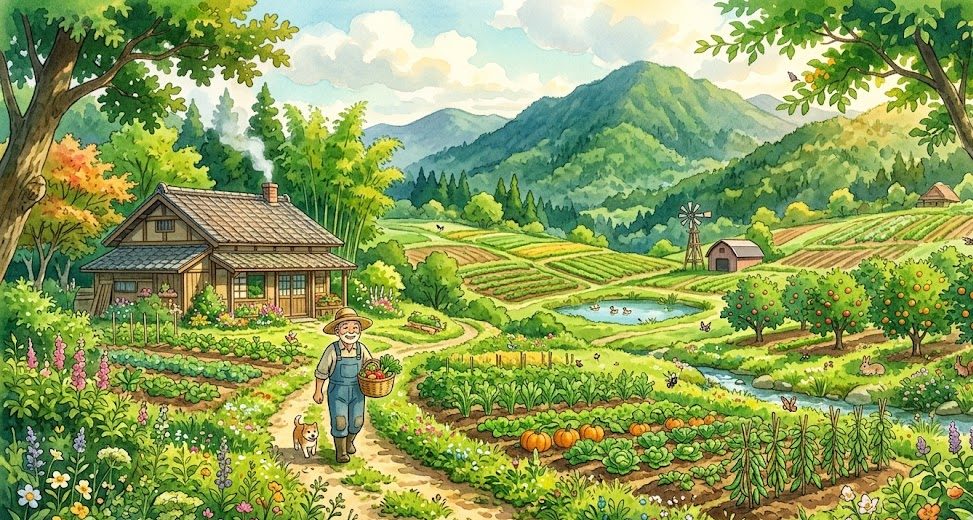
Modern agriculture has become a cycle of expensive chemicals and depleting soil health. But what if you could break free from this system and double your productivity using only what nature provides? Natural farming is not just a method; it is a blueprint for high-profit, low-maintenance success. By focusing on soil vitality and biological synergy, you can eliminate chemical costs entirely while maximizing your harvest quality.
Here are the seven hidden secrets to mastering natural farming and securing a sustainable future for your land.
1. The Living Soil: Beyond Just Dirt
The first secret is treating soil as a living organism rather than a medium for plants. Healthy soil is a goldmine of microbial activity. In natural farming, we avoid tilling, which preserves the delicate fungal networks (mycorrhizae) that help plants absorb nutrients. Instead of synthetic NPK, focus on “healing the soil” through fermented organic matter that feeds these microbes, creating a self-sustaining nutrient cycle.
2. Mulching: Nature’s Protective Blanket
Mulching is a cornerstone of practical farming that saves time and money. By covering the soil with organic waste like straw, dried leaves, or crop residues, you simulate the forest floor. This “blanket” performs three critical roles:
- Water Conservation: It drastically reduces evaporation, making it an essential water-saving technique.
- Weed Control: It naturally smothers weeds, eliminating the need for toxic herbicides.
- Nutrient Recycling: As the mulch decomposes, it turns into rich humus, feeding the soil directly.
3. The Power of Fermented Bio-Inputs
One of the best-kept secrets of high-yield natural farming is the use of liquid bio-fertilizers. Using local ingredients like cow dung, urine, jaggery, and pulse flour, farmers can create powerful microbial starters. These inputs act as a catalyst for growth, providing immediate nutrition to crops without the “burning” effect of chemical fertilizers. This approach ensures zero chemical costs while significantly boosting plant immunity.
4. Strategic Intercropping and Biodiversity
Monoculture (growing only one crop) invites pests and depletes specific nutrients. The secret to doubling your yield is diversity. By integrating high-value cash crops with nitrogen-fixing legumes, you create a “smart crop” environment. For example, planting marigolds among vegetables acts as a natural pest repellent, while tall crops provide shade for smaller, shade-loving varieties. This synergy ensures every inch of your land is productive.
5. Water Management through “Smart” Design
Practical farming requires “Smart Farming” innovations in irrigation. Instead of flood irrigation, which wastes water and leaches nutrients, natural farming uses techniques like “moistening” rather than “soaking.” By maintaining a consistent moisture level under the mulch, you create a stable micro-climate for roots, allowing plants to thrive even in harsh summer conditions.
6. Natural Pest Management (NPM)
Pests are often a sign of an unbalanced ecosystem. Instead of killing everything with pesticides, natural farming focuses on balance. By maintaining a “Farming Innovation Hub” on your land—such as small ponds for frogs or bird perches—you invite natural predators that keep pest populations in check. For active management, simple botanical extracts like neem or garlic-chili sprays provide effective protection without harming beneficial insects like bees.
7. Holistic Integration: Livestock and Crops
The ultimate blueprint for success is integrated farming. By combining dairy, poultry, or goat farming with your crops, you create a closed-loop system. Livestock provide the raw materials for bio-inputs, while crop residues serve as nutritious feed for the animals. This integration not only doubles your income streams but also ensures that your farm remains a self-sufficient ecosystem.
Conclusion: The Path to Financial Freedom
Natural farming is more than just an agricultural practice; it is a strategy for financial independence. By eliminating the heavy burden of chemical costs and focusing on “smart,” low-maintenance techniques, you can transform your farm into a digital and physical goldmine. Whether you are practicing micro-farming in a small space or managing large-scale cash crops, these secrets provide the foundation for long-term success.
Pro-Tip: Start small with one section of your land to see the results. As you witness the soil healing and your yields increasing, you can gradually transition your entire farm to this sustainable, high-profit model.