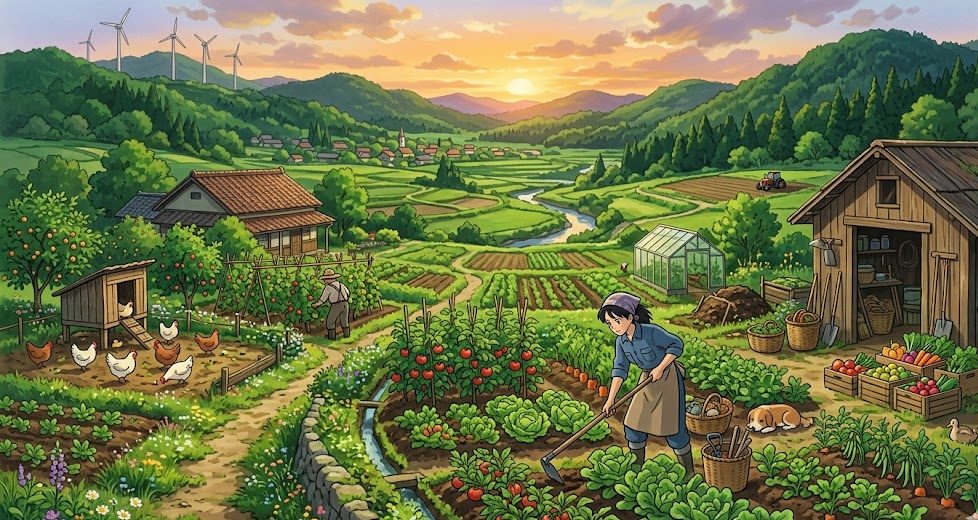
In the current economic climate, many aspiring entrepreneurs are turning their gaze toward the land. The allure of small-scale agriculture is strong: it promises independence, a connection to the natural world, and the potential to build a business that serves the community. However, the gap between “having a garden” and “running a profitable farm” is significant.
Transitioning from hobbyist to commercial producer requires moving beyond intuition. It demands a shift toward industrial-level efficiency, financial discipline, and aggressive market positioning. This guide outlines the real-world strategies necessary to turn small-scale agriculture into a sustainable, profit-generating enterprise.
1. The Principle of High-Turnover Production
On a small plot, you cannot compete with large-scale industrial farms on volume. You must compete on velocity and value.
- Crop Selection: Focus on crops with a short “seed-to-harvest” cycle. Microgreens, radishes, baby spinach, and herbs are the backbone of profitable small-scale farming because they allow for 10–12 harvests per year on the same square footage.
- The “Market Garden” Model: Implement the bio-intensive method. This involves permanent, narrow beds that are never tilled, allowing you to plant at higher densities. By eliminating the space wasted on paths and heavy machinery, you can quadruple your yield per square meter.
2. Infrastructure as an Asset
To be profitable, you must minimize labor and maximize output. In agriculture, labor is often your biggest expense. Investing in the right tools isn’t a luxury; it is a prerequisite for survival.
- Mechanization of Small Tasks: Invest in a walk-behind tractor or specialized hand tools like the Jang seeder. These tools allow one person to do the work that previously required four.
- Controlled Environments: A simple unheated hoop house (high tunnel) can extend your growing season by months. In the early spring and late autumn—when fresh produce is scarce and prices are highest—your hoop house will be the engine of your farm’s profitability.
3. Financial Discipline: The “Profit-First” Approach
Many farmers fail because they treat their farm like a lifestyle rather than a business.
- Cost of Goods Sold (COGS): Know exactly how much it costs to produce a single bunch of kale. This includes your time, water, electricity, compost, and packaging. If it costs you $1.50 to grow it, you cannot sell it for $2.00.
- Diversification vs. Focus: While it is tempting to grow 50 different types of vegetables, it often destroys efficiency. Analyze your records: which 20% of your crops are bringing in 80% of your profit? Focus your energy on those “cash cows” and minimize the rest.
4. Building a Direct-to-Consumer Brand
The biggest mistake small farmers make is selling to wholesalers. When you sell to a middleman, you are competing against massive farms that have already driven prices to the bottom.
- The Power of Narrative: Consumers pay a premium not just for food, but for the story of how it was grown. Use high-quality photography and social media to show your farming practices—your organic soil management, your pest control, and your harvest process.
- Direct Channels: Prioritize Community Supported Agriculture (CSA) programs, local farmers’ markets, and direct partnerships with high-end restaurants. By selling directly to the end user, you capture the full retail margin instead of the meager wholesale price.
5. Integrating Technology and Automation
In 2026, even the smallest farm can benefit from “smart” farming.
- Inventory and Sales Tracking: Use simple apps to track what you harvest and what you sell. You cannot improve what you do not measure.
- Automated Systems: Even basic drip irrigation with a solar-powered timer saves hours of labor every week. For those in more advanced operations, automated lighting and nutrient dosing for hydroponics can ensure consistent, high-grade produce that commands “premium” pricing in the market.
6. Value-Added Products: The Hidden Revenue Stream
Raw produce is perishable and has a limited shelf life. Value-added products act as a hedge against spoilage.
- Processing: Turn your surplus basil into pesto, your excess berries into jams, or dry your culinary herbs into artisanal spice blends.
- Margins: These items are non-perishable, easy to store, and generally carry a significantly higher profit margin than fresh produce. They turn “waste” into “revenue” and keep your cash flow moving even during the off-season.
7. The Roadmap to Scalability
Profitable farming is not about “working harder”; it is about “working smarter” through systems.
- Year 1: Validation. Focus on a few high-value crops. Test your local market. Do not over-invest in infrastructure until you know exactly what your customers want.
- Year 2: Efficiency. Refine your systems. Standardize your bed preparations and harvest routines. Look for ways to reduce your time spent on manual weeding and packing.
- Year 3: Optimization. Scale up your most profitable items. Consider adding value-added products and formalizing your D2C marketing channels.
Conclusion: Farming as a High-Tech Business
Small-scale agriculture in the modern age requires the soul of a gardener but the mind of an accountant. It is a sector where technology, biological efficiency, and direct market connection intersect. By focusing on high-turnover crops, minimizing labor through strategic infrastructure, and relentlessly cutting costs, small-scale farmers can achieve profitability that rivals traditional businesses.
The land is a resource, but your system is the product. Focus on building robust, repeatable, and scalable systems, and you will find that the potential for profit in niche agriculture is not just a dream—it is an achievable reality for the modern, informed cultivator.