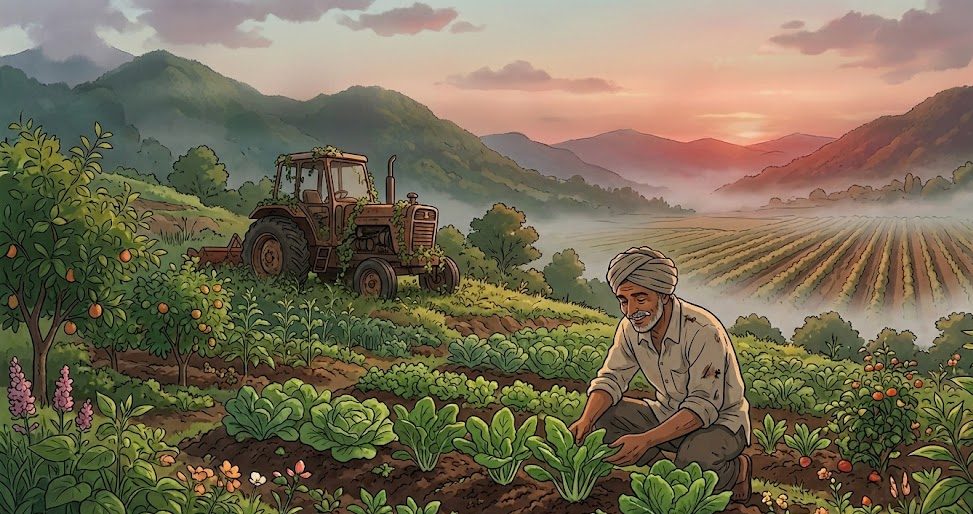
The modern agricultural landscape has long been dominated by the narrative of industrialization. We are told that higher yields require higher inputs—more synthetic fertilizer, more chemical pesticides, and heavy mechanization. However, a silent revolution is brewing beneath the surface. Experienced, successful natural farmers are proving that the most powerful secrets to a thriving farm aren’t found in a laboratory, but in the soil itself.
If you are looking to move beyond the treadmill of rising costs and diminishing returns, here are the hidden truths that large-scale industrial operations often overlook.
1. The Soil is a Living Organism, Not a Substrate
The single biggest mistake in industrial farming is treating soil as a lifeless medium designed only to hold a plant upright while chemicals provide the nutrition. The “hidden” secret is that soil is a complex, living ecosystem.
Productive soil relies on a symbiotic relationship between fungi, bacteria, protozoa, and organic matter. When you douse the land with chemical fertilizers, you effectively “kill” this biological network, making your crops dependent on synthetic inputs for survival. Natural farmers focus on feeding the soil, not the plant. By introducing high-quality compost, vermicompost, and microbial inoculants, you create a self-sustaining system where the soil works for you, providing nutrients on demand.
2. Diversity is Your Best Insurance Policy
Large-scale farming thrives on monocropping—planting thousands of acres of a single variety. While this simplifies logistics, it creates a massive “invitation” for pests and diseases. If a pathogen hits a monocrop, the entire field is at risk.
Natural farmers utilize Intercropping and Crop Rotation as a primary defensive strategy. By planting diverse species together (e.g., legumes with grains), you naturally break pest cycles and distribute nutrient uptake across different soil depths. This diversity acts as an insurance policy. If one crop underperforms due to weather, the others often thrive, ensuring you always have a harvest.
3. The “Weed” Myth: Understanding Ecological Succession
Large-scale farming views weeds as enemies to be eradicated with expensive herbicides. Natural farmers, however, view weeds as indicators.
If you see certain weeds dominating your field, they are often signaling a soil imbalance—perhaps a lack of calcium, compaction, or poor drainage. Instead of just killing the weed, a professional natural farmer asks, “Why is this here?” By correcting the underlying soil condition through biological means, the “weed” problem often disappears on its own. Furthermore, many “weeds” are actually dynamic accumulators that pull minerals from deep underground—use them as mulch, and they become a free fertilizer source.
4. The Power of “Low-Input” Efficiency
Large-scale operations are often burdened by “input debt”—where a large portion of the harvest revenue goes directly to paying for seeds, fertilizers, and sprays. The hidden secret to true agricultural wealth is input autonomy.
The most successful small-to-medium natural farmers produce their own inputs. Whether it is liquid organic fertilizers (like Jeevamrut in India), fermented plant extracts for pest control, or saving their own heirloom seeds, these farmers are not at the mercy of market supply chains. By keeping your costs near zero, even a modest harvest becomes highly profitable.
5. Nature Knows Timing Better Than a Calendar
Industrial agriculture forces crops to grow on a rigid schedule determined by chemical application cycles. Natural farming, however, follows the language of the landscape.
Observation is the most underutilized tool in modern farming. By observing the timing of natural rain cycles, insect life cycles, and temperature shifts, you can plant and harvest in harmony with nature’s rhythm. When your crops grow in sync with the natural climate of your region, they are inherently more resilient, requiring less intervention.
The Path Forward
Transitioning to natural farming is not about “going backward”; it is about moving forward with a deeper understanding of biology. You don’t need to convert your entire farm overnight. Start by designating a “pilot zone” where you apply these principles—restore the soil life, embrace diversity, and minimize external inputs.
The secrets that large-scale farmers don’t tell you aren’t really secrets at all—they are the fundamental laws of ecology. When you stop fighting nature and start partnering with her, your farm transitions from an expensive manufacturing process into a self-regenerating asset.