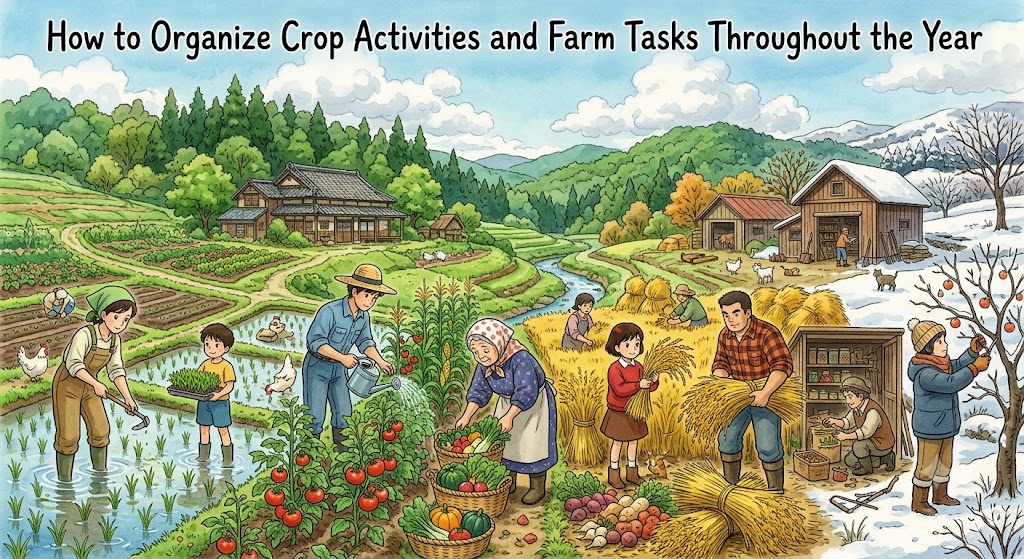
Seasonal Farming Plan: How to Organize Crop Activities and Farm Tasks Throughout the Year
A successful farm depends on good planning just as much as it depends on healthy soil, suitable crops, and reliable weather. Farming activities change throughout the year, and each season brings different responsibilities. Preparing fields, selecting seeds, planting crops, managing water, controlling weeds, monitoring plants, harvesting, and maintaining equipment all need to happen at the right time.
A seasonal farming plan helps farmers organize these activities instead of handling them only when a problem appears. It can also make better use of labor, machinery, water, storage space, and farm finances. Whether a farm is small or large, a clear annual schedule can make daily decisions easier and reduce avoidable delays.
The exact timing of farm activities depends on the region, climate, soil type, crop varieties, and local growing conditions. Therefore, a seasonal plan should be treated as a flexible framework rather than a fixed calendar.
Understanding the Farming Year
Before creating a schedule, farmers should divide the year into practical farming periods. These may include land preparation, planting, crop establishment, active growth, harvesting, and the period between major crops.
In areas with distinct summer, rainy, and winter seasons, crop planning can be organized around these weather patterns. In other regions, farmers may rely more heavily on irrigation and temperature conditions.
The important point is to connect each farm activity with the conditions required for successful crop growth. Planting should not simply be based on a date. Soil moisture, temperature, rainfall forecasts, and the expected growing period should also be considered.
Planning Before the Season Begins
The best time to organize a farm season is before fieldwork becomes busy. Farmers can review what worked during the previous season and identify problems that need attention.
Records from the previous crop can provide useful information about planting dates, seed quantities, fertilizer use, irrigation, pest problems, labor requirements, harvest quantities, and selling prices.
Farmers can then decide which crops to grow, how much land to allocate to each crop, and what resources will be required.
A simple seasonal plan should include expected planting dates, important crop-development stages, irrigation requirements, field inspections, weed management, harvesting periods, equipment maintenance, and expected market activities.
Preparing the Soil and Fields
Land preparation should begin early enough to allow the soil to reach a suitable condition before planting.
Fields may need to be cleared of unwanted vegetation and crop residues managed appropriately. Soil testing can help farmers understand nutrient levels and other characteristics that influence crop selection and fertilizer decisions.
The objective is not necessarily to perform the maximum amount of tillage. Excessive soil disturbance can damage soil structure and increase erosion in some conditions. Farmers should choose preparation methods that suit their soil, crop, and local environment.
Drainage should also be checked before planting. Poor drainage can create waterlogged areas that interfere with root development, while compacted areas can restrict water movement and root growth.
Choosing Crops for Each Season
Crop selection should match the local growing conditions. Temperature, rainfall, soil characteristics, growing duration, water availability, and market demand all influence whether a crop is suitable.
Farmers can reduce risk by avoiding dependence on a single crop when practical. Growing crops with different harvest periods can distribute labor requirements and reduce the financial impact of problems affecting one crop.
Crop rotation is another useful planning tool. Rotating crops with different nutrient requirements and growth characteristics can support soil management and help farmers avoid repeatedly creating favorable conditions for the same crop-specific problems.
Seed and Planting Material Preparation
Seeds and planting materials should be arranged before the intended planting period. Waiting until the last moment can create unnecessary delays, particularly when suitable varieties become difficult to obtain.
Seed quality matters because poor-quality planting material can result in uneven germination and weak crop establishment.
Farmers should also calculate the amount of seed required based on field size and recommended planting density. Buying excessive quantities can increase unnecessary costs, while purchasing too little can interrupt planting.
The Planting Period
Planting is one of the most time-sensitive activities on a farm. A delay of several days may sometimes affect the crop’s ability to establish properly, especially when the planting window is influenced by rainfall or temperature.
Farmers should prepare equipment, labor, seeds, irrigation systems, and field conditions before planting begins.
Plant spacing should be appropriate for the crop and variety. Crowded plants may compete for light, water, nutrients, and air circulation, while excessive spacing can reduce the productive use of available land.
Keeping a record of planting dates for every field is also useful because it helps farmers estimate later activities such as irrigation, crop monitoring, and harvesting.
Early Crop Establishment
The first weeks after planting require careful observation. Farmers should check whether plants are emerging evenly and whether there are gaps in the field.
Water management is particularly important during this stage. Too little moisture can affect establishment, while excessive water can create root problems in poorly drained soils.
Early weed growth should also be monitored. Weeds can compete with young crops for water, nutrients, sunlight, and growing space.
Instead of waiting until weeds become difficult to control, farmers can schedule regular field inspections during the early growth period.
Managing Crops During Active Growth
Once crops become established, the focus shifts toward maintaining healthy growth.
Irrigation should be adjusted according to crop requirements, soil moisture, weather conditions, and rainfall. A fixed watering schedule may not always be appropriate because environmental conditions can change.
Nutrient management should also be based on crop needs and soil conditions. Applying more fertilizer than necessary does not automatically produce better yields and can increase costs or create environmental problems.
Farmers should monitor crop color, growth patterns, soil conditions, and other visible changes. Records from field inspections can help identify developing problems before they become widespread.
Weed Management Throughout the Season
Weed control should be treated as an ongoing activity rather than a single task.
Different weeds emerge at different times, so a field that looks clean shortly after planting may require additional attention later.
Farmers can use appropriate combinations of cultivation, mulching, manual removal, crop competition, and other suitable management methods depending on the crop and farming system.
The timing of weed management is important because young crops can be particularly sensitive to competition.
Monitoring for Pests and Crop Problems
Regular crop inspections allow farmers to identify unusual symptoms early. Leaves, stems, flowers, fruits, and soil conditions can all provide useful information.
Farmers should look for changes such as unusual leaf damage, discoloration, wilting, abnormal growth, insect activity, or signs of fungal problems.
Correct identification should come before treatment. Not every damaged leaf indicates a serious pest or disease problem, and unnecessary treatments can increase costs and potentially affect beneficial organisms.
Integrated pest management can combine monitoring, prevention, cultural practices, biological approaches, and carefully selected control methods when necessary.
Managing Water Across the Year
Water planning should be included in the annual farming calendar rather than considered only during dry periods.
Before the growing season, farmers can inspect irrigation pipes, pumps, storage tanks, channels, sprinklers, and other equipment.
During the season, water use should be adjusted according to crop stage and weather conditions. Young plants, flowering crops, and crops approaching harvest may have different water requirements.
Water-saving practices such as mulching, efficient irrigation systems, rainwater collection, and maintaining soil organic matter can help improve water-use efficiency where appropriate.
Preparing for Harvest
Harvest planning should begin well before crops reach maturity.
Farmers should estimate when different fields are likely to become ready and arrange labor, harvesting equipment, containers, transportation, and storage facilities.
Harvesting too early can reduce quality in some crops, while harvesting too late can increase losses from weather, pests, over-ripening, or crop damage.
A field-by-field harvest schedule can help prevent large amounts of produce from becoming ready at the same time when labor or storage capacity is limited.
Reducing Post-Harvest Losses
Producing a good crop is only part of farm success. A portion of the harvest can still be lost through poor handling, unsuitable storage, transportation problems, or delayed marketing.
Farmers should prepare clean storage areas and appropriate containers before harvest begins.
Fresh produce may require rapid movement to suitable storage or markets, while grains and other durable crops may require proper drying and protection from moisture and pests.
Careful handling during harvesting and transportation can also reduce physical damage.
Maintaining Farm Equipment
Equipment maintenance should be scheduled throughout the year instead of waiting for a breakdown during a critical farming operation.
Tractors, pumps, irrigation systems, sprayers, harvesting equipment, tools, and storage facilities should be inspected periodically.
Before major planting and harvesting periods, farmers can check equipment condition and arrange repairs or replacement parts in advance.
This simple practice can reduce the risk of losing valuable working time during short planting or harvesting windows.
Managing Labor and Farm Workloads
Farm labor requirements are rarely the same throughout the year. Some periods may require significantly more workers because planting, weeding, harvesting, or post-harvest processing can involve several activities at once.
A seasonal plan allows farmers to estimate these busy periods ahead of time.
Tasks can be divided according to urgency and importance. Critical activities such as planting and harvesting should receive priority when weather conditions create a limited working window.
Using a written schedule can also make it easier to coordinate family labor, permanent workers, and temporary workers.
Planning Farm Finances by Season
Farm expenses should be connected to the production calendar.
Seed purchases, soil preparation, fertilizer, irrigation, labor, equipment maintenance, harvesting, transportation, and storage can all create expenses at different times.
Farmers can estimate these costs before the season begins and compare them with expected production and market opportunities.
Keeping separate records for each crop can reveal which activities consume the most resources and where future improvements may be possible.
The Off-Season Is Still a Farming Season
The period between major crops should not be considered completely inactive.
Farmers can use this time to repair equipment, maintain buildings, clean storage facilities, review records, prepare fields, plan crop rotations, and arrange seeds and other supplies.
It can also be a useful period for improving soil management. Depending on the farming system and local conditions, cover crops, crop residues, composting, or other soil-building practices may be considered.
Using the off-season effectively can reduce pressure when the next planting period begins.
Using Technology for Seasonal Planning
Modern technology can make annual farm planning easier. Farmers can use spreadsheets, mobile applications, digital calendars, weather information, satellite imagery, irrigation controllers, and farm-management software to organize activities.
Technology does not need to be complicated. A simple digital calendar can be enough to record planting dates, expected irrigation periods, equipment maintenance, and harvest schedules.
Weather information can also help farmers prepare for periods of heavy rain, heat, frost, or dry conditions.
The most useful technology is usually the technology that solves a specific farm problem without creating unnecessary complexity.
Reviewing the Season After Harvest
The final step of a seasonal farming plan is reviewing the results.
Farmers should compare planned activities with what actually happened. This includes reviewing planting dates, crop performance, water use, fertilizer expenses, labor requirements, pest problems, harvest quantities, market prices, and post-harvest losses.
Unexpected events should also be recorded. A rainfall event, equipment breakdown, labor shortage, or market change may explain why results differed from the original plan.
These observations become valuable information for the next season.
Creating a Simple Annual Farm Calendar
An effective annual calendar does not need to be complicated. It can divide the year into major periods and assign important activities to each one.
The first period can focus on reviewing previous results, selecting crops, testing soil, purchasing seeds, and preparing equipment.
The next period can focus on field preparation and planting.
The active growing period can include irrigation, weed management, crop monitoring, nutrient management, and pest observation.
The harvest period can focus on maturity checks, labor planning, harvesting, storage, transportation, and marketing.
The period after harvest can include equipment maintenance, record keeping, soil management, crop-residue planning, and preparation for the next production cycle.
Final Thoughts
Seasonal farming becomes easier to manage when major activities are planned before they become urgent. A good annual farming plan connects crop selection, soil preparation, planting, irrigation, crop monitoring, harvesting, storage, equipment maintenance, labor, and financial management into one organized system.
The exact schedule will differ from one farm to another because climate, soil, crops, water availability, and market conditions are different. The goal is not to follow a rigid calendar but to create a flexible system that helps farmers make timely decisions.
By keeping useful records, reviewing each season, preparing equipment in advance, and adjusting activities according to actual field conditions, farmers can gradually build a more organized and efficient farming operation.