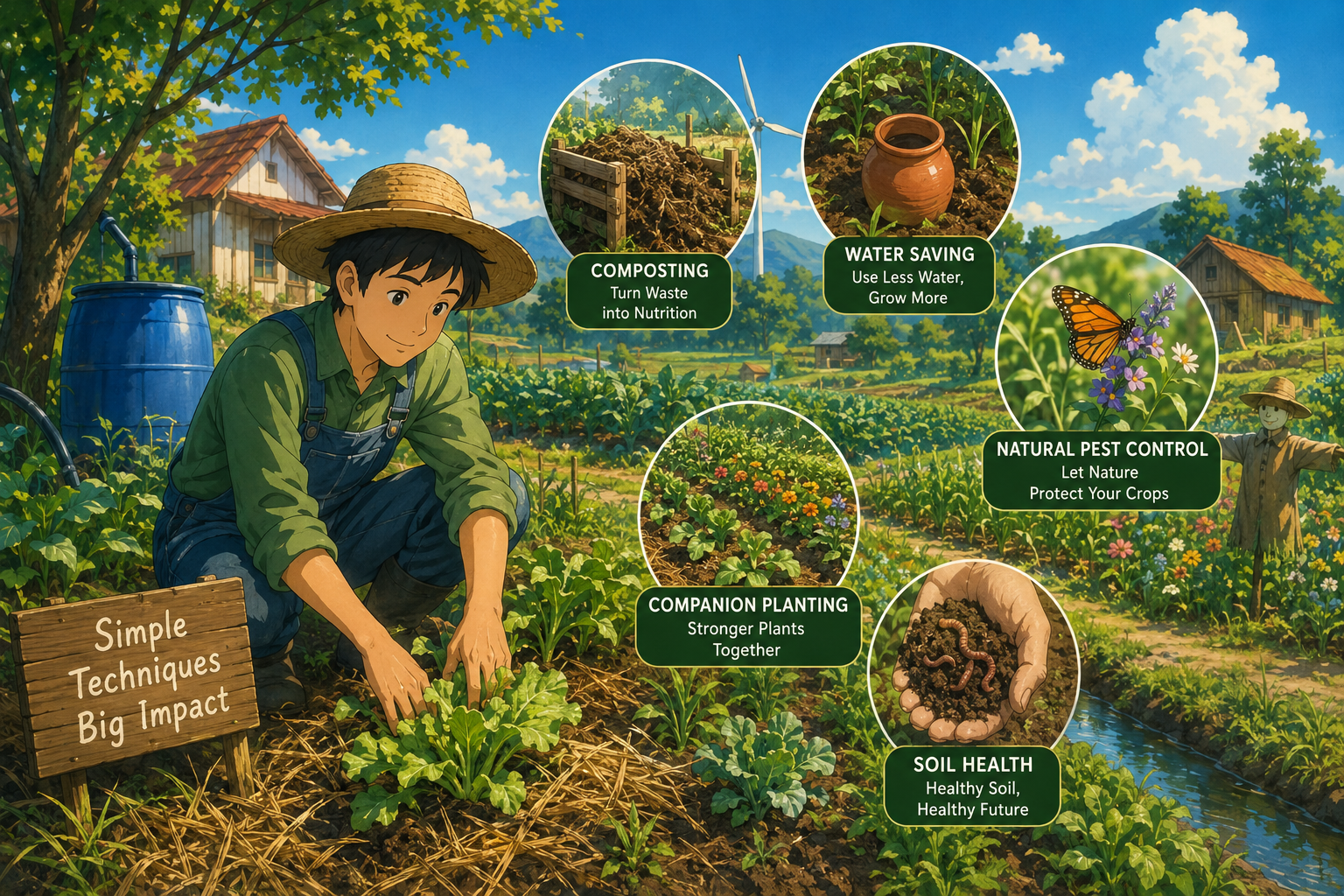
When I first dug my boots into the soil a decade ago, I thought farming was a straightforward equation: you buy seeds, you plow the earth, you water it, and you pray for a good harvest. Ten years and countless calluses later, I can tell you that the real magic doesn’t happen in the obvious chores. It happens in the margins.
I call it “Hidden Farming.”
These are the quiet, subtle adjustments and overlooked techniques that don’t cost a fortune but yield massive returns. Over the years, I’ve seen seasoned growers and beginners alike walk right past these opportunities. Today, I want to share the practical, field-tested ideas that transformed my harvests—and my profit margins.
1. The “Chop and Drop” Mulch Method
We all know about mulching, but the way most of us do it is exhausting. We grow cover crops, tear them out, haul them to a compost bin, wait a year, and haul the compost back. It is a massive waste of labor.
About four years into my journey, I discovered the chop-and-drop method. Instead of uprooting weeds or cover crops (like clover or vetch) that haven’t gone to seed, simply slash them at the base and leave them right where they fall on the soil beds.
Why this works:
- Zero Hauling: You save hours of backbreaking labor.
- Instant Armor: The cut plants immediately protect the topsoil from harsh sun and heavy rain.
- Root Decay: The roots left in the ground decay naturally, creating microscopic air channels for your primary crops to breathe and stretch.
Farmer’s Tip: Only chop and drop before the plant sets seed. If you wait until it goes to seed, you’re just planting next year’s weeding chores!
2. Trap Cropping: The Sacrificial Lamb
Pest control used to be my biggest headache. I was constantly battling aphids and beetles, trying to find organic sprays that wouldn’t bankrupt me. Then, an older mentor taught me about trap cropping.
Instead of fighting bugs across your entire field, you intentionally plant something they love more than your cash crop, drawing them away from your valuable harvest.
- Nasturtiums: Plant these near your tomatoes or cabbages. Aphids absolutely love them and will completely ignore your cash crops to swarm the nasturtiums.
- Radishes: Flea beetles will devour radish leaves. If you are growing expensive greens, put a cheap border of radishes around them.
Once the trap crop is infested, you simply pull it up and dispose of it, pests and all. It’s psychological warfare against bugs, and it is incredibly effective.
3. Farming the Edges (Hedgerows and Borders)
Take a walk around your property. Look at the fence lines, the edges of your driveway, and the borders between your fields. For my first few seasons, those spaces were just dead zones where I parked the tractor.
In hidden farming, every square inch has a job.
By planting perennial herbs, wildflowers, or berry bushes along the borders, you unlock a hidden ecosystem. These edges do three vital things:
- Windbreaks: Tall border crops protect delicate inner plants from wind damage and reduce soil erosion.
- Pollinator Highways: Wildflowers attract bees and parasitic wasps. More bees mean better pollination for your fruiting crops, naturally boosting your yield by up to 20%.
- Bonus Revenue: A row of lavender or rosemary along a fence line requires almost no maintenance but sells beautifully at farmers’ markets.
4. Micro-Climates and Sun Traps
We often treat a one-acre field as if it has the exact same weather all over. It doesn’t. After years of observation, I noticed frost would kill my peppers on the east side of a slight slope, while the ones near a large boulder survived.
Thermal mass is a farmer’s best friend. Rocks, brick walls, or even a simple pond absorb heat during the day and slowly release it at night.
How to use this:
- Plant your most frost-sensitive crops near large stones, water bodies, or south-facing walls.
- Use tall, hardy crops (like corn or sunflowers) to create temporary shade for cool-weather crops (like spinach or lettuce) during the scorching late-summer months.
Understanding your farm’s micro-climates allows you to extend your growing season by weeks, giving you the first (and highest priced) crops at the market.
5. The Field Journal: The Ultimate Tool
If you ask me what my most valuable piece of farming equipment is, I won’t point to my tractor or my irrigation system. I will point to the battered, dirt-stained notebook in my truck’s glovebox.
Memory lies to you. You think you’ll remember when the first frost hit last year, or which specific row of beans got a fungus, but you won’t.
Keep a ruthlessly detailed journal:
- Record planting dates, seed varieties, and harvest yields.
- Note the weather anomalies (e.g., “Heavy rain in week 3 of June”).
- Track pest appearances.
After a few years, patterns emerge. You stop reacting to problems and start predicting them. You’ll know exactly when to apply organic preventative measures because your journal tells you the beetles always arrive in the second week of July.
The Shift in Perspective
To make this easier to digest, here is a quick look at how my mindset shifted over my ten years in the dirt.
| Traditional Farming Habit | Hidden Farming Technique | The Real-World Benefit |
| Pulling weeds and hauling them away. | Chop and Drop. Cut and leave on the soil. | Builds organic matter instantly; saves labor. |
| Spraying entire fields for pests. | Trap Cropping. Plant a decoy crop to attract bugs. | Cheaper, organic, and keeps cash crops pristine. |
| Mowing the fence lines. | Edge Farming. Plant perennials/flowers on borders. | Attracts pollinators; creates a windbreak. |
| Treating the whole farm as one climate. | Utilizing Micro-climates. Planting based on thermal mass. | Extends growing seasons; prevents frost loss. |
| Relying on memory year to year. | Field Journaling. Writing everything down. | Predicts pests; optimizes planting schedules. |
Final Thoughts
Farming isn’t just about brute force; it’s about biological judo. It is about using the natural momentum of the earth, the bugs, and the weather to do the heavy lifting for you.
The next time you walk your fields, don’t just look at what is growing. Look at what isn’t growing. Look at the edges, the soil cover, and the patterns. The secrets to a better, more profitable harvest are already there, hiding in plain sight. You just have to know where to look.