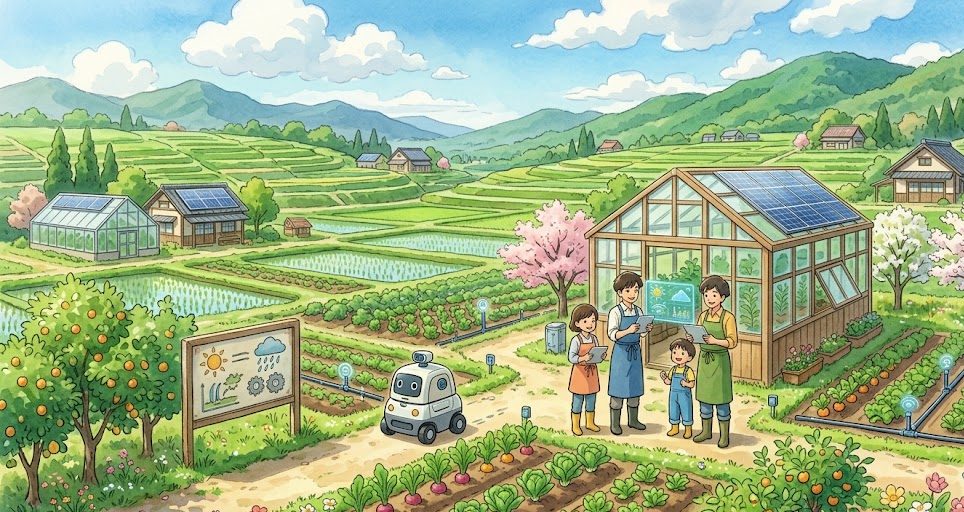
The global agricultural sector is standing at a crossroads. With the world’s population projected to reach nearly 10 billion by 2050, the pressure to produce more food on less land has never been higher. Traditional farming methods, while foundational, often struggle to keep pace with volatile climate patterns and resource scarcity. This is where Smart Farming—often called Precision Agriculture or Farming 4.0—steps in to bridge the gap.
By leveraging the Internet of Things (IoT), artificial intelligence, and big data, farmers are transforming their operations from reactive, guesswork-based systems into proactive, data-driven powerhouses.
1. What is Smart Farming?
Smart farming is the integration of modern digital technologies into agricultural processes to optimize production, minimize waste, and improve product quality. It isn’t just about replacing tractors with robots; it’s about creating an interconnected “cyber-physical” ecosystem where every drop of water, every gram of fertilizer, and every minute of labor is accounted for and optimized.
2. Advanced Techniques in Precision Agriculture
The effectiveness of a smart farm relies on its ability to collect and interpret real-time data. Modern techniques are changing how we interact with the land:
IoT-Driven Precision Irrigation
Water scarcity is one of the biggest threats to agriculture. Smart irrigation systems use soil moisture sensors to detect exactly when crops need water. By integrating these sensors with real-time weather forecasts, systems can automatically adjust irrigation schedules, reducing water consumption by as much as 30–50% without sacrificing yield.
Aerial Monitoring with Drones
Drones have moved beyond being a novelty to becoming essential farm tools. Equipped with multispectral and infrared cameras, they can survey hundreds of acres in a single flight. They identify:
- Nutrient deficiencies: Highlighting areas that need specific fertilizers.
- Pest outbreaks: Detecting early-stage infestations before they spread.
- Crop health: Creating “vigor maps” that help farmers prioritize where to focus their manual labor.
Artificial Intelligence (AI) and Machine Learning
AI is the “brain” of the smart farm. It processes massive datasets—ranging from historical weather patterns to current soil pH levels—to provide actionable insights. For example, machine learning algorithms can predict the optimal time to harvest, maximizing both market value and crop quality.
3. Protecting Farm Assets and Sustainability
Smart farming isn’t just about output; it’s about safeguarding the entire farm ecosystem.
Livestock Health Management
Wearable sensors for livestock track movement, temperature, and heart rates. If an animal shows signs of distress or illness, the system sends an instant alert to the farmer’s smartphone. This early intervention drastically reduces the need for antibiotics and veterinary costs while ensuring higher animal welfare standards.
Perimeter and Equipment Security
Remote areas are often targets for theft. IoT-based security solutions, including geofencing and motion-sensitive cameras, provide 24/7 monitoring. If a tractor moves outside a designated perimeter or a grain silo is accessed without authorization, the owner is alerted immediately, allowing for rapid response.
Reducing Environmental Impact
By applying fertilizers and pesticides with “surgical precision”—only where needed and in the exact right dosage—farmers significantly reduce chemical runoff. This protects local water sources, promotes soil health, and helps farms meet increasingly strict environmental sustainability regulations.
4. Strategic Planning: The Roadmap to Implementation
Transitioning to smart farming can be overwhelming. To avoid “tech fatigue,” you need a solid strategy.
| Phase | Objective | Actionable Step |
| Phase 1: Assessment | Define the Goal | Identify the biggest “pain point” (e.g., water waste, labor costs). |
| Phase 2: Data Foundation | Connectivity | Ensure reliable internet (satellite or cellular) across the fields. |
| Phase 3: Pilot Project | Small-Scale Testing | Install sensors in one field/zone before a full-farm rollout. |
| Phase 4: Scaling | Integration | Connect your dashboard to your machinery and ERP software. |
Keys to a Successful Smart Farm Transition
- Start Small: Don’t digitize everything at once. Pick one area, such as soil monitoring or automated irrigation, and master it.
- Focus on Interoperability: Ensure the hardware you buy can talk to the software you use. Avoid “siloed” systems that don’t share data.
- Invest in Digital Literacy: The best technology is useless if you don’t know how to interpret the data. Prioritize training for yourself and your staff.
- Prioritize Data Security: Farm data is valuable. Use encrypted platforms to ensure your yield and operational insights aren’t compromised by competitors or bad actors.
Challenges and How to Overcome Them
It is important to acknowledge that smart farming isn’t a silver bullet. High initial investment, lack of rural connectivity, and the learning curve can be barriers. However, the industry is responding:
- Financial Support: Many governments now offer subsidies and grants specifically for AgTech adoption.
- Cooperative Models: Small-scale farmers are increasingly sharing the cost of drones and advanced machinery through cooperatives, making high-end technology accessible to everyone.
The Bottom Line
Smart farming is a shift from “farming by tradition” to “farming by information.” While the upfront costs and technical requirements are real, the long-term benefits—increased profitability, reduced resource consumption, and enhanced resilience against climate change—make it an essential path forward.
As we look toward the next decade, the farmers who embrace these digital tools will be the ones who not only survive the changing landscape but thrive in it.