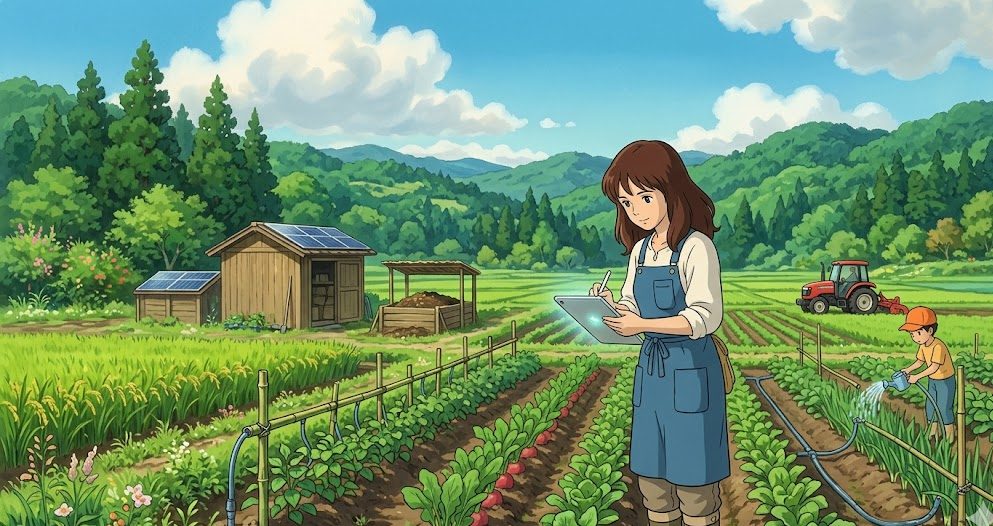
The global agricultural landscape is undergoing a massive paradigm shift. With a growing global population and changing climate patterns, traditional farming methods are no longer sufficient to maintain profitability and food security. Modern agriculture systems are stepping into this gap, leveraging technology, data, and innovative management practices to maximize yield while minimizing resource inputs.
For contemporary farmers, agronomists, and agribusiness entrepreneurs, transition is no longer optional—it is a strategic necessity. This guide breaks down advanced cultivation systems, provides actionable operational workflows, and explores precision field management techniques designed to scale production.
1. Advanced Modern Agriculture Systems
To optimize land and resource utilization, growers are shifting toward controlled environments and highly specialized biological farming. Here are the three most impactful modern systems dominating the industry today:
Hydroponics and Soilless Cultivation
Hydroponics bypasses traditional soil entirely, delivering nutrient-rich water solutions directly to plant roots.
- The Benefit: Eliminates soil-borne diseases, reduces water usage by up to 90% compared to traditional open-field farming, and allows for precise control over nutrient intake.
- Best Suited For: Leafy greens (lettuce, spinach), tomatoes, strawberries, and herbs.
Structured Mushroom Cultivation
Mushroom farming represents a highly profitable, vertical space utilization model. Unlike photosynthetic crops, mushrooms thrive in controlled, dark environments using agricultural waste (like straw or sawdust) as substrate.
- The Benefit: Low land requirement, rapid crop cycles, and high market demand for gourmet varieties like Oyster, Shiitake, and Button.
- Key Focus: Strict sterilization and precise humidity management are critical to prevent contamination.
Organic and Regenerative Farming Systems
Modern organic farming goes beyond simply avoiding synthetic chemicals; it focuses on rebuilding soil biology. By utilizing cover crops, crop rotation, and microbial inoculants, regenerative agriculture restores the soil ecosystem, leading to long-term crop resilience and premium market pricing.
2. Actionable Operational Guide for Modern Growers
Transitioning to or scaling a modern agricultural setup requires a systematic workflow. Below is a foundational operational blueprint to ensure commercial success.
[Phase 1: Resource Auditing] ➔ [Phase 2: System Selection] ➔ [Phase 3: Microclimate Calibration]
Phase 1: Comprehensive Site & Resource Auditing
Before investing capital into hardware, execute a thorough assessment of available infrastructure:
- Water Quality Analysis: Test for pH, Electrical Conductivity (EC), and Total Dissolved Solids (TDS). High sodium or heavy metal content can ruin hydroponic systems.
- Power Reliability: Modern automated systems rely heavily on sensors, pumps, and climate controllers. Ensure a stable grid connection backed by solar or generator redundancies.
Phase 2: System and Crop Selection
Align your crop selection with local market demand and your specific system capability. For instance, do not deploy a high-energy vertical farming setup for low-margin crops. Focus on high-value, fast-turnaround varieties that guarantee consistent cash flow.
Phase 3: Microclimate Calibration
Whether using a greenhouse or an indoor growth chamber, environment setting dictates your profit margin. Implement strict parameter baselines:
- Maintain daytime temperatures between 22°C to 26°C for optimal vegetative growth in most commercial crops.
- Keep relative humidity (RH) balanced at 50% to 70% to prevent fungal outbreaks while maintaining transpiration.
3. Visualizing Smart Agriculture Infrastructure
To truly understand how modern field management and technological integration function, consider the ecosystem mapped below. It illustrates the seamless loop between environmental inputs, automated infrastructure, and data-driven crop management.
+--------------------------------------------------------------------------+
|                     SMART AGRICULTURAL ECOSYSTEM                         |
+--------------------------------------------------------------------------+
|                                                                          |
|    [ Sunlight / LED ]        [ Air / CO2 Control ]    [ Crop Canopy ]    |
|            │                          │                      │           |
|            ▼                          ▼                      ▼           |
|  ┌────────────────────────────────────────────────────────────────────┐  |
|  │                       AUTOMATED GREENHOUSE                         │  |
|  └────────────────────────────────────────────────────────────────────┘  |
|            ▲                          ▲                      ▲           |
|            │                          │                      │           |
|    [ Irrigation / EC-pH ]     [ Climate Sensors ]    [ Vertical Rack ]   |
|                                                                          |
+--------------------------------------------------------------------------+
|  DATA LAYER: Continuous monitoring of soil, moisture, and vital metrics  |
+--------------------------------------------------------------------------+
(AI Prompt Suggestion for Post Enhancement: If you are using an AI image generator to create the featured graphic for this section, use the following prompt: “A high-definition, hand-painted anime style illustration in a Studio Ghibli aesthetic, showcasing a modern sustainable smart farming setup. The scene features clean, organized vertical farming racks filled with vibrant green leafy lettuce, advanced automated drip irrigation pipes with clear water droplets, and subtle digital climate sensors glowing softly in the background. The lighting should be soft, natural, and bright, emphasizing lush greenery and innovative agricultural technology. No human figures.”)
4. Precision Field Management & Crop Monitoring
For open-field operations or macro-level farm management, precision agriculture uses technology to ensure that crops receive exactly what they need for optimum health and productivity.
Data-Driven Soil Management
Modern field management discards guesswork. By deploying IoT (Internet of Things) soil moisture and nutrient sensors across cultivation zones, managers get real-time telemetry on soil health.
- Variable Rate Application (VRA): Instead of broadcasting fertilizers uniformly across an entire field, VRA tech allows automated tractors to apply nutrients only where sensor data indicates a deficiency. This saves input costs and protects the environment from chemical runoff.
Disease and Pest Prevention Protocols
In high-density modern systems, a disease outbreak can wipe out entire batches rapidly. Success relies on integrated pest management (IPM):
- Biological Controls: Introducing beneficial insects (like ladybugs or predatory mites) to manage pest populations naturally.
- Early Detection Diagnostics: Utilizing high-resolution cameras and automated imagery analysis to catch early signs of leaf chlorosis, stress, or fungal spots before they spread through the entire crop canopy.
Strategic Harvesting and Logistics
Field management does not end at the harvest. Post-harvest loss is a major profit killer. Modern systems utilize cold-chain logistics tracking from the exact moment of harvest. Keeping crops at optimized temperatures immediately after cutting extends shelf life, preserves nutritional value, and commands top tier pricing at delivery.
5. Maximizing Efficiency and ROI
Implementing advanced agricultural systems requires upfront capital, but strategic execution ensures rapid return on investment (ROI).
| Strategy Component | Operational Action | Expected Financial Benefit |
|---|---|---|
| Automation Integration | Automate pH/EC dosing and climate schedules. | Lowers manual labor costs by up to 40% and prevents human error. |
| Vertical Space Stacking | Utilize multi-tier racking systems for mushrooms or leafy greens. | Multiplies yield per square foot exponentially compared to flat ground. |
| Resource Recycling | Implement closed-loop run-to-waste drainage recycling. | Cuts water and raw fertilizer expenditure by roughly 30% to 50%. |
Export to Sheets
By combining specialized cultivation structures, data-backed field management, and precise climate execution, modern agricultural operations can achieve predictable, high-volume production cycles year-round. Adopting these actionable guides positions modern agribusinesses at the forefront of the green revolution, transforming traditional farming into a highly optimized, tech-driven enterprise.