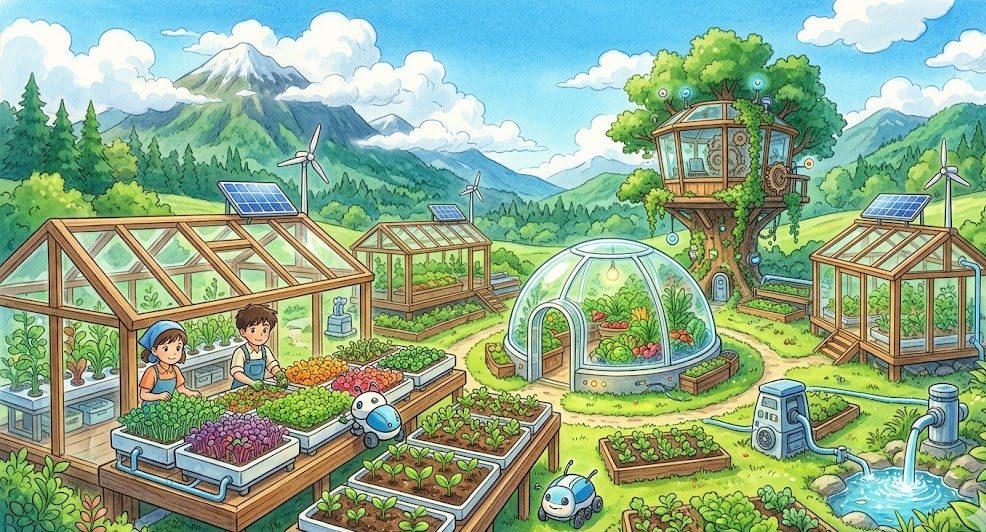
The global agricultural landscape is undergoing a massive paradigm shift. With urban populations exploding and arable land shrinking, the traditional image of farming—vast fields stretching across endless acres—is being redefined. Enter Next-Gen Micro-Farming.
By combining localized, small-scale agriculture with advanced automation and smart techniques, micro-farming is no longer just a hobby for gardening enthusiasts. It has evolved into a highly efficient, commercial-grade powerhouse capable of maximizing yields in minimal spaces.
Whether you are an agritech entrepreneur, a backyard grower looking to scale, or an investor eyeing the future of food, understanding these modern advancements is key to unlocking the full potential of micro-farming.
1. The Rise of Next-Gen Micro-Farming
Micro-farming typically refers to agricultural operations managed on a small scale—often on less than five acres, and frequently in urban or suburban environments. While the footprint is small, the impact is massive.
Next-gen micro-farming elevates this concept by utilizing vertical space, controlled environments, and data-driven methodologies. The goal is simple: produce more food per square foot while using fewer resources.
Why Micro-Farming is Gaining Momentum:
- Hyper-Localization: Food is grown right where it is consumed, drastically reducing transportation emissions and supply chain delays.
- Resource Efficiency: Modern setups can use up to 95% less water than traditional open-field farming.
- Year-Round Production: Controlled Environment Agriculture (CEA) isolates crops from unpredictable weather, droughts, and frosts.
2. Advanced Automation: The Backbone of High-Yield Systems
The magic ingredient that allows a micro-farm to compete with traditional farms is automation. Manually checking soil moisture, adjusting lights, and dosing nutrients can be incredibly time-consuming. Advanced automation takes the guesswork and heavy lifting out of the equation.
Automated Nutrient Delivery (Hydroponics & Aeroponics)
In next-gen setups, soil is often replaced by nutrient-rich water solutions (hydroponics) or mist (aeroponics). Automation systems use sensors to constantly monitor the Electrical Conductivity (EC) and pH levels of the water. If the nutrients dip, automated pumps inject the exact amount needed, ensuring plants never suffer a nutrient deficiency.
Robotic Planting and Harvesting
Small-scale robotic arms and automated seeding trays are now accessible to micro-farmers. These robots can plant thousands of seeds with millimeter precision, monitor growth patterns using computer vision, and even harvest delicate microgreens without bruising them.
3. Smart Techniques for Maximum Efficiency
Automation keeps the farm running, but smart techniques optimize the quality and speed of crop growth. These techniques leverage Internet of Things (IoT) devices and data analytics.
IoT Sensor Networks
A network of inexpensive IoT sensors placed throughout the grow space tracks vital variables in real-time:
- Ambient temperature and relative humidity.
- Carbon dioxide ($CO_2$) levels.
- Light intensity and spectrum absorption.
This data is synced to the cloud, allowing farmers to monitor and control their entire farm from a smartphone app, anywhere in the world.
Precision Climate Control & “Light Recipes”
Plants do not just need sunlight; they need specific wavelengths of light at different stages of growth. Smart micro-farms use programmable LED grow lights to deliver tailored “light recipes.” For instance, blue light encourages vegetative and leaf growth, while red light promotes flowering and fruiting. By tweaking the light spectrum and adjusting automated HVAC systems, growers can trick crops into growing up to 50% faster than they would outdoors.
4. Next-Gen Micro-Farming Methods
To implement these advanced automations, micro-farmers generally choose from three primary high-tech cultivation methods:
| Method | How It Works | Best For | Key Advantage |
| Vertical Farming | Stacking crops in vertical layers inside buildings or shipping containers. | Leafy greens, herbs, strawberries | Multiplies grow space exponentially. |
| Aquaponics | A closed-loop system combining aquaculture (fish farming) with hydroponics. | Tilapia, lettuce, tomatoes | Fish waste provides natural fertilizer for plants. |
| Deep Water Culture (DWC) | Plant roots are suspended in a constantly aerated, nutrient-rich water solution. | Heavy-feeding plants | Simple to automate and highly reliable. |
5. Monetizing a Smart Micro-Farm: An AdSense & Business Perspective
From a business standpoint, high-tech micro-farming has incredible margins if managed correctly. Because the yield quality is incredibly high and consistent, micro-farmers can target premium markets.
- B2B Restaurant Sales: High-end chefs willingly pay top dollar for fresh, living microgreens, rare edible flowers, and exotic herbs delivered hours after harvest.
- Subscription Boxes (CSA): Direct-to-consumer models like weekly salad or herb boxes provide steady, predictable recurring revenue.
- Hyper-Local Grocery Stores: Independent grocers value the extended shelf-life of locally grown hydroponic produce.
AdSense Optimization Tip: If you are blogging about this niche, focus your content on high-intent keywords like “best automated hydroponic systems,” “how to build an IoT vertical farm,” and “microgreens profitable business model.” Advertisers in the agricultural tech, automation software, and green energy sectors pay highly competitive CPC (Cost Per Click) rates for traffic looking at these topics.
Conclusion: The Future of Food is Small and Smart
Next-gen micro-farming is rewriting the rules of food production. By blending advanced automation with smart, data-driven techniques, small spaces can now outperform traditional agricultural plots in efficiency, sustainability, and speed.
As technology becomes cheaper and more accessible, the barrier to entry is dropping. Tomorrow’s food security won’t just depend on giant industrial rural farms—it will thrive in the automated vertical racks, retrofitted shipping containers, and smart backyard greenhouses of the next-generation micro-farmer.