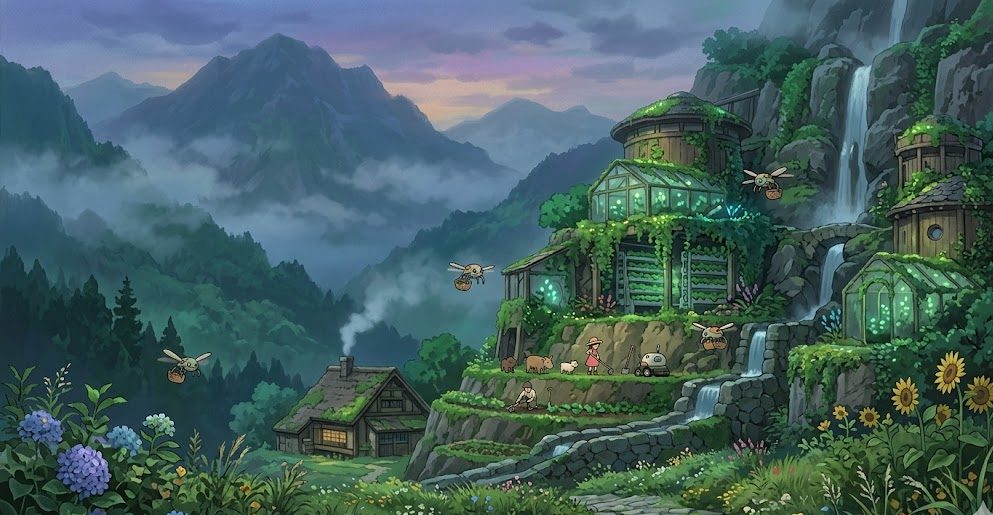
For decades, farming was defined by vast open fields and visible labor. But as we move through 2026, a new paradigm has emerged: Hidden Farming. This movement represents a shift toward agricultural systems that are either physically tucked away from the surface or technologically “invisible” through hyper-automation and stealth data layers.
Whether it is growing premium crops in abandoned subterranean bunkers or managing massive “stealth device farms” to optimize agri-tech data, Hidden Farming is the answer to a world facing climate volatility, land scarcity, and the need for absolute resource efficiency.
1. Defining Hidden Farming in 2026
Hidden Farming is not just one technique; it is a philosophy of Subsurface and Stealth production. It generally falls into two categories:
- Subterranean Agriculture: Utilizing underground spaces (bunkers, tunnels, and basements) to grow food in 100% controlled environments.
- Stealth Tech Farming: The use of “invisible” automation layers—such as hidden sensors, silent robotics, and decentralized device networks—to manage agricultural output without visible human intervention.
Both forms share a common goal: To produce maximum value with zero external disturbance.
2. The Rise of Subterranean (Underground) Farms
As surface temperatures fluctuate and extreme weather events become the “new normal” in 2026, the underground has become the safest place to grow high-value crops.
A. The “Cave” Advantage: Thermal Stability
Surface farms must battle frost, heatwaves, and storms. However, just 10 meters underground, the temperature remains constant year-round. This “Hidden” environment drastically reduces the energy needed for cooling or heating, making it the most energy-efficient way to operate Controlled Environment Agriculture (CEA).
B. Urban Infill: Farming in the Shadows
Hidden farming is solving the urban land crisis. By converting abandoned subway tunnels, parking garages, and old bomb shelters into high-tech hydroponic hubs, cities are now producing fresh greens and mushrooms just feet away from the consumers. This eliminates the “carbon footprint” of transportation, delivering food that is truly “Hidden” until it reaches the plate.
3. Stealth Technology: The “Invisible” Labor Force
While underground farms are physically hidden, many modern surface farms are now “Hidden” in a technological sense. In 2026, the most profitable farms are often those that look empty to the naked eye.
- Silent Robotics: Traditional loud tractors are being replaced by small, autonomous, electric “weeding bots” that operate at night. They move silently through the crops, hidden by the darkness or the height of the plants.
- Subsoil Sensor Networks: Farmers no longer “look” at the soil; they “listen” to it through thousands of buried IoT sensors. These sensors are invisible to the eye but provide a 24/7 data stream regarding moisture, nutrient levels, and microbial activity.
- Drone Scouting: High-altitude “Stealth Drones” monitor crop health using multispectral imaging. This allows for “Hidden Protection”—targeting a single diseased plant with a precise drop of bio-pesticide before the infection becomes visible to a human scout.
4. The Economics of Hidden High-Value Crops
Hidden farming isn’t just about survival; it’s about Premium ROI. Because these environments are 100% controlled, they are perfect for crops that are difficult to grow elsewhere:
- Exotic Mushrooms: Varieties like Lion’s Mane and Cordyceps thrive in the dark, humid “Hidden” bunkers.
- Medicinal Herbs: Saffron and Ginseng require specific, stable conditions that only a hidden, subterranean environment can provide consistently.
- Micro-Greens: These high-margin crops can be harvested every 7–10 days in stacked “Hidden” vertical racks, providing a continuous revenue stream.
5. Security and “Stealth” in Agri-Data
In 2026, data is as valuable as the crop itself. “Hidden Farming” also refers to the Secret Workflows used by elite agri-entrepreneurs to protect their intellectual property.
- Algorithmic Secrecy: Leading farms now use private, decentralized “Device Farms” to process local climate and soil data. By keeping this data “Hidden” on their own hardware networks rather than the public cloud, they prevent competitors from copying their high-yield “Recipes.”
- IP Protection: For breeders of new seed varieties, hidden farms provide a secure, enclosed environment where “Bio-Piracy” is impossible. Your genetic research stays underground and out of sight.
6. Challenges: The Cost of Going Under
Despite the benefits, Hidden Farming requires a sophisticated approach to overcome specific hurdles:
- High Initial CapEx: Building an underground farm or a stealth robotic network requires significant upfront investment in lighting (LEDs), ventilation, and automated hardware.
- Light Recipes: Since there is no sun, the farmer must master “Light Recipes”—specific wavelengths of LED light that trigger photosynthesis.
- Air Exchange: In subterranean spaces, managing CO2 levels and preventing mold is a precise science. Professional farmers use AI-Controlled HVAC systems to maintain a “Perfect Breath” environment for their plants.
7. The Future: Multi-Layered Landscapes
By 2030, we expect to see “Stacked Landscapes.” The surface of the earth will be returned to nature, forests, and grazing livestock, while the intensive “Hidden” production of vegetables, fruits, and grains moves into highly efficient underground or indoor hubs.
This shift will allow for Surface Regeneration while ensuring food security. Hidden Farming is the ultimate expression of “Smart Growth”—expanding our capabilities without expanding our footprint.
8. Conclusion: Embracing the Invisible
Hidden Farming is the silent engine of the 2026 agricultural revolution. It represents a move away from the “Bigger is Better” mindset toward a “Smarter and Stealther” approach. Whether you are an investor looking for the next high-yield tech niche or a farmer wanting to insulate your business from climate change, the underground and automated world of Hidden Farming offers a path to sustainable, high-revenue success.
The most successful farmers of the future won’t be seen in the fields; they will be found managing the invisible systems that keep the world fed.
Hidden Farming vs. Traditional Farming (2026 Comparison)
| Metric | Traditional Surface Farming | Hidden (Subterranean/Stealth) |
|---|---|---|
| Climate Impact | High Risk (Weather Dependent) | Zero Risk (Controlled) |
| Land Requirement | Massive Horizontal Space | Minimal (Vertical/Underground) |
| Water Efficiency | 30–40% Loss (Evaporation) | 95% Efficiency (Recirculation) |
| Labor | Manual/Visible | Automated/Invisible |
| Revenue Stability | Seasonal/Variable | Consistent/Year-Round |
Export to Sheets
Pro Tip: To maximize AdSense earnings on Hidden Farming content, focus on keywords like “Subterranean ROI,” “Automated CEA,” and “Controlled Environment Agriculture Infrastructure.”