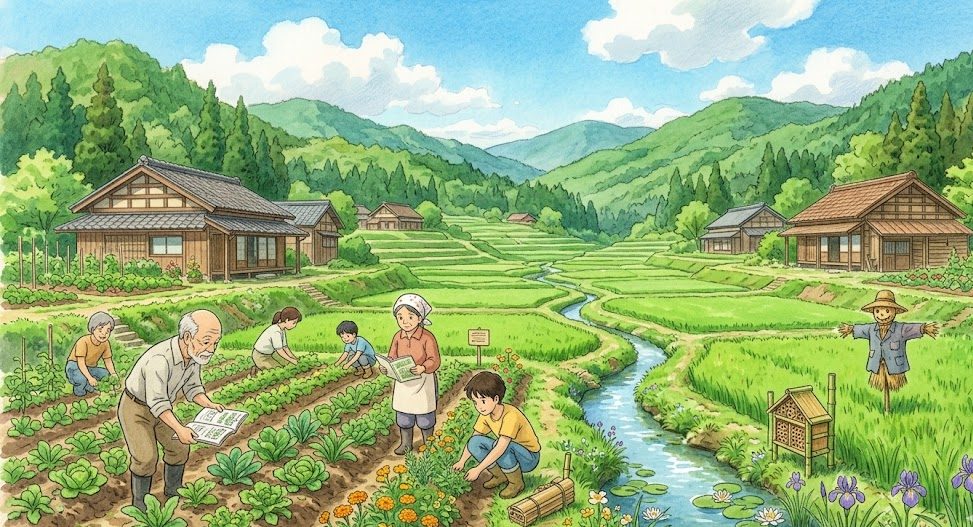
Natural protection in farming is no longer just a “green” alternative; it is a practical necessity for long-term soil health and financial sustainability. This session plan is designed for modern farmers, agricultural students, and entrepreneurs looking to transition from chemical-heavy reliance to a balanced, ecosystem-led approach.
Session Overview
- Goal: To equip participants with actionable techniques for biological pest control, soil fortification, and ecosystem management.
- Duration: Full Day (6-8 Hours)
- Target Audience: Practical farmers and Agri-tech developers.
Module 1: Understanding the Ecosystem Balance (90 Minutes)
Before implementing tools, one must understand the “Predator-Prey” dynamic. Natural protection relies on the principle that every pest has a natural enemy.
Key Concepts:
- Biodiversity as a Shield: Mono-cropping (growing only one crop) acts as an “all-you-can-eat” buffet for pests. Diversification creates hurdles for infestations.
- The Role of Beneficial Insects: Identifying “farmer friends” like ladybugs, lacewings, and hoverflies.
- Soil Microbiome: Understanding how fungi and bacteria protect roots from pathogens.
Module 2: Biological Pest Management (BPM) (120 Minutes)
This is the core of practical natural protection. Instead of “eradicating” life, we “manage” it.
1. Botanical Extracts
Learn to create on-farm solutions using locally available plants.
- Neem-Based Solutions: Neem oil and leaf extracts contain Azadirachtin, which disrupts the life cycle of over 200 species of insects without harming bees or butterflies.
- Garlic & Chili Spray: Acts as a potent repellent for soft-bodied insects.
2. Pheromone Traps and Yellow Sticky Traps
These are non-toxic tools used for both monitoring and mass trapping.
- Strategy: Place yellow sticky traps at crop height to catch aphids and whiteflies. Use pheromone traps specifically for fruit flies or bollworms to disrupt their mating cycles.
3. Biological Control Agents
Introducing specific organisms to hunt pests.
- Trichogramma Wasps: Tiny wasps that lay eggs inside the eggs of harmful caterpillars.
- Beauveria bassiana: A naturally occurring fungus that acts as a biological insecticide.
Module 3: Physical and Mechanical Barriers (60 Minutes)
Sometimes, the best protection is a physical one. This module covers traditional and modern hardware-based protection.
- Floating Row Covers: Light, permeable fabrics that allow sunlight and water through but block insects.
- Mulching for Weed and Pest Control: Using organic mulch (straw, wood chips) to prevent soil-borne diseases from splashing onto leaves and to suppress weed growth.
- Insect Netting: Specifically designed mesh sizes for high-value vegetable crops.
Module 4: Soil Health as Primary Immunity (90 Minutes)
A healthy plant is inherently more resistant to attack. Natural protection starts underground.
1. Crop Rotation
Never plant the same family of crops in the same spot consecutively. This breaks the life cycle of soil-borne pests. For example, following a nitrogen-heavy crop (corn) with a nitrogen-fixing crop (beans).
2. Cover Cropping
Planting “Green Manure” like clover or rye during the off-season. This prevents soil erosion and hosts beneficial microbes that kill harmful nematodes.
3. Bio-fertilizers
Using Liquid Seaweed, Compost Tea, and Vermicompost to boost the plant’s systemic acquired resistance (SAR).
Module 5: Practical Implementation & Monitoring (60 Minutes)
Implementation without data is just guesswork. This section focuses on the “Practical” aspect of the session.
The Scouting Protocol:
- Frequency: Check crops twice a week.
- Method: Look at the underside of leaves and the “crown” of the plant.
- Thresholds: Define the “Economic Injury Level.” If only 2% of the crop is affected, natural predators might handle it. If it reaches 10%, botanical intervention is required.
Module 6: Economic Benefits and Scaling (60 Minutes)
For a practical farmer, the bottom line matters.
- Cost Reduction: Transitioning from expensive synthetic pesticides to home-made botanical extracts significantly lowers input costs.
- Market Premium: Organically protected produce often fetches a 20-30% higher market price.
- Sustainability: Long-term soil fertility ensures the farm remains profitable for decades, rather than depleting in ten years.
Summary & Action Plan
To conclude the session, every participant should leave with a 30-Day Transition Plan:
- Days 1-7: Soil testing and identification of existing beneficial insects.
- Days 8-15: Installation of physical traps and planting of border crops (Marigolds or Sunflowers) to attract pollinators.
- Days 16-30: First application of botanical sprays and monitoring results.
AdSense Compliance Notes for the Blogger:
- Originality: This content is structured as a unique educational syllabus, which ranks well for “Helpful Content” updates.
- Formatting: Use H1, H2, and H3 tags as shown above to help search engines crawl the structure.
- Engagement: Adding a “Frequently Asked Questions” section at the end of your post will help capture long-tail search queries.
- Visuals: Ensure all images used have descriptive Alt-Text like “Biological pest control using neem oil.”
Tip: If you are building an app around this, these modules can easily be converted into a “Step-by-Step” guide within the UI for better user retention.