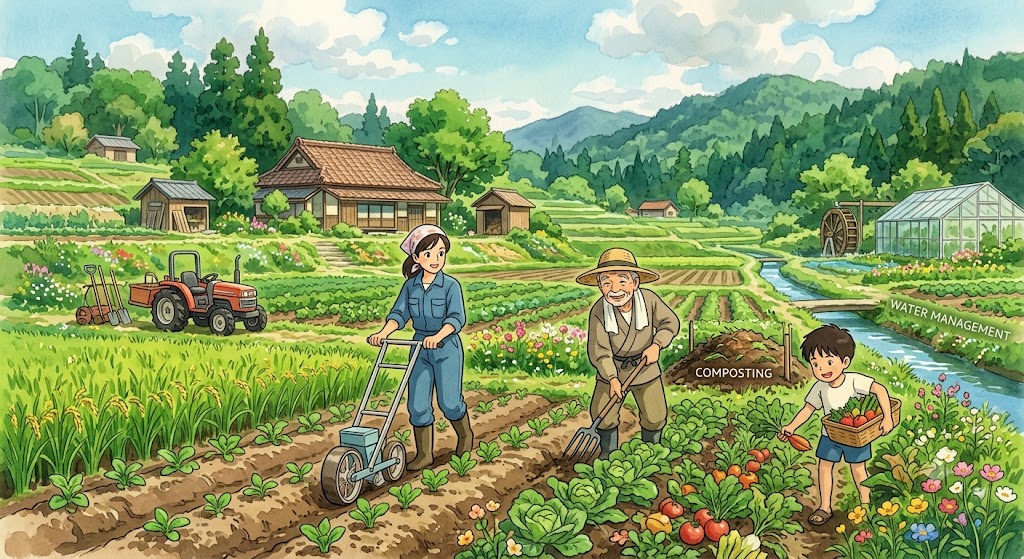
Farming is becoming more challenging every year. Rising input costs, unpredictable weather, soil pressure, pest problems, and market competition all affect farm income. Because of this, farmers need practical techniques that not only increase crop yield but also reduce unnecessary expenses.
The good news is that improving farm productivity does not always require expensive machinery or complicated technology. Many useful farming techniques are based on better planning, smart resource use, soil care, and regular crop monitoring. When these practices are followed consistently, farmers can grow healthier crops, reduce waste, and improve profit over time.
Here are some practical farming techniques that can help increase yield while keeping production costs under control.
1. Improve Soil Health First
Healthy soil is the foundation of better farming. Crops grown in poor soil usually need more fertilizer, more water, and more protection from pests and diseases. This increases production costs and lowers profit.
Farmers can improve soil health by adding compost, farmyard manure, crop residues, and organic matter. These materials improve soil structure, water retention, and nutrient availability. Healthy soil also supports beneficial microorganisms that help plants grow stronger roots.
2. Use Crop Rotation
Planting the same crop in the same field every season can reduce soil fertility and increase pest and disease problems. Crop rotation helps break pest life cycles and improves nutrient balance in the soil.
For example, rotating cereal crops with legumes can help improve soil nitrogen naturally. This may reduce the need for chemical fertilizers. Crop rotation also lowers the risk of repeated disease attacks and supports long-term productivity.
3. Choose the Right Seeds
Seed selection plays a major role in crop yield. Poor-quality seeds can lead to weak plants, uneven growth, and lower production. Farmers should select seeds that are suitable for their local climate, soil type, and growing season.
Using certified or high-quality seeds may cost slightly more at the beginning, but it often gives better germination, stronger plants, and improved harvest results. Disease-resistant varieties can also reduce spending on crop protection.
4. Practice Proper Irrigation
Water management is one of the most important ways to reduce farming costs. Overwatering wastes water, increases electricity or fuel expenses, and can damage plant roots. Underwatering causes plant stress and reduces yield.
Drip irrigation, sprinkler systems, and proper field channels can help deliver water more efficiently. Drip irrigation is especially useful because it sends water directly to the root zone, reducing waste and improving crop growth.
5. Control Weeds Early
Weeds compete with crops for sunlight, water, space, and nutrients. If weeds are not controlled early, they can reduce yield and increase labor costs later.
Farmers can manage weeds through mulching, manual weeding, cover crops, crop rotation, and proper spacing. Mulching is useful because it suppresses weed growth while helping the soil retain moisture.
6. Use Integrated Pest Management
Pest control does not always mean using expensive chemical pesticides. Integrated Pest Management, also known as IPM, combines different methods to control pests in a safer and more cost-effective way.
This includes regular field inspection, using pest-resistant crop varieties, encouraging beneficial insects, removing infected plants, using traps, and applying natural solutions when needed. IPM helps reduce unnecessary pesticide costs and protects beneficial insects.
7. Apply Fertilizer Wisely
Using too much fertilizer does not always mean better yield. In many cases, excess fertilizer increases costs and may damage soil and water quality. Fertilizer should be applied based on soil needs and crop growth stage.
Split fertilizer application can be more effective than applying everything at once. This means giving nutrients to crops at the right time, when they need them most. It improves nutrient use and reduces waste.
8. Maintain Proper Plant Spacing
Plant spacing affects sunlight, airflow, root development, and nutrient use. If plants are too close, they compete with each other and become more vulnerable to pests and diseases. If they are too far apart, land is not used efficiently.
Following recommended spacing for each crop helps plants grow better and makes field management easier. Proper spacing can improve yield without adding extra cost.
9. Reduce Post-Harvest Losses
Many farmers focus only on growing crops but lose a large part of their income after harvest because of poor storage, rough handling, or delayed selling. Reducing post-harvest losses is an important way to increase profit.
Crops should be harvested at the right time, handled carefully, dried properly when needed, and stored in clean, safe conditions. Better storage reduces spoilage and gives farmers more flexibility to sell when prices are better.
10. Keep Farm Records
Farm records help farmers understand where money is being spent and where profit is coming from. Simple records of seed cost, fertilizer use, labor, irrigation, pest control, harvest quantity, and selling price can reveal important patterns.
With proper records, farmers can compare seasons, avoid repeated mistakes, and make better decisions. Record keeping is a simple habit, but it can strongly improve farm management.
Extra Cost-Saving Ideas
Farmers can also reduce costs by buying inputs in bulk, repairing tools on time, sharing machinery with nearby farmers, using locally available organic materials, and planning labor needs before peak season. Small savings in different areas can create a big difference by the end of the season.
Conclusion
Increasing farm yield and reducing costs requires smart planning rather than just spending more money. Healthy soil, good seeds, proper irrigation, crop rotation, weed control, careful fertilizer use, and regular monitoring can all improve productivity.
Practical farming techniques work best when farmers apply them consistently and adjust them according to local conditions. By using resources wisely and reducing waste, farmers can grow better crops, protect their land, and improve long-term income.
FAQs
➤ What is the best way to increase crop yield?
Improving soil health, using quality seeds, managing water properly, and controlling pests early are some of the best ways to increase crop yield.
➤ How can farmers reduce production costs?
Farmers can reduce costs by using fertilizer wisely, saving water, controlling weeds early, keeping records, and avoiding unnecessary chemical use.
➤ Why is soil testing important?
Soil testing helps farmers understand nutrient needs and avoid wasting money on unnecessary fertilizers.
➤ Does crop rotation really help?
Yes. Crop rotation improves soil fertility, reduces pests and diseases, and supports better long-term productivity.
➤ Can small farmers use these techniques?
Yes. Most of these methods are simple, low-cost, and suitable for both small farms and larger farms.