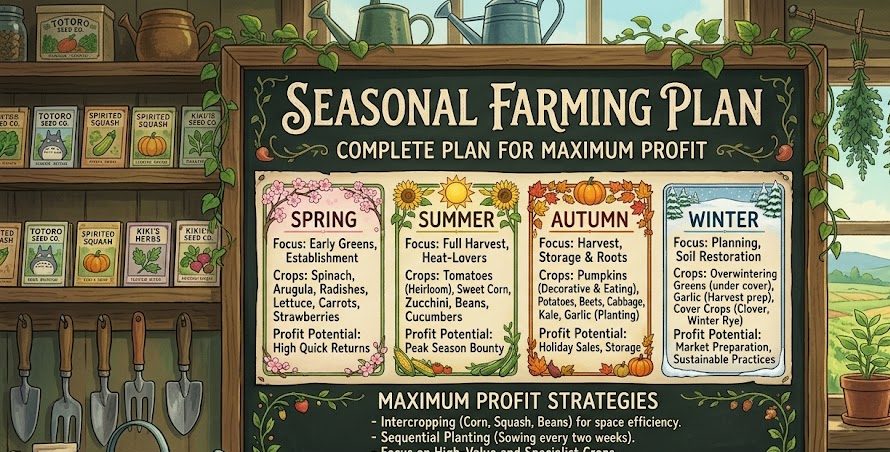
Successful farming depends on more than hard work. Timing plays a very important role in crop production. When farmers plant the right crop in the right season, crops grow better, pest problems are reduced, and market prices can be more favorable.
A seasonal farming plan helps farmers decide what to plant, when to plant it, and how to manage land throughout the year. This planning can improve crop yield, reduce waste, and increase profit. Without proper planning, farmers may face poor germination, low production, unnecessary input costs, and weak market returns.
Why Seasonal Planning Matters
Every crop has a preferred growing season. Some crops grow well in warm weather, while others need cooler temperatures. Planting outside the right season can increase the risk of disease, pest attacks, and poor growth.
Seasonal planning also helps farmers use land more efficiently. Instead of leaving fields empty after one harvest, farmers can plan another crop that fits the next season. This improves yearly income and keeps soil productivity active.
1. Spring Season Farming Plan
Spring is a good season for many vegetables, fruits, and short-duration crops. The weather is usually mild, and soil begins to warm up, making it suitable for planting.
Farmers can plant crops such as tomatoes, cucumbers, beans, peppers, lettuce, spinach, carrots, onions, and herbs during spring. These crops often grow well when temperatures are not too hot or too cold.
Best Spring Crops
➤ Tomatoes
➤ Cucumbers
➤ Beans
➤ Lettuce
➤ Spinach
➤ Carrots
➤ Herbs
Spring crops can give good profits if farmers target early market demand. Fresh vegetables and herbs often sell well during this period, especially when quality is high.
2. Summer Season Farming Plan
Summer is suitable for heat-loving crops. However, farmers must manage water carefully because high temperatures can cause moisture loss and plant stress.
Crops such as okra, maize, watermelon, melon, chili, eggplant, sweet potato, and certain pulses can perform well in summer. These crops can handle warmer temperatures when irrigation is managed properly.
Summer Management Tips
➤ Use mulching to keep soil cool and reduce water loss.
➤ Irrigate during morning or evening hours.
➤ Choose heat-tolerant crop varieties.
➤ Monitor crops frequently for pests.
Summer crops can be profitable when farmers focus on high-demand produce like watermelon, chili, okra, and fresh vegetables. Proper irrigation and pest control are very important during this season.
3. Monsoon or Rainy Season Farming Plan
The rainy season offers natural water support, but it also brings challenges such as waterlogging, fungal diseases, and pest attacks. Farmers should choose crops that can perform well with available rainfall.
Rice, maize, soybean, groundnut, cotton, pulses, millet, and green vegetables are commonly grown during the rainy season. The right crop depends on rainfall pattern and soil drainage.
Rainy Season Focus
Good drainage is very important during the rainy season. Standing water can damage roots and increase disease problems.
For better profit, farmers should avoid overcrowding plants and keep fields clean. Regular monitoring helps control pests and diseases before they spread.
4. Winter Season Farming Plan
Winter is one of the best seasons for many vegetables and cereal crops. Cooler temperatures support crops that may struggle during hot weather.
Farmers can plant wheat, mustard, peas, cabbage, cauliflower, broccoli, carrots, radish, spinach, coriander, garlic, onions, and potatoes during winter. These crops often produce good quality when temperature conditions are favorable.
Best Winter Crops
➤ Wheat
➤ Mustard
➤ Potatoes
➤ Cabbage
➤ Cauliflower
➤ Peas
➤ Carrots
➤ Spinach
Winter vegetables can be profitable because demand is usually steady. Farmers who manage quality, grading, and timely harvesting can get better market returns.
5. Choose Crops Based on Market Demand
Growing the right crop is important, but selling it at the right price is equally important. Farmers should study local market demand before planting.
High-yield crops do not always mean high profit. Sometimes a lower-yield crop with strong market demand can bring better income. Farmers should compare input cost, expected yield, selling price, storage life, and transport cost before choosing a crop.
6. Use Short-Duration Crops for Extra Income
Short-duration crops can help farmers earn income between major crop seasons. Leafy vegetables, radish, coriander, beans, and some herbs can be harvested quickly.
These crops are useful for small farmers because they require less time and can provide regular cash flow. They can also be grown in unused spaces or between rows of main crops.
7. Plan Crop Rotation for Better Soil
Crop rotation helps maintain soil fertility and reduces pest and disease buildup. Growing the same crop repeatedly in one field can weaken soil and increase farming problems.
Farmers can rotate cereals with legumes, vegetables with pulses, or deep-rooted crops with shallow-rooted crops. This improves nutrient balance and supports long-term productivity.
8. Manage Water According to the Season
Water needs change with the season. Summer crops need more careful irrigation, while rainy season crops need proper drainage. Winter crops usually need balanced watering because excess water can cause root problems.
Drip irrigation, mulching, water channels, and rainwater harvesting can help farmers reduce water waste and improve crop performance.
9. Prepare Before Each Season Starts
Farmers should prepare land, seeds, fertilizer, tools, and irrigation systems before the season begins. Delayed preparation can lead to late planting, which may reduce yield and profit.
Good preparation also includes checking seed quality, repairing equipment, arranging labor, and planning pest-control methods in advance.
10. Keep Records of Every Season
Farm records help farmers understand which crops performed well and which crops caused losses. Records should include seed cost, fertilizer cost, labor, irrigation, pest control, yield, selling price, and final profit.
By comparing records from different seasons, farmers can make smarter planting decisions in the future.
Simple Year-Round Farming Strategy
➤ Spring: Plant fresh vegetables and herbs.
➤ Summer: Grow heat-tolerant crops with proper irrigation.
➤ Rainy Season: Choose crops that match rainfall and soil drainage.
➤ Winter: Focus on vegetables, cereals, and high-demand crops.
Conclusion
A complete seasonal farming plan helps farmers use land, water, labor, and money more efficiently. When crops are planted at the right time, they grow stronger and produce better results.
Farmers should choose crops based on season, soil, water availability, and market demand. With proper planning, crop rotation, irrigation management, and record keeping, farming can become more productive and profitable throughout the year.
FAQs
➤ Why is seasonal farming planning important?
Seasonal planning helps farmers plant crops at the right time, improve yield, reduce risks, and increase profit.
➤ Which season is best for vegetable farming?
Vegetables can be grown in different seasons, but winter and spring are often suitable for many high-quality vegetables.
➤ How can farmers choose profitable crops?
Farmers should compare market demand, input cost, expected yield, water needs, and selling price before choosing crops.
➤ What crops grow well in summer?
Okra, maize, watermelon, chili, eggplant, melon, and sweet potato can grow well in warm conditions with proper irrigation.
➤ How does crop rotation help farmers?
Crop rotation improves soil fertility, reduces pest and disease problems, and supports better long-term production.