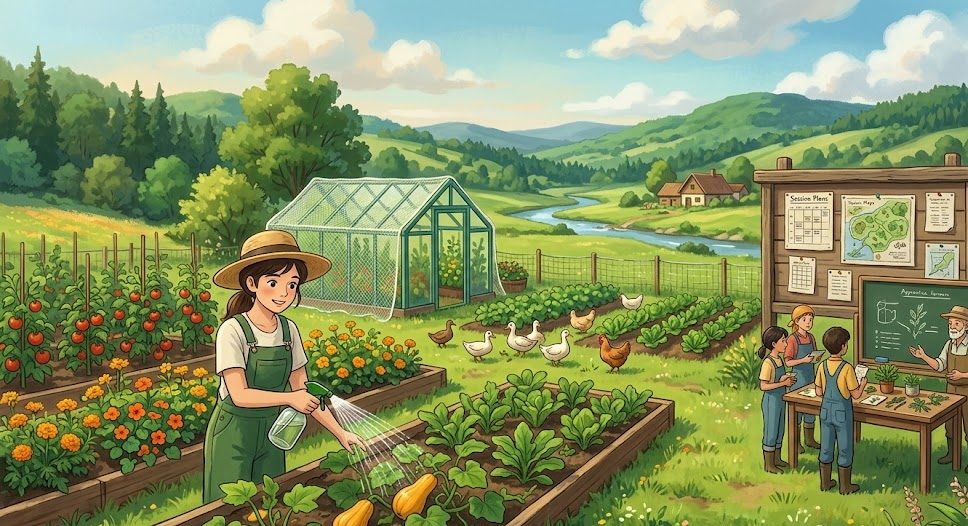
In modern agriculture, the rising use of chemicals is not only degrading soil fertility but also posing significant risks to human health. Consequently, Natural Protection and Practical Farming techniques have emerged as sustainable and profitable alternatives. This guide details how you can protect your crops using natural methods and elevate your farming through an effective Session Plan.
1. What is Practical Farming?
Practical farming represents a blend of traditional wisdom and modern science that can be easily implemented on the ground. Instead of relying solely on theoretical knowledge, it prioritizes the actual condition of the field, soil health, and local climate.
2. Natural Protection Methods: Safeguarding Crops Naturally
To protect crops from pests and diseases, replace expensive chemicals with these natural alternatives:
- Neem-Based Protection: Neem acts as a natural insecticide. Sprays derived from neem can control nearly 200 types of harmful pests.
- Dashparni Ark: This powerful organic tool is made from the leaves of ten different bitter plants. It significantly boosts the disease resistance of crops.
- Biological Control: Encourage the presence of beneficial insects like ladybugs and dragonflies in your fields. These insects act as natural predators, eating harmful aphids and larvae to protect your harvest.
- Mulching: Covering the soil with dry leaves or grass retains moisture and suppresses weeds, naturally protecting the soil ecosystem.
3. How to Create an Effective Session Plan
Success in farming requires a systematic approach. A well-structured Session Plan helps you take the right steps at the right time.
| Phase | Activity | Objective |
| Pre-Planting | Soil Testing & Treatment | Understanding nutrient deficiencies and applying natural fertilizers. |
| Seeding | Seed Treatment (Bijamrit) | Protecting seeds from fungal infections and pathogens. |
| Growth Phase | Natural Sprays & Nutrition | Periodic application of neem extracts and Jivamrit. |
| Management | Weed & Pest Monitoring | Observing beneficial insect populations and controlling weeds. |
| Harvesting | Timely Reaping | Ensuring maximum crop quality and market value. |
4. Soil Health: The Foundation of Farming
The greatest pillar of natural protection is the health of the soil. If the soil is “alive” and nutrient-rich, the crops are naturally less susceptible to diseases.
- Use of Jivamrit: This solution, made from cow dung, urine, and jaggery, increases the population of beneficial microbes in the soil by millions.
- Crop Rotation: Avoid growing the same crop repeatedly in the same field. This breaks the lifecycle of pests and maintains soil vitality.
5. The Future of Farming: Smart & Natural
The modern farmer does more than just plow; they utilize data and technology. By integrating natural protection methods with Smart Irrigation and Soil Sensors, you can move toward ‘Smart Practical Farming.’
Conclusion
By following Natural Protection methods and a precise Session Plan, you can reduce input costs while providing consumers with chemical-free, healthy food. Practical farming is the path forward to make agriculture a respectable and profitable profession for future generations.