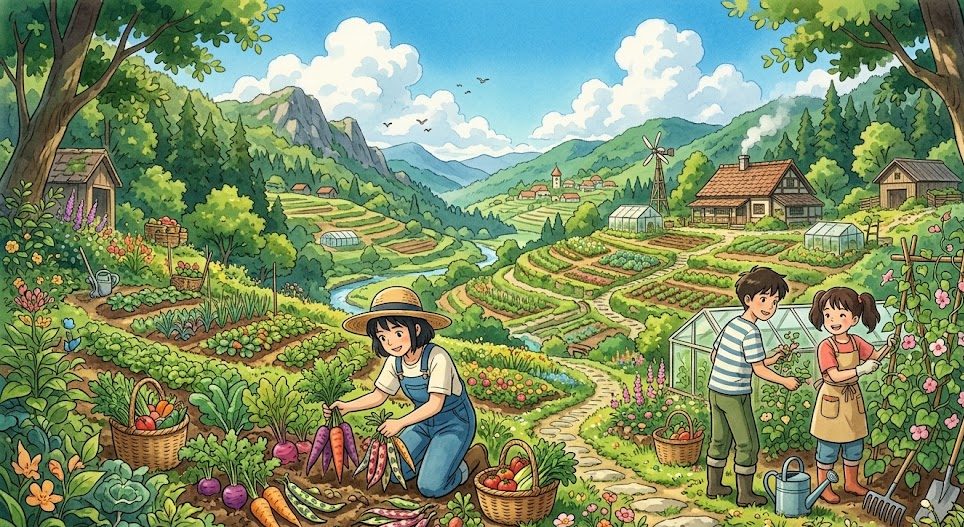
In an era dominated by industrial monoculture and mass-market food production, a quiet revolution is taking root. Niche agricultural practices—ranging from micro-farming and hydroponics to vertical gardening and specialized crop rotation—are no longer just experimental hobbyist pursuits. They have evolved into sophisticated, scalable strategies that offer sustainable solutions to modern food security challenges, environmental degradation, and the increasing demand for high-quality, organic produce.
For the modern cultivator, shifting toward niche agriculture is not merely about choosing a different crop; it is about redefining the relationship between land, technology, and the market.
1. The Power of Micro-Farming and Vertical Integration
Micro-farming is the art of maximizing yield within a minimal footprint. By utilizing intensive planning, bio-intensive techniques, and high-turnover planting cycles, small-scale farmers are proving that you do not need hundreds of acres to generate significant revenue.
Vertical farming and shelf-based hydroponic systems represent the frontier of this space. By stacking growing layers and controlling environmental variables—such as light spectrum, humidity, and nutrient delivery—producers can grow greens, herbs, and certain fruits year-round, regardless of local climate conditions. This reduces transportation costs, minimizes water usage by up to 90% compared to traditional field methods, and eliminates the need for harmful chemical pesticides.
2. Survival Farming: Building Resilience
Survival farming, or subsistence farming with a modern twist, focuses on self-sufficiency and creating a closed-loop ecosystem. This practice emphasizes heirloom seeds, seed-saving, and integrated pest management (IPM) to create a farm that thrives without heavy reliance on external inputs like synthetic fertilizers or heavy machinery.
The true potential of survival farming lies in resilience. By diversifying crop varieties and incorporating permaculture principles (such as layering trees, shrubs, and ground-cover crops), farmers create a self-healing landscape. This is a critical strategy for mitigating the risks associated with climate change, such as erratic rainfall and soil erosion.
3. The Precision of Hydroponics and Aeroponics
Hydroponics is the ultimate marriage of technology and biology. By suspending plants in nutrient-rich water solutions, growers remove the “wait” time associated with soil-based nutrient absorption.
The economic potential here is found in specialization. Rather than competing with commodity wheat or corn, niche hydroponic growers focus on high-value, fast-growing crops like microgreens, gourmet basil, and artisanal lettuces. These items command premium prices in local urban markets and restaurants, allowing a grower to turn a basement or a small greenhouse into a steady revenue stream.
4. Strategic Crop Rotation and Soil Health
While high-tech methods gain headlines, the foundational strength of niche agriculture remains in the soil. Strategic crop rotation—alternating legumes, nitrogen-heavy crops, and deep-rooting plants—is essential for maintaining long-term soil vitality.
In niche farming, this is taken a step further through companion planting. By pairing specific crops that naturally deter pests or fix nitrogen, farmers reduce their operational costs. A healthy soil microbiome is the “hidden asset” of any farm; it increases the nutritional density of the produce, which is a key selling point for health-conscious consumers who are willing to pay more for nutrient-dense, chemical-free food.
5. Monetizing the Niche: Connecting with the Modern Consumer
The most successful niche farmers understand that they are selling more than food; they are selling a narrative of transparency and quality. To unlock the financial potential of these practices, consider the following strategies:
- Direct-to-Consumer (D2C) Models: Utilize local farmers’ markets and community-supported agriculture (CSA) programs to bypass middle-men.
- The “Story” Factor: Modern consumers are deeply interested in the origins of their food. Using digital platforms to showcase your farming process, from seed to harvest, builds trust and creates a loyal customer base.
- Value-Added Products: Expand your revenue by processing your harvest. Drying herbs, creating artisanal jams, or packaging microgreen kits turns perishable goods into shelf-stable, higher-margin products.
- Education and Agritourism: Share your knowledge. Hosting workshops on hydroponics or micro-farming can become an additional stream of income while establishing your farm as a local hub for sustainable innovation.
Conclusion: The Future is Small, Smart, and Scalable
The path to unlocking the potential of niche agricultural practices lies in the balance between traditional ecological wisdom and modern technological precision. Whether you are managing a small vertical setup or a diverse micro-farm, the opportunity for profitability exists where innovation meets market demand.
As global supply chains face increasing volatility, localized, intensive, and high-quality agriculture is no longer just a trend—it is a necessity. By investing in soil health, leveraging space-saving technology, and cultivating a direct connection with your community, you can turn a niche agricultural project into a thriving, sustainable, and profitable enterprise. The future of farming is not found in massive monocultural tracts, but in the precision, care, and efficiency of the niche producer.