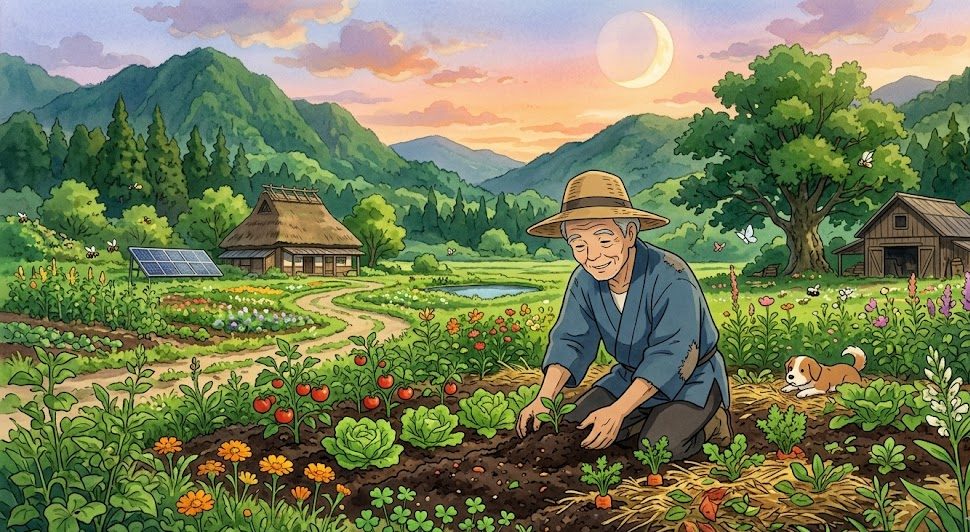
In the race for higher yields, modern agriculture has often relied on synthetic fertilizers, chemical pesticides, and heavy tilling. But in 2026, the global shift is clear: the future of farming lies in working with nature, not against it. Natural farming is not just a trend; it is a scientifically sound approach to restoring soil health, cutting input costs, and ensuring long-term profitability.
If you are a farmer looking to transition from chemical dependency to a self-sustaining system, you’ve come to the right place. This guide will walk you through the core principles of sustainable soil management.
What is Natural Farming?
At its heart, natural farming—often associated with the principles of Masanobu Fukuoka—is about minimizing human intervention. It focuses on maintaining the biological balance of the soil. Instead of feeding the plant directly via chemicals, you feed the soil ecosystem, and the soil, in turn, feeds the plant.
The “Living Soil” Concept
Conventional farming often treats soil as a medium to hold plants in place. Natural farming treats soil as a living organism. A teaspoon of healthy soil contains more microorganisms than there are people on Earth. These microbes are responsible for breaking down organic matter and making nutrients available to plant roots. When you apply harsh chemicals, you kill these microbes, creating a “dead” soil that requires more chemicals to function.
3 Pillars of Sustainable Soil Management
1. Zero-Tillage (No-Till Farming)
Tilling is the act of turning the soil, which helps in weed control but destroys the delicate fungal networks (mycelium) that help plants absorb water and nutrients.
- The Strategy: By leaving the soil undisturbed, you maintain its structure. Use organic mulches (like dried leaves or crop residue) to suppress weeds instead of a plow.
- The Benefit: No-till farming preserves soil moisture, significantly reducing irrigation costs during the dry season.
2. The Power of Mulching
In nature, the soil is never bare. It is always covered by leaves, grass, or plant matter. Bare soil is subject to erosion, moisture evaporation, and harmful temperature spikes.
- The Strategy: Apply a thick layer of organic mulch around your crops. This creates a micro-climate where earthworms and beneficial bacteria thrive.
- The Benefit: As the mulch decomposes, it slowly releases nutrients back into the soil, acting as a natural, time-release fertilizer.
3. Integrated Nutrient Management
Instead of buying expensive NPK (Nitrogen, Phosphorus, Potassium) bags, natural farmers use on-farm waste.
- Composting: Transform your crop residue and animal manure into “black gold.”
- Green Manure: Planting cover crops like legumes (clover or beans) and then cutting them back into the soil adds massive amounts of nitrogen naturally.
- Liquid Fertilizers: Using fermented mixtures of cow dung, urine, and jaggery (often called Jeevamrut) provides an instant boost of microbial life to your soil.
Why This is Better for Your Wallet (AdSense & Profitability)
If you are wondering why this matters for your farm’s bottom line, consider the Input-Output Ratio.
- Reduced Cost: You stop buying expensive chemical fertilizers and pesticides. Your primary “investment” becomes your labor and smart management.
- Premium Pricing: Consumers are willing to pay 20–30% more for produce that is labeled “naturally grown” or “residue-free.”
- Sustainability: Your land does not become barren after 10 years of use. It becomes more fertile over time, protecting the asset value of your farm.
Step-by-Step Transition Plan
You don’t have to switch your entire farm overnight. Follow this plan to reduce risk:
- Phase 1 (The Pilot): Convert 10–20% of your land to natural methods. Observe the soil health and yield differences.
- Phase 2 (Observe & Record): Document your soil color changes, moisture retention, and pest cycles. You will likely notice that after two seasons, pests decrease as natural predators (like ladybugs) return.
- Phase 3 (Scaling): Once you have mastered your own composting and microbial liquid fertilizers, scale your practice to the rest of the farm.
Conclusion: The Path Forward
Natural farming is an exercise in patience and observation. It is a transition from being a “consumer of products” to a “manager of ecosystems.” By restoring your soil today, you are ensuring that your land remains productive for the next generation.
Are you ready to start your journey? * Start small. * Focus on building organic matter. * Stop the chemicals.
The soil is ready to work for you—if you give it the chance to breathe.
If you found this guide helpful, stay tuned for our next article where we discuss “High-Value Crop Rotation Secrets to Increase Your Annual Revenue.” Subscribe to our newsletter for more farming tips, and don’t forget to check out our latest resources on smart farm automation!