➡️ INTRODUCTION
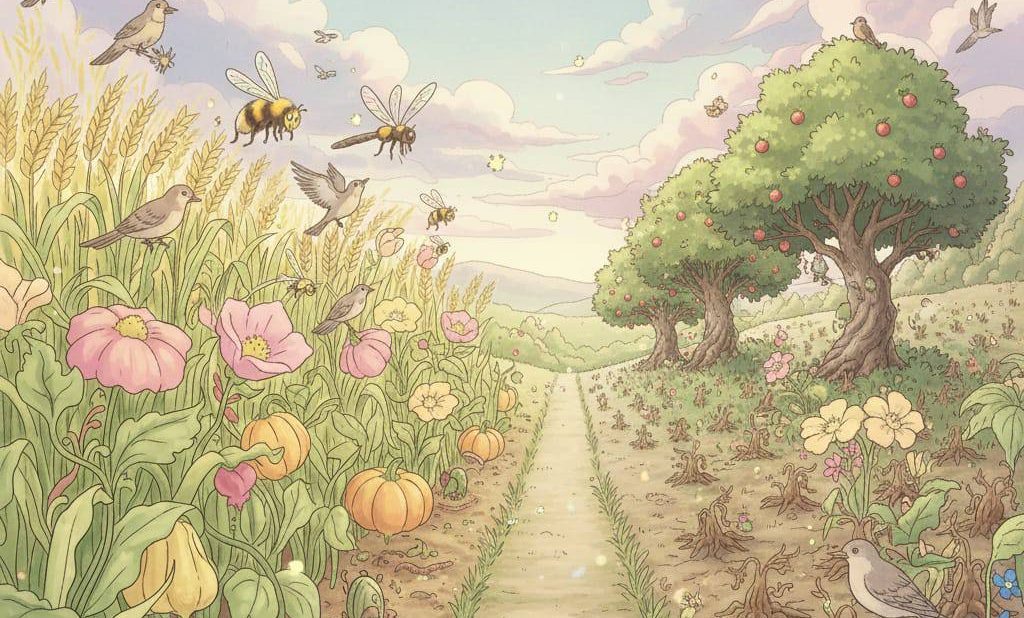
→ Many farms struggle with recurring problems such as poor yields, rising input costs, pests, and declining soil health. Often, these issues are not caused by a lack of effort or resources, but by a missing natural balance within the farming system. Modern practices sometimes focus too much on quick fixes while ignoring how soil, plants, water, insects, and climate work together. When this balance is disturbed, farms become dependent on external inputs and face repeated challenges. Understanding the natural balance most farms are missing helps farmers grow healthier crops with fewer problems. By restoring this balance, farmers can reduce costs, improve productivity, and build a more resilient and sustainable farming system over time.
➡️ Key Points / Benefits
→ Strengthens crop health and natural resistance
→ Reduces dependency on chemicals and external inputs
→ Improves soil fertility and structure
→ Encourages beneficial insects and organisms
→ Lowers long-term farming costs
→ Supports stable and sustainable crop yields
🔵 1️⃣ → Balance Between Soil Life and Crop Nutrition
Healthy farms depend on living soil, not just nutrients. Soil contains beneficial microorganisms that help break down organic matter and release nutrients to plants. When soil life is damaged, crops rely heavily on fertilizers and become weaker.
Practical steps to restore soil balance include:
- Adding organic matter such as compost or crop residues.
- Reducing excessive tillage that harms soil organisms.
- Avoiding overuse of chemical inputs.
For example, soils rich in microbial life improve nutrient availability naturally. Crops grown in such soil develop stronger roots and better immunity. Balanced soil life ensures nutrients are released gradually, matching crop needs and reducing waste.
🔵 2️⃣ → Harmony Between Crop Growth and Water Use
Water is essential, but too much or too little disrupts farm balance. Many farms suffer because irrigation is applied without considering soil condition or crop stage.
Balanced water management includes:
- Watering based on soil moisture rather than fixed schedules.
- Improving drainage to avoid waterlogging.
- Conserving moisture through mulching or residue cover.
Mistakes to avoid:
- Overwatering to correct poor crop growth.
- Ignoring signs of moisture stress.
When water use matches crop needs, roots grow deeper and plants become more resilient. Balanced water management reduces disease risk and saves energy and labor.
🔵 3️⃣ → Natural Control of Pests and Diseases
In balanced farms, pests and diseases are kept under control naturally. Problems arise when beneficial insects and organisms are removed through excessive chemical use.
Actionable tips to restore balance include:
- Encouraging beneficial insects by reducing unnecessary sprays.
- Maintaining plant diversity around fields.
- Monitoring pest levels instead of reacting immediately.
Advantages of natural balance:
- Fewer pest outbreaks.
- Lower pesticide costs.
For example, fields with diverse plant life often have fewer severe pest attacks. Natural predators help keep pest populations under control, reducing the need for frequent chemical treatments.
🔵 4️⃣ → Crop Diversity and Rotation for Field Stability
Growing the same crop repeatedly weakens the farming system. It depletes specific nutrients and encourages pest and disease buildup.
Practical guidance includes:
- Rotating crops with different nutrient needs.
- Including soil-improving crops in the rotation.
- Avoiding long-term monocropping.
Mistakes to avoid:
- Choosing crops based only on short-term profit.
- Ignoring the benefits of rotation.
Crop diversity improves soil structure and breaks pest cycles. Farms with balanced crop systems are more stable and face fewer long-term problems.
🔵 5️⃣ → Aligning Farming Practices With Natural Seasons
Nature works in cycles, but many farms ignore seasonal rhythms. Planting, fertilizing, and harvesting without considering seasonal conditions increases stress on crops.
Step-by-step seasonal alignment includes:
- Planting crops at the right time for local climate.
- Applying nutrients during active growth periods.
- Allowing fields time to recover between seasons.
Dos and don’ts:
- Do observe seasonal weather patterns.
- Do not rush operations against natural conditions.
When farming practices follow seasonal rhythms, crops grow with less stress and require fewer corrections during the season.
➡️ CONCLUSION
→ The natural balance most farms are missing is the harmony between soil life, crops, water, insects, and seasonal cycles. When this balance is restored, farms become healthier, more productive, and less dependent on costly inputs. By improving soil health, managing water wisely, encouraging natural pest control, rotating crops, and respecting seasonal rhythms, farmers can solve many problems before they start. This balanced approach reduces costs, protects the environment, and builds long-term resilience. Farmers who work with nature rather than against it create stronger systems that support sustainable and profitable farming for years to come.