➡️ INTRODUCTION
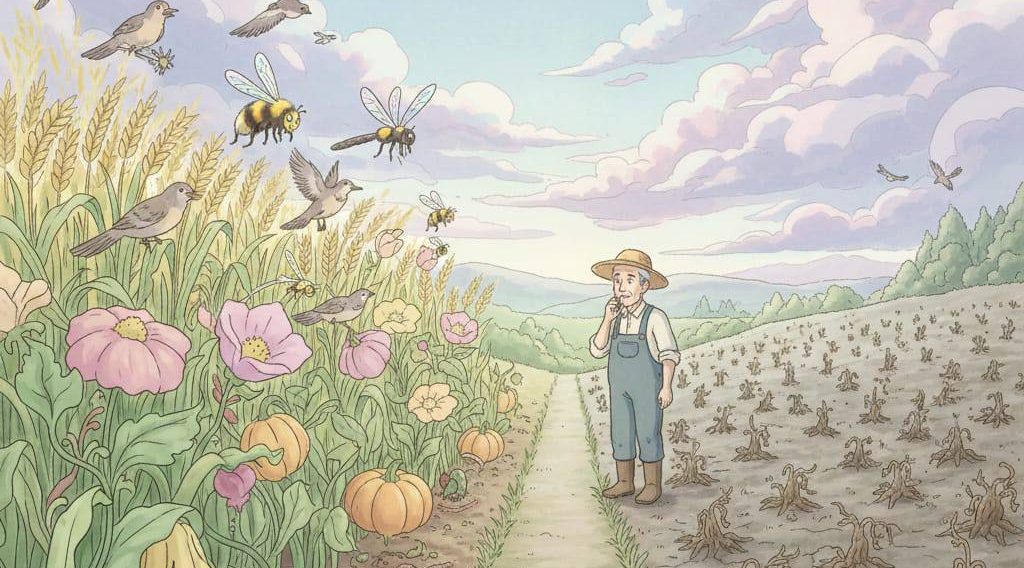
→ Farmers often notice that pests damage some fields heavily while nearby fields remain relatively healthy. This difference is not random. Pests attack certain fields more than others because of specific conditions that make those fields more attractive or vulnerable. Factors such as crop health, soil condition, water management, and farming practices play a major role in pest behavior. Understanding why pests prefer some fields helps farmers prevent infestations instead of reacting after damage occurs. This knowledge allows growers to reduce crop losses, lower pesticide costs, and protect beneficial insects. By identifying the reasons behind pest attacks, farmers can create stronger, more balanced fields that naturally resist pest pressure.
➡️ Key Points / Benefits
→ Helps farmers understand the real causes of pest problems
→ Reduces unnecessary pesticide use and expenses
→ Improves crop strength and natural pest resistance
→ Supports healthier soil and field balance
→ Prevents repeated pest attacks season after season
→ Leads to more stable yields and farm profitability
🔵 1️⃣ → Weak Crops Attract More Pests
Pests are naturally drawn to weak or stressed plants. Crops that lack proper nutrition, water balance, or healthy roots release signals that attract insects. Strong, well-grown plants are better at resisting pest attacks.
Practical steps to strengthen crops include:
- Maintaining balanced soil nutrition.
- Avoiding overuse of nitrogen fertilizers.
- Ensuring proper plant spacing for air circulation.
For example, crops with soft, fast growth caused by excess nitrogen are easier for pests to feed on. When plants are healthy and balanced, pests find it harder to damage them. Strong crops act as the first line of defense against infestations.
🔵 2️⃣ → Poor Soil Health Increases Pest Pressure
Soil health plays a major role in pest activity. Fields with low organic matter, compacted soil, or poor drainage often produce stressed crops that attract pests.
Key soil-related factors include:
- Low microbial activity reducing plant immunity.
- Compacted soil limiting root growth.
- Poor drainage creating humid conditions.
Practical improvement tips:
- Add organic matter to improve soil structure.
- Avoid working soil when it is too wet.
- Encourage beneficial soil organisms.
Healthy soil supports strong root systems and balanced plant growth. This reduces pest attraction and improves the field’s natural resistance.
🔵 3️⃣ → Repeated Cropping Creates Pest Build-Up
Growing the same crop repeatedly in the same field allows pests to survive and multiply easily. When their preferred food source is always available, pest populations increase season after season.
Actionable prevention strategies include:
- Rotating crops with different plant families.
- Including non-host crops to break pest cycles.
- Avoiding continuous monocropping.
Mistakes to avoid:
- Ignoring pest history of a field.
- Relying only on chemicals instead of rotation.
Crop rotation disrupts pest life cycles and reduces long-term pressure. Fields with diverse cropping systems usually experience fewer pest problems.
🔵 4️⃣ → Water and Moisture Conditions Influence Pests
Pests thrive in certain moisture conditions. Fields that are overwatered or poorly drained often create favorable environments for insects and disease-causing organisms.
Practical water management tips include:
- Avoiding standing water in fields.
- Watering based on soil moisture, not fixed schedules.
- Improving drainage in low-lying areas.
Advantages of proper water management:
- Healthier root systems.
- Reduced humidity around plants.
Balanced moisture keeps crops strong and limits conditions that favor pest breeding. Fields with proper water control are less attractive to pests.
🔵 5️⃣ → Lack of Natural Enemies Encourages Pest Attacks
Fields with low biodiversity often experience higher pest pressure. Beneficial insects, birds, and soil organisms help control pest populations naturally. When these are missing, pests multiply quickly.
Step-by-step ways to support natural control include:
- Reducing unnecessary pesticide use.
- Maintaining field borders or natural vegetation.
- Encouraging beneficial insects through diverse planting.
Dos and don’ts:
- Do observe pest and beneficial insect balance.
- Do not eliminate all insects indiscriminately.
Fields that support natural enemies maintain better pest control and require fewer chemical interventions.
➡️ CONCLUSION
→ Pests attack some fields more than others because of specific conditions that favor their survival and growth. Weak crops, poor soil health, repeated cropping, improper water management, and lack of natural enemies all increase pest pressure. By addressing these root causes, farmers can reduce pest problems naturally and sustainably. Focusing on prevention rather than reaction saves money, protects crops, and improves long-term farm health. When fields are balanced and crops are strong, pests are less likely to cause serious damage, leading to more stable and productive farming systems.