➡️ INTRODUCTION
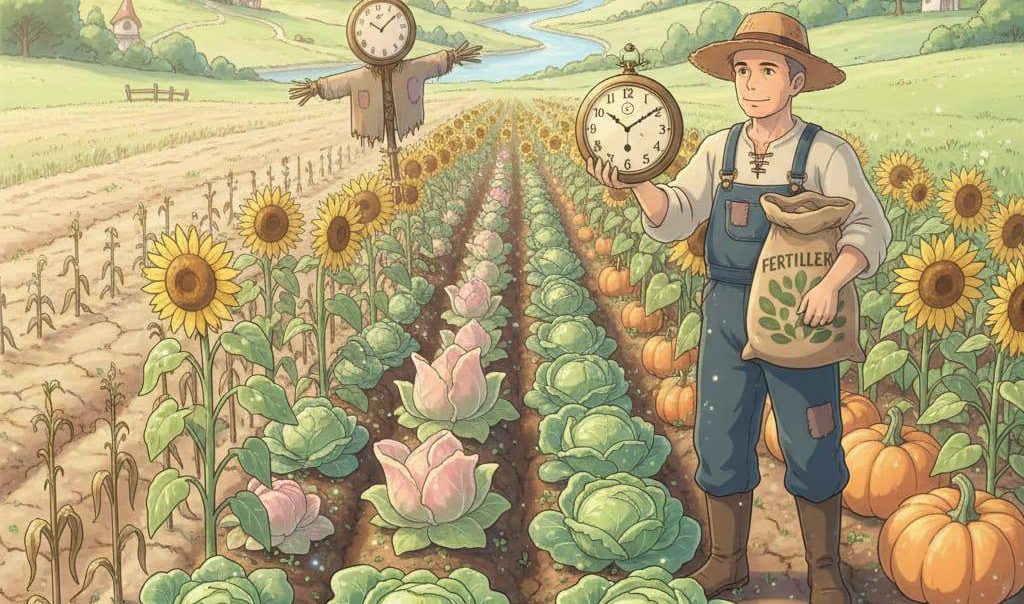
→ Many farmers believe that applying more fertilizer is the fastest way to increase crop yield. While nutrients are important, crop timing often has a much greater impact on success than fertilizer alone. Planting at the right time allows crops to use natural sunlight, moisture, and soil conditions more efficiently. When crops are planted too early or too late, even the best fertilizer cannot correct weak growth, stress, or yield loss. Understanding crop timing helps farmers reduce waste, lower input costs, and protect soil health. By focusing on when to plant instead of how much fertilizer to apply, growers can achieve healthier crops, stronger roots, and more stable harvests with fewer risks.
➡️ Key Points / Benefits
→ Stronger germination and early crop establishment
→ Better use of natural soil nutrients
→ Reduced fertilizer waste and lower costs
→ Less stress from weather, pests, and diseases
→ Improved yield consistency and crop quality
→ Long-term soil health and sustainability
🔵 1️⃣ → Crop Timing Determines Early Plant Strength
The first few weeks after planting are critical for any crop. If planting is done at the wrong time, seeds may struggle to germinate or seedlings may grow slowly. Weak early growth cannot always be fixed later, even with high fertilizer use.
Practical guidance includes:
- Plant when soil temperature is suitable for the crop.
- Avoid planting during extreme cold or heat periods.
- Ensure enough soil moisture is available at planting time.
When crops start strong, their roots grow deeper and wider, allowing better nutrient uptake naturally. Fertilizer works best only when plants are healthy enough to absorb it. Proper timing creates this foundation, while poor timing limits crop potential from the start.
🔵 2️⃣ → Natural Nutrient Availability Depends on Timing
Soil naturally releases nutrients based on temperature, moisture, and biological activity. If crops are planted at the wrong time, they may not match this natural nutrient cycle. This results in poor nutrient uptake and unnecessary fertilizer application.
Key points to understand:
- Warm, moist soils activate beneficial microorganisms.
- These microbes release nutrients gradually for plant use.
- Poor timing reduces microbial activity and nutrient flow.
For example, planting too early in cold soil slows nutrient release, while planting too late may expose crops to nutrient loss through leaching. By aligning planting time with natural soil activity, crops can access nutrients efficiently, reducing dependency on fertilizers.
🔵 3️⃣ → Fertilizer Cannot Fix Weather-Related Stress
Weather stress is one of the biggest causes of crop failure. Late planting may expose crops to heat waves, drought, or heavy rainfall. Early planting may lead to frost damage or slow growth. Fertilizer cannot protect crops from these stresses.
Mistakes to avoid include:
- Planting just because fertilizer is available.
- Ignoring weather forecasts and local climate patterns.
- Assuming fertilizer will compensate for poor conditions.
Actionable tips:
- Monitor short-term and seasonal weather trends.
- Adjust planting dates to avoid extreme conditions.
Correct timing helps crops grow during favorable weather, reducing stress and allowing fertilizer to support growth instead of trying to rescue damaged plants.
🔵 4️⃣ → Proper Timing Reduces Pest and Disease Pressure
Many pests and diseases appear at specific times of the year. Crops planted at the wrong time may face heavy infestations during early growth stages. In such cases, fertilizer may increase leafy growth but also attract more pests.
Practical guidance:
- Learn common pest and disease seasons in your area.
- Adjust planting dates to avoid peak infestation periods.
- Maintain balanced growth rather than excessive fertilization.
Well-timed crops often escape major pest cycles naturally. This reduces the need for chemical controls and protects beneficial insects. Healthy timing leads to balanced plant growth, while fertilizer alone cannot prevent damage caused by pests and diseases.
🔵 5️⃣ → Timing Improves Fertilizer Efficiency, Not Quantity
When crops are planted at the right time, fertilizer becomes more effective even at lower rates. Plants absorb nutrients better when they are actively growing under favorable conditions.
Step-by-step best practices:
- First, choose the correct planting window.
- Then, apply fertilizer based on crop stage and soil needs.
- Monitor crop response before adding more nutrients.
Dos and don’ts:
- Do match fertilizer application with crop growth stages.
- Do not overapply fertilizer to correct poor timing.
Correct timing ensures that fertilizer supports growth rather than being lost to runoff, evaporation, or poor absorption.
➡️ CONCLUSION
→ Crop timing plays a more important role in farming success than fertilizer alone. When crops are planted at the right time, they grow stronger, use natural nutrients better, and face less stress from weather, pests, and diseases. Fertilizer works best as a support tool, not a solution for poor timing. By focusing on soil conditions, weather patterns, and crop needs, farmers can reduce costs, improve yields, and protect soil health. Adopting proper crop timing practices leads to more reliable harvests, efficient input use, and long-term sustainability for farms of all sizes.