➡️ INTRODUCTION
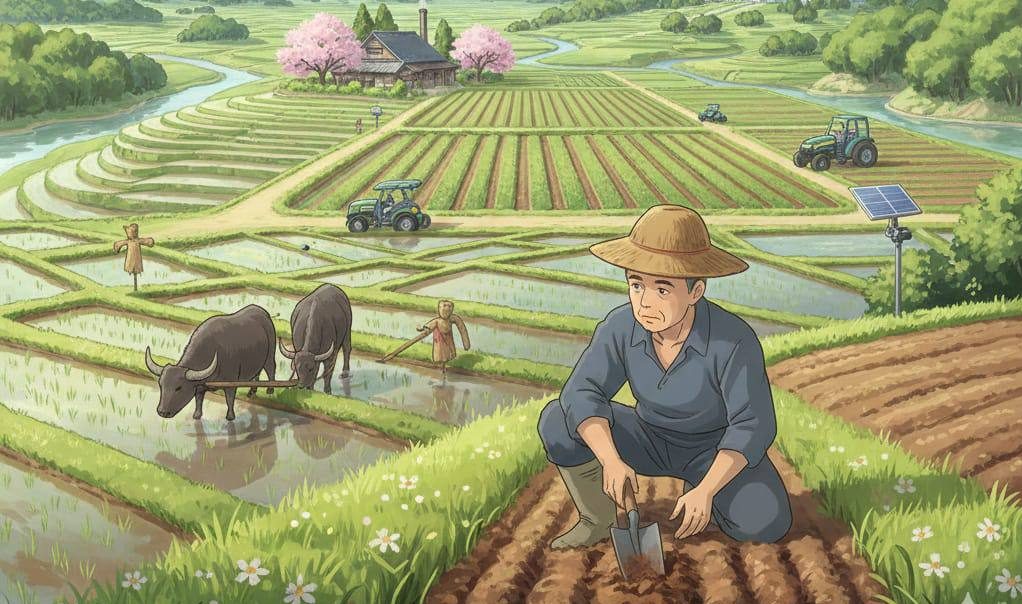
→ Modern farming has achieved impressive productivity, but it has also created new challenges such as rising input costs, declining soil health, and increasing crop stress. Long before advanced machinery and packaged solutions existed, farmers relied on traditional practices that worked with nature rather than against it. One such traditional farming practice is now becoming essential again for modern farmers who want stable yields and healthy land. This practice focuses on restoring soil balance, observing natural cycles, and making thoughtful decisions instead of rushing actions. It matters because it reduces dependency on external inputs and improves long-term farm resilience. By adopting this time-tested approach, farmers can save money, protect their soil, and grow crops more sustainably in changing conditions.
➡️ Key Points / Benefits
→ Strengthens soil structure and fertility naturally
→ Reduces unnecessary use of fertilizers and treatments
→ Improves crop resilience against pests and stress
→ Lowers long-term farming costs
→ Encourages sustainable and balanced farming systems
→ Supports consistent yields over time
🔵 1️⃣ → Understanding the Traditional Practice: Working With the Soil, Not Against It
The traditional farming practice modern farmers need most is soil-first management. Earlier farmers believed healthy soil was the foundation of healthy crops. They focused on feeding the soil rather than forcing growth through heavy inputs.
Key elements include:
- Maintaining organic matter through crop residues
- Avoiding excessive soil disturbance
- Allowing natural soil organisms to function
This approach improves water retention, nutrient availability, and root development. When soil life thrives, crops receive nutrients steadily rather than in sudden bursts. Farmers who shift their focus to soil health often notice improved plant vigor and fewer problems throughout the growing season.
🔵 2️⃣ → The Role of Crop Rotation in Traditional Farming
Crop rotation was a core practice in traditional agriculture, yet many modern systems overlook it. Growing the same crop repeatedly weakens soil and encourages pests and diseases. Traditional farmers rotated crops to restore nutrients and break pest cycles.
Effective rotation practices include:
- Alternating deep-rooted and shallow-rooted crops
- Including legumes to naturally enrich soil nitrogen
- Avoiding repeated planting of the same crop family
Rotation improves soil structure and reduces pressure from insects and diseases. It also helps balance nutrient use. Modern farmers who reintroduce crop rotation often see healthier fields and reduced need for corrective measures.
🔵 3️⃣ → Common Mistakes When Traditional Practices Are Ignored
Ignoring traditional practices often leads to problems that require costly solutions later. One major mistake is relying only on quick fixes instead of understanding long-term effects.
Common mistakes include:
- Continuous monocropping without rest
- Overworking soil with frequent tillage
- Applying inputs without checking soil condition
These actions reduce soil life and increase erosion. Over time, yields become unstable and input costs rise. Traditional practices help avoid these issues by promoting balance and patience. Recognizing these mistakes early allows farmers to correct course before damage becomes severe.
🔵 4️⃣ → How Traditional Practices Improve Natural Farm Balance
Traditional farming methods aim to create balance between crops, soil, water, and living organisms. When balance exists, farms become more self-regulating.
Balanced practices include:
- Using organic matter to support soil organisms
- Encouraging beneficial insects through habitat diversity
- Managing water based on soil needs rather than fixed schedules
This balance reduces stress on crops and improves their natural resistance. Fields managed with balance often experience fewer pest outbreaks and better moisture control. Over time, farms become easier to manage and more resilient to weather changes.
🔵 5️⃣ → How Modern Farmers Can Apply This Practice Step-by-Step
Applying this traditional practice does not require abandoning modern tools. It requires adjusting priorities and observing the land more closely.
Step-by-step guidance:
- Test soil regularly to understand its condition
- Add organic matter such as compost or residues
- Plan simple crop rotations based on soil needs
- Reduce unnecessary soil disturbance
- Observe crop response and adjust gradually
Dos and don’ts:
- Do focus on long-term soil health
- Do make gradual changes, not sudden ones
- Don’t rely on one solution for every problem
- Don’t ignore early signs of soil fatigue
Consistency is key to success.
➡️ CONCLUSION
→ The traditional farming practice modern farmers need most is a return to soil-centered, balanced agriculture. By caring for soil health, rotating crops, and observing natural processes, farmers can reduce costs and improve long-term productivity. These methods may seem slower, but they build stronger foundations that support crops season after season. Modern challenges require reliable solutions, and traditional practices provide exactly that. Farmers who adopt these approaches often find their land becoming healthier, more resilient, and easier to manage. Embracing this proven wisdom can help secure sustainable farming success for future generations.